

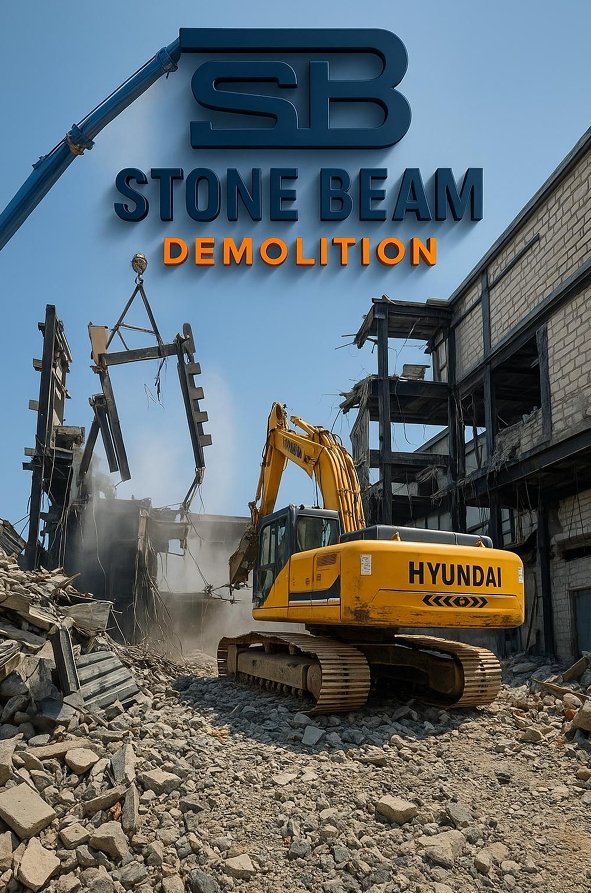
Steel Structure Demolition in Dubai & UAE – Safe Removal of Fast-Assembly Metal Buildings
In Dubai and across the UAE, steel houses, prefabricated metal buildings, and fast-assembly structures have become a core part of the built environment. From logistics warehouses and industrial sheds to prefab camps, portacabins, and temporary site facilities, these systems are designed to be erected quickly and to carry significant loads.
At some point, however, every steel structure reaches the end of its life:
A logistics hub needs to expand.
A temporary workers’ camp must be removed.
A prefabricated steel villa or showroom is replaced with a new development.
A steel mezzanine or temporary extension must be dismantled to restore the original building.
This is where specialized steel structure demolition in Dubai becomes critical. Unlike traditional concrete demolition, dismantling steel houses and fast-assembly metal structures is as much about engineering and sequencing as it is about cutting and lifting.
Stone Beam Demolition positions itself as a modern, engineered demolition contractor in Dubai and the UAE, delivering safe, compliant and efficient demolition for steel and metal structures – with a strong focus on reuse, recycling and minimal disruption.
1. What Are “Steel Houses” and Fast-Assembly Metal Structures in the UAE?
1.1 Types of Steel and Metal Structures Common in Dubai
In the UAE market typically refers to:
Pre-engineered steel buildings (PEB)
Logistics and distribution warehouses
Industrial workshops and factories
Storage sheds and vehicle depots MAK PREFAB STEEL CONTRACTING L.L.C+1
Prefabricated & modular buildings
Portacabins and modular office blocks
Labour camps and accommodation units
Site offices and guard rooms Line Pre Fab+2AK Prefab+2
Light-gauge steel houses and villas
Lightweight residential units made with cold-formed steel sections Mikendad
Steel canopies and auxiliary structures
Car park shades, petrol station canopies, gantries, billboard frames
Pedestrian bridges, link bridges, pipe racks
Industrial steel structures
Steel platforms and mezzanines inside factories
Process support structures and pipe racks
Steel tanks, silos and frames around equipment
These systems are usually bolted or welded, designed for relatively fast erection compared with traditional reinforced concrete buildings. That same feature – fast assembly – can allow fast, safe dismantling, but only if handled by an experienced demolition contractor in Dubai with the right engineering approach.
1.2 Why Owners Decide to Demolish or Dismantle Steel Structures
Common drivers include:
Redevelopment of high-value land
A single-storey steel warehouse in Dubai can be replaced with a high-rise or mixed-use development, making land use far more profitable.
End of lease or temporary permit
Many prefab and modular buildings are installed under temporary approvals. When leases or project phases end, these structures must be removed safely and on time.
Change of use or functional upgrade
Removing steel mezzanines, platforms or temporary extensions to comply with new codes or to improve process flow.
Structural damage or corrosion
Severely corroded steel structures, especially near the coast or industrial zones, may no longer be economical to repair.
Health, safety and compliance issues
Non-compliant or informally modified steel structures can present fire, stability or load risks and may be ordered for removal by authorities.
For all of these scenarios, engineered dismantling provides a controlled alternative to “brute-force” demolition, reducing risk to people, adjacent assets and ongoing operations.
2. Why Steel Structure Demolition Is Different from Concrete Demolition
2.1 Structural Behaviour and Connections
Concrete buildings are typically monolithic: most elements are cast in place, continuous and rigid. By contrast, steel buildings are assemblies of members and connections:
Bolted and welded joints
Bracing systems and portal frames
Thin roof and wall cladding systems
Secondary members such as purlins and girts Topnotch Steels+1
When demolition starts, removing the wrong member at the wrong time can destabilize an entire frame. A steel portal frame warehouse, for example, can behave like a house of cards if rafters or braces are cut without temporary support and controlled sequencing.
2.2 Opportunities for Reuse and Recycling
Steel is one of the most recycled materials in the world, with recovery rates frequently above 80%, and structural steel at end-of-life reaching recovery levels near 98% in some sectors. American Institute of Steel Construction+2worldsteel.org+2
This has two immediate implications:
Dismantling vs. Demolition:
Where possible, it can be more profitable and sustainable to dismantle a steel structure for reuse (keeping members in long lengths) instead of chopping everything into small scrap pieces.
Value of scrap steel:
Even if reuse is not practical, segregating and processing steel scrap efficiently supports a circular economy and reduces environmental impact. corporate.arcelormittal.com+1
2.3 Working at Height and Heavy Lifts
Because steel buildings often rely on frames and roof trusses:
Many operations take place at height, on roofs or elevated platforms.
Large elements may require cranage and carefully planned lifting operations.
This makes temporary works, rigging engineering and method statements a central part of any safe steel structure demolition project.
3. Regulatory Framework for Steel Structure Demolition in Dubai & UAE
3.1 Approvals and Licensed Demolition Contractors
In Dubai, demolition works must comply with Dubai Municipality and other authority requirements (such as free zone or development authority regulations). Competitor demolition contractors highlight the need for approvals and licensing, including from Dubai Municipality, Dubai Development Authority and Trakhees. Atninfo+3JBR Demolition+3primecontractorsuae.com+3
Key points generally include:
Only approved demolition contractors are allowed to perform structural demolition works.
A demolition permit is required, often supported by a method statement, structural assessment and safety plan.
When structures are located in free zones or special development areas, additional approvals from the relevant master developer or authority may be needed.
Stone Beam Demolition operates within this framework, preparing engineered demolition method statements, risk assessments, and traffic / logistics plans aligned with local requirements.
3.2 Safety, Environment and Public Protection
Regulators and consultants in Dubai typically focus on:
Public safety:
Exclusion zones, hoarding, barriers, and controlled access.
Structural stability:
Ensuring no uncontrolled collapse that could affect adjacent buildings or utilities.
Environmental controls:
Dust suppression (though steel demolition is less dusty than concrete, cladding and floor removals still generate debris).
Noise management and working hour restrictions.
Proper disposal of waste, including segregated steel scrap.
Fire and hot work controls:
For cutting and welding operations—requiring hot work permits, fire watch and fire-fighting equipment. TELAL+1
4. Stone Beam’s Step-by-Step Methodology for Steel Structure Demolition
Hiring a professional metal building demolition contractor in Dubai should not just mean bringing in excavators and torches. At Stone Beam Demolition, projects are approached as engineered operations with clear stages.
4.1 Stage 1 – Technical Survey and Data Collection
Before any cutting or lifting starts, the team conducts a thorough technical survey:
Structural information review
Original design drawings, if available (portal frames, trusses, mezzanines, foundations).
As-built changes, extensions, and additional loads (e.g., extra offices added inside a steel shed).
Site and environment assessment
Proximity to neighbouring villas, warehouses, roads or live operations.
Access constraints for cranes, trucks and equipment.
Overhead lines, underground services, and nearby utilities.
Condition assessment
Corrosion and fatigue in steel members.
Distortion or damage from prior incidents (fire, collision, overloading).
Reuse or recycling potential
Are portacabins or modules reusable?
Can primary steel members be salvaged in long lengths?
What volume and quality of scrap steel is expected?
This data forms the backbone of an engineered demolition plan.
4.2 Stage 2 – Demolition Engineering and Sequencing
Using survey data, Stone Beam’s engineers define:
Demolition strategy
Progressive dismantling (member-by-member).
Semi-mechanical demolition (excavator + high-reach shear).
Hybrid approaches combining manual unbolting, cranage and controlled mechanical pulling.
Structural sequencing
Typical sequence for a steel warehouse, for example:
Remove roof cladding and insulation.
Remove wall cladding and secondary members (purlins, girts).
Dismantle bracing and tie beams in a controlled pattern.
Lower rafters and trusses using cranes and tag lines.
Cut or unbolt columns, stabilising frames one by one.
Break or cut foundations and anchor bolts using concrete cutting or coring. Orsu Demolition+1
Temporary works and stability
Temporary bracing or propping where frames are partially dismantled.
Checking that no frame is left unbraced with large eccentric loads.
Lift planning
Calculating weights of beams, rafters and modules.
Defining lifting points, rigging, tag lines and crane capacities.
4.3 Stage 3 – Authority Approvals and Coordination
Once the plan is defined, Stone Beam supports the client with:
Preparation of method statements and risk assessments for submission to client/consultant and authorities.
Supporting documentation for Dubai Municipality demolition permits and, where applicable, free zone approvals (JAFZA, Dubai South, etc.). JBR Demolition+2primecontractorsuae.com+2
Coordination with utility providers (DEWA, telecoms, gas) to confirm disconnections and safe isolation.
4.4 Stage 4 – Site Setup and HSE Controls
Before dismantling:
Perimeter and access control:
Hoarding, fencing and access gates.
Clear signage in Arabic and English.
Designated pedestrian routes and emergency exits.
Exclusion zones:
Drop zones under cranes and lifting routes.
Restricted areas where structural members might swing or fall.
Working-at-height systems:
Certified manlifts (boom and scissor lifts).
Lifelines and harness systems for roof work.
Hot work and fire safety:
Hot work permits for flame cutting.
Fire extinguishers and fire watch during cutting operations.
Environmental controls:
Dust suppression via misting when cutting concrete or cladding.
Noise management and compliance with permitted working hours. TELAL+1
4.5 Stage 5 – Dismantling and Demolition Operations
Depending on the project type, Stone Beam deploys:
Cranes for large lifts
Lifting entire roof truss segments or portacabin units.
Rigging plans with tag lines for directional control.
High-reach excavators and hydraulic shears
For cutting and pulling down high steel frames where cranage is not practical or where buildings are isolated.
Manual unbolting and segmenting
For sensitive environments where vibration, noise, or uncontrolled movement is not acceptable.
Ideal for dismantling light-gauge steel houses or interior steel mezzanines.
Concrete cutting and core drilling
To separate steel base plates from heavily reinforced concrete pedestals.
To remove anchor bolts or cut openings in slabs for steel removal. WEMTS+1
4.6 Stage 6 – Segregation, Recycling and Site Clearance
Once members are lowered to the ground:
Segregation and cutting
Separating primary beams, columns and trusses from secondary items.
Cutting longer members to transportable lengths (or keeping long lengths for reuse where specified).
Scrap processing and recycling
Loading scrap steel to approved recyclers.
Maximising recycling percentage in line with steel’s high recyclability (often above 80–90% for end-of-life steel products). American Institute of Steel Construction+1
Waste management and disposal
Segregating cladding, insulation, gypsum, timber and other non-metallic waste streams.
Handling any hazardous materials (e.g., old insulation, coatings) under appropriate guidelines.
Final clearance
Levelling and compacting the site where required.
Handover of a clean, obstruction-free plot ready for the next phase of construction.
5. Typical Steel Structure Demolition Projects in Dubai & UAE
5.1 Warehouse and Factory Steel Demolition
Dubai’s rapid logistics and industrial growth means many large-span PEB warehouses and factories are periodically reconfigured, expanded or replaced. Dubai Demolition+2JBR Demolition+2
Challenges:
Large roof spans and tall eaves.
Heavy loading from overhead cranes, racking or solar panels.
Tight logistics for cranes, particularly in busy industrial zones.
Stone Beam’s approach:
Detailed frame-by-frame demolition sequencing to avoid progressive collapse.
Where possible, dismantling rafters and columns in large segments for quick removal.
Using GPR scanning and survey before excavating foundations to avoid damaging underground utilities.
5.2 Demolition of Prefabricated Camps and Modular Buildings
Modular buildings – labour camps, site offices, schools, clinics – are designed for fast installation and relocation. Line Pre Fab+2AK Prefab+2
Key considerations:
Reuse versus scrapping:
Many portacabin units can be fully reused on other sites when dismantled correctly.
Services and utilities:
Hidden power, water, drainage and telecom connections must be safely isolated before lifting.
Tight schedules:
Removal often needs to be coordinated with lease handover dates and new construction programmes.
Stone Beam typically:
Performs module-by-module disconnection and carefully labels units.
Uses cranes and low-bed trailers for relocation or transportation to buyers.
Ensures that all underground services (septic tanks, soakaways, cables) are safely dealt with.
5.3 Steel Houses and Light-Gauge Steel Villas
As lightweight steel housing systems become more popular, requests to modify or demolish such units are also rising. Light gauge systems rely on thin, cold-formed sections, which behave differently from heavy hot-rolled frames. Mikendad
Key risks:
Removing bracing or sheathing too early can destabilise large wall panels.
Cutting structural studs without proper reshoring can lead to partial collapse.
Stone Beam addresses this with:
Detailed wall-by-wall dismantling plans.
Temporary propping where walls or roof sections are removed in phases.
Controlled cutting and removal, particularly around stair cores and openings.
5.4 Temporary Steel Structures and Event Installations
Dubai regularly hosts large events and temporary installations:
Grandstands and viewing platforms.
Temporary steel stages and roof trusses.
Exhibition halls and event tents with steel frames.
These structures must be erected and removed quickly, often within narrow time windows between events.
Stone Beam’s capabilities include:
Fast-track dismantling teams working in shifts.
Strict working-at-height and public safety controls in live venues.
Coordination with event organisers, security teams and other contractors.
5.5 Auxiliary Steel Structures: Canopies, Gantries and Signage
Petrol station canopies, steel gantries, overhead signs and billboard frames often require removal in live traffic or urban environments.
Key elements of Stone Beam’s approach:
Night or off-peak working to minimise traffic disruption.
Crane lifts with clear traffic management and lane closures as required.
Segmented cutting and controlled lowering to avoid impact on adjacent structures.
6. Advanced Tools and Technologies Stone Beam Uses
To deliver safe demolition services in Dubai, Stone Beam integrates advanced tools and methods commonly used by leading demolition and cutting specialists in the region. WEMTS+2primecontractorsuae.com+2
6.1 GPR Scanning and Utility Detection
Before heavy equipment or cranes are mobilised, Ground Penetrating Radar (GPR) can be used to:
Map underground utilities and ducts.
Locate foundation edges, pile caps and buried slabs.
Reduce the risk of striking unseen services during demolition or excavation.
6.2 Concrete Cutting, Wire Sawing and Core Drilling
In many cases, steel structures are anchored into heavily reinforced concrete foundations. Stone Beam combines demolition with specialised cutting services:
Core drilling to cut around embedded base plates or anchors.
Wall and slab sawing to separate steel-supported elements from the main structure.
Wire sawing for thick concrete pedestals or combined steel–concrete elements.
These techniques minimise vibration and allow controlled removal in sensitive environments like live factories or occupied commercial buildings.
6.3 High-Reach Excavators and Hydraulic Attachments
For isolated structures with enough work area, Stone Beam can deploy:
High-reach excavators fitted with steel shears or multi-processors.
Standard excavators with grapples, shears and pulverisers.
This allows fast and efficient demolition of:
Old industrial sheds and warehouses.
Corroded or fire-damaged steel buildings that are unsafe for manual access.
6.4 Robotic Demolition for Confined or Hazardous Areas
In tight spaces or where there may be residual contamination (e.g., industrial process areas), remote-controlled robotic demolition can be used to:
Break concrete pedestals and plinths.
Remove steel members in confined or partially enclosed spaces, keeping operators at a safe distance.
7. Safety Controls Specific to Steel Structure Demolition
7.1 Structural Stability and Sequencing
The biggest risk in steel demolition is unplanned collapse. Controls include:
Completing a frame stability check for each sequence stage.
Prohibiting cutting of key bracing or columns before alternative load paths or temporary supports are installed.
Ensuring no frame is left with large unsupported cantilevers or asymmetrical loads.
7.2 Working at Height
Because so much work is done on roofs and elevated beams:
Only trained and certified workers operate manlifts and access platforms.
Full body harnesses and lanyards are mandatory when working on open edges.
Overhead work is cordoned off, with exclusion zones below to avoid falling object hazards.
7.3 Hot Work and Fire Safety
Steel demolition frequently involves flame cutting:
All burners work under a hot work permit system.
Fire blankets and fire extinguishers are staged strategically.
A dedicated fire watch observes during cutting and for a defined period after hot work stops.
7.4 Noise, Vibration and Dust Management
While steel demolition produces less dust than concrete demolition, there are still environmental controls:
Noise from cutting, grinding and shearing is managed through time restrictions and, where necessary, temporary barriers.
When breaking concrete foundations or slabs, water mist systems are used to suppress dust.
7.5 Public and Traffic Safety
Many steel structures are located near roads, parking and public areas:
Stone Beam prepares traffic management plans where required, including lane closures, flagmen and signage.
Lifting operations are planned so that no load swings over public areas or active roads.
Emergency response plans and communication lines with authorities are clearly defined.
8. Environmental and Sustainability Benefits of Engineered Steel Dismantling
Steel is one of the most sustainable structural materials precisely because it can be recycled repeatedly:
Globally, steel is among the most recycled materials, with overall recycling rates often reported around 80–85%. American Institute of Steel Construction+2worldsteel.org+2
Structural steel from buildings has particularly high recovery rates because members are easy to separate and magnetically sorted.
By applying engineered dismantling techniques, Stone Beam can:
Maximise the percentage of steel and metal materials sent to approved recyclers.
Reduce general landfill waste by carefully segregating cladding, insulation, timber, gypsum and other streams. steelconstruction.info+1
Support clients’ ESG and sustainability goals, including circular economy commitments and green building certifications.
For owners and developers, this means better waste metrics and the option to report on recycled content and diversion-from-landfill rates for their projects.
9. Case-Style Scenarios: How Stone Beam Handles Complex Steel Demolition
To illustrate how an engineered approach works in practice, here are some scenario-style examples (not named projects) based on typical Dubai/UAE conditions.
9.1 Scenario 1 – Removing a Steel Logistics Warehouse Next to a Live Operation
Context:
A large pre-engineered warehouse (120m x 60m) with high eaves and attached office block, located within a logistics park. Adjacent warehouses remain fully operational.
Challenges:
Tight space for cranes and equipment.
Need to maintain access for neighbouring tenants.
Roof-mounted MEP equipment and solar panels.
Stone Beam’s approach:
Detailed survey of frame geometry and MEP loads.
Demolition plan separating the office block (concrete) and warehouse (steel).
Roof cladding and solar removal by manlifts, followed by purlins and secondary steel.
Controlled lifting of rafters using cranes and tag lines, working bay by bay.
Progressive lowering and cutting of columns, then breaking foundations.
Continuous segregation of steel and non-metallic materials for recycling and disposal.
Result: The warehouse is dismantled with no impact on neighbouring operations, and most steel is sent to recyclers.
9.2 Scenario 2 – Dismantling a Prefab Labour Camp Under a Tight Deadline
Context:
A multi-block prefab labour camp with stacked portacabin units must be removed within six weeks at the end of a project.
Challenges:
Limited time before land handover.
Need to preserve units for reuse by the owner.
Complex network of underground services.
Stone Beam’s approach:
Joint survey with the client to identify units earmarked for reuse vs. scrapping.
Coordination with utilities to confirm disconnection and safe isolation.
Systematic dismantling of external stairs, walkways and canopies.
Crane lifting of units onto trailers for relocation and storage.
Removal of any remaining foundations, septic tanks or soakaways.
Levelled site handed back within the agreed timeframe.
Result: The entire camp is removed on schedule, with maximum reuse of valuable prefab units.
9.3 Scenario 3 – Removing a Corroded Steel Canopy Over a Live Forecourt
Context:
A petrol station canopy with significant corrosion and reduced structural capacity is scheduled for replacement, but the forecourt must remain partially operational.
Challenges:
Work above fuel pumps and sensitive equipment.
Limited working hours and strict safety rules.
Need to avoid damage to underground tanks and services.
Stone Beam’s approach:
Night-time working under an approved method statement and permit system.
Temporary support of sections of the canopy while segments are cut and lowered.
Use of cranes and manlifts to avoid any uncontrolled collapse.
Close coordination with the fuel station operator and EHS team.
Result: The canopy is removed safely with no incident, and the client can proceed with new construction.
9.4 Scenario 4 – Demolishing Internal Steel Mezzanines in a Live Factory
Context:
A manufacturing facility needs to remove old steel mezzanine floors to reconfigure production lines, while parts of the factory remain operational.
Challenges:
Maintaining fire escape routes and access.
Avoiding damage to machines and electrical systems.
Working in a confined indoor environment.
Stone Beam’s approach:
Phased demolition plan aligned with shutdown windows.
Manual unbolting and small mechanical cutting, using mini-cranes and spiders where needed.
Protection of machines with temporary barriers and coverings.
Use of low-noise cutting methods and dust extraction where possible.
Result: Mezzanines removed with minimal disruption to production and a clean, open floor ready for new layouts.
10. How to Choose the Right Steel Structure Demolition Contractor in Dubai
When selecting a metal building demolition contractor in Dubai, owners should look beyond just price:
10.1 Technical and Engineering Capability
In-house or partnered structural engineering support.
Experience with complex steel structures (not only small concrete villas).
Ability to produce detailed method statements, risk assessments and lift plans.
10.2 Authority Approval and Track Record
Proper registration and approvals with Dubai Municipality and other local authorities. Atninfo+3JBR Demolition+3primecontractorsuae.com+3
Demonstrated track record in completing similar steel and prefab demolition projects in the UAE.
10.3 Safety Culture and HSE Systems
HSE policies covering working at height, hot work, lifting operations and traffic management.
Regular training and certification for operators and riggers.
Strong incident reporting and learning culture.
10.4 Equipment and Specialist Tools
Access to cranes, high-reach excavators, manlifts and robotic equipment.
In-house or partnered capability for concrete cutting, core drilling and GPR scanning.
10.5 Sustainability and Waste Management
Clear processes for segregating and recycling steel and other materials.
Relationships with approved recycling plants and waste facilities. worldsteel.org+1
Stone Beam Demolition aligns with these criteria by combining engineering, safety and sustainability into a single, integrated demolition service.
11. Frequently Asked Questions (FAQ)
11.1 How much does steel structure demolition cost in Dubai?
Costs depend on several factors:
Size, height and complexity of the structure.
Access constraints and need for cranes or high-reach equipment.
Whether the goal is fast demolition or precise dismantling for reuse.
Site conditions, authority requirements and waste disposal distances.
A quick site visit and basic drawings typically allow Stone Beam to provide a budget estimate, followed by a detailed proposal once the methodology is defined.
11.2 How long does it take to demolish a steel warehouse or prefab camp?
Programme duration is driven by:
Building size and number of structures.
Working hours allowed by authorities and neighbours.
Complexity of utilities and internal fit-out.
A small steel shed might be completed in a few days, whereas a large warehouse or multi-block camp can take several weeks from mobilisation to final clearance.
11.3 Can my steel structure be dismantled and reused instead of scrapped?
Often, yes. Many steel frames, portacabins and modular buildings can be dismantled and reused if:
Members are in acceptable condition (no severe corrosion or fire damage).
The owner has a buyer or new location lined up.
Dismantling is planned carefully to preserve components in long lengths.
Stone Beam can adapt its method statement to prioritise reuse where this is economically and technically viable.
11.4 Do I need a demolition permit for dismantling a steel building?
In most cases, yes. Steel building demolition is still structural demolition and typically requires:
A demolition permit from Dubai Municipality or the relevant authority.
Approved method statements and safety plans. JBR Demolition+2primecontractorsuae.com+2
Stone Beam assists clients in preparing all required documentation.
11.5 Is steel structure demolition noisy or dusty?
Steel demolition is usually less dusty than concrete demolition, especially when cladding and steel members are unbolted rather than smashed. However:
Noise occurs from cutting, grinding, shearing and crane operations.
Dust is generated when breaking foundations or cutting concrete.
Stone Beam uses noise management and dust suppression (water mist, controlled breaking) to minimise impact on neighbours.
11.6 Can demolition be done while my facility is still operating?
In many cases, yes, provided suitable safety measures and coordination are in place. For example:
Removing internal mezzanines in phases during planned shutdowns.
Dismantling external steel canopies or extensions outside peak hours.
Stone Beam develops phased demolition plans that respect clients’ operational needs while maintaining strict safety controls.
11.7 What happens to the scrap steel?
Scrap steel is:
Segregated, cut to size and loaded into trucks.
Sent to approved scrap yards and recyclers in the UAE.
Documented as part of waste tracking and recycling reporting.
This supports both economic returns from scrap and environmental objectives, given steel’s high recycling rate. American Institute of Steel Construction+1
11.8 Can Stone Beam also remove concrete foundations after steel demolition?
Yes. Stone Beam combines steel structure demolition with:
Concrete breaking, cutting and removal of pedestals, plinths and slabs.
Excavation and backfilling to leave a clean, level platform ready for new construction.
11.9 Is it possible to demolish only part of a steel structure?
Partial demolition is common:
Removing one bay of a warehouse to create access.
Lowering an attached steel canopy or mezzanine while retaining the main building.
Such works require exact engineering to ensure the remaining structure stays fully stable. Stone Beam’s method statements clearly define what will be removed and what will be preserved.
11.10 Why choose Stone Beam Demolition over a general contractor for steel structure removal?
Specialised demolition contractors bring:
Dedicated engineering expertise for demolition sequencing and temporary works.
Purpose-designed equipment (shears, high-reach excavators, robotic breakers).
Established procedures for safety, authority approvals and waste management.
This reduces risk, shortens programme and limits unexpected costs compared with improvised demolition by non-specialists.
you’re planning a demolition project in Dubai , don’t settle for outdated methods or inflated prices. Stone Beam Demolition Company delivers professional and compliant services. They are competitively priced and align with the highest standards of the UAE capital.
- Get a Free, No-Obligation Quote Today Through +971 55 930 8594– info@sbdemolition.ae
Related topic
- Demolition Company Dubai – Complete Guide to Safe Demolition Services
- Bridge and Highway Demolition in Dubai and the UAE
- Tunnel and Underground Structure Demolition – Safety and Settlement Control
- Concrete Cutting, Drilling and Scanning Services in Dubai and the UAE
- Selective Demolition and Interior Strip-Out Services