
Demolition Company Dubai
Professional Demolition Company Dubai
Finding the right demolition company Dubai is one of the most important decisions in any redevelopment, renovation, infrastructure, or construction project. Demolition is not simply the process of removing a structure. It is a highly specialized engineering operation that requires careful planning, technical expertise, advanced equipment, regulatory compliance, and strict safety management to ensure successful project execution.
At Stone Beam, we provide professional demolition services across Dubai and the UAE, helping developers, contractors, consultants, industrial operators, government entities, and property owners safely remove structures and prepare sites for future development. Our team combines engineering knowledge, demolition expertise, and modern technology to deliver projects efficiently while minimizing disruption to surrounding properties and infrastructure.
As a trusted demolition contractor in Dubai, we understand that every project presents unique challenges. Factors such as building height, structural design, neighboring properties, underground utilities, environmental considerations, accessibility constraints, and project timelines all influence the demolition strategy that should be used.
For this reason, every demolition project begins with a detailed engineering assessment. Our specialists evaluate the structure, identify potential risks, analyze project requirements, and develop a customized demolition plan that prioritizes safety, efficiency, and compliance.
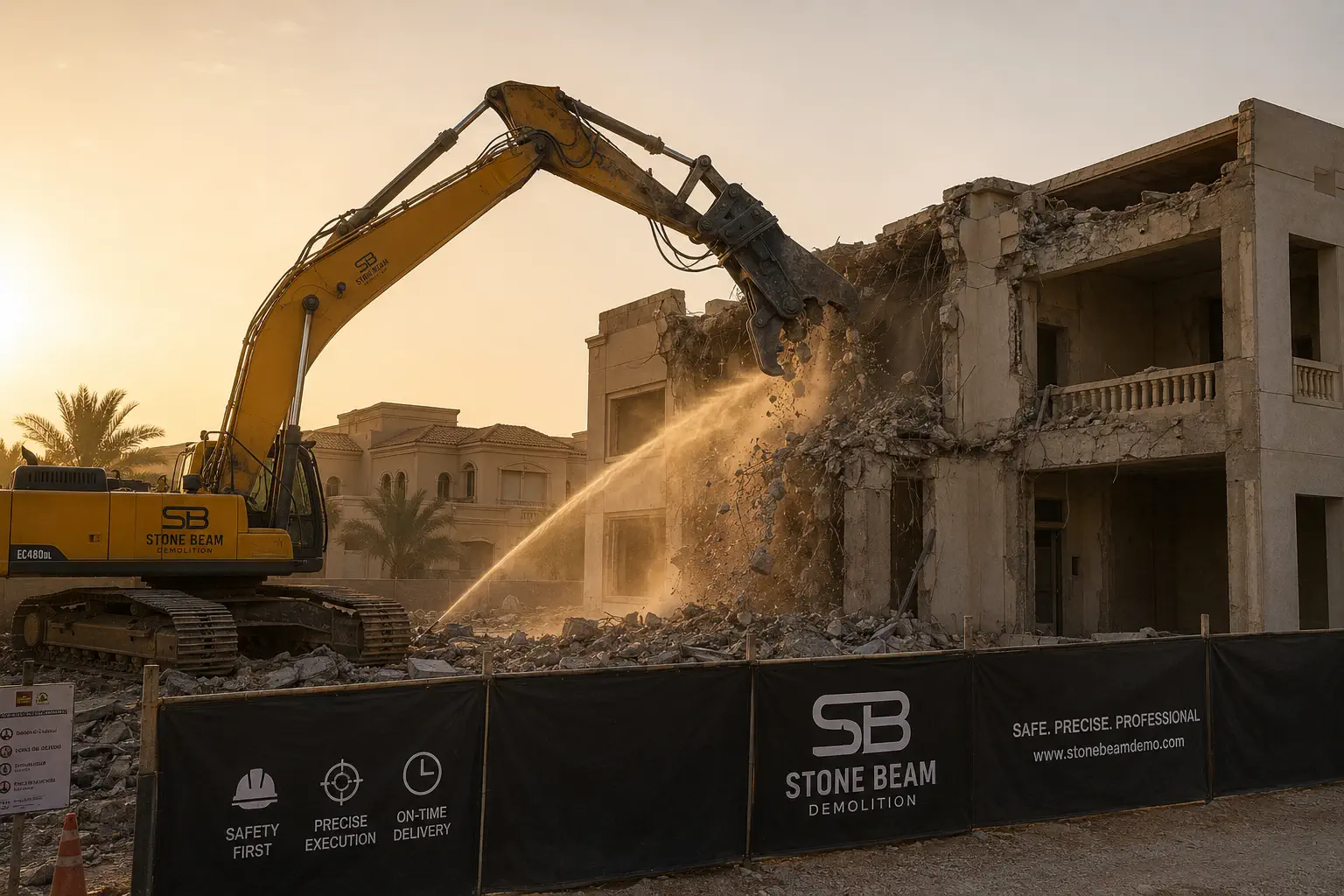
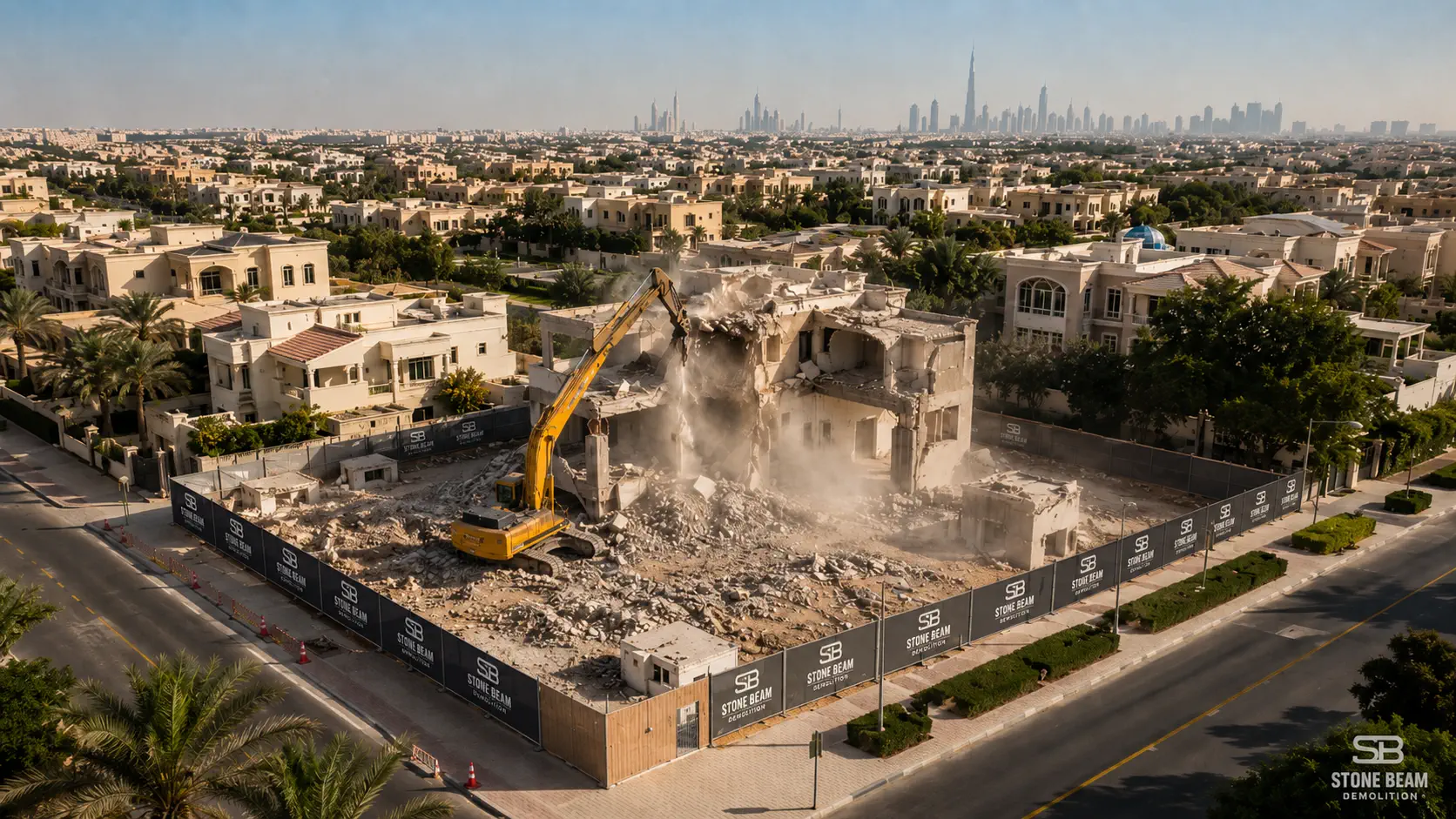
Over the years, Stone Beam has successfully delivered demolition solutions for residential, commercial, industrial, and infrastructure projects throughout the UAE. From villa demolition and commercial building demolition to industrial dismantling, controlled demolition, strip-out works, and site clearance operations, we provide complete demolition solutions under one roof.
Our integrated capabilities allow clients to work with a single contractor throughout the entire demolition lifecycle. This approach improves communication, reduces project delays, simplifies coordination, and ensures consistent quality from initial planning through final site handover.
What separates Stone Beam from many demolition contractors is our engineering-led methodology. Rather than relying solely on heavy machinery, we focus on understanding the structure, selecting the most appropriate demolition technique, and implementing controlled processes that reduce risk while maximizing efficiency.
We also recognize that safety is non-negotiable. Demolition projects often involve complex structural conditions, heavy equipment operations, utility connections, environmental hazards, and public safety considerations. Our teams follow strict health and safety procedures throughout every stage of the project, helping protect workers, clients, neighboring properties, and the surrounding community.
In addition to demolition services, we provide supporting solutions including concrete cutting, core drilling, concrete scanning, excavation works, waste management, decommissioning services, steel structure dismantling, and site preparation works. This allows us to deliver complete project support without requiring clients to coordinate multiple contractors.
Whether you are planning a villa redevelopment project, commercial property renovation, industrial facility closure, bridge demolition operation, or large-scale urban redevelopment project, Stone Beam has the expertise, equipment, and resources necessary to deliver safe and successful demolition solutions throughout Dubai and the UAE.
Our goal is simple: provide clients with a reliable demolition partner capable of delivering projects safely, efficiently, on schedule, and in full compliance with all applicable requirements.
Why Choose Stone Beam as Your Demolition Contractor in Dubai?
Choosing a demolition contractor is not simply about selecting a company with heavy equipment. Successful demolition projects require engineering expertise, strategic planning, strict safety controls, regulatory compliance, and the ability to execute complex operations without compromising surrounding structures or project timelines.
At Stone Beam, we have built our reputation by delivering demolition solutions that prioritize safety, efficiency, precision, and long-term project success. Our clients choose us because we approach every project with the mindset of engineers, not just contractors.
Engineering-Led Decision Making
Many demolition projects fail because critical structural factors are overlooked during the planning stage.
At Stone Beam, every project begins with a thorough engineering evaluation. Before any demolition activity starts, our team analyzes structural conditions, load-bearing elements, neighboring properties, underground utilities, access constraints, environmental risks, and project objectives.
This engineering-first approach enables us to develop the safest and most effective demolition methodology while minimizing risks and unexpected challenges during execution.
Rather than applying a one-size-fits-all solution, we tailor our demolition strategy to the unique requirements of each project.
Comprehensive Demolition Solutions Under One Contractor
Managing multiple contractors often creates communication gaps, scheduling conflicts, and unnecessary project delays.
Stone Beam provides complete demolition and enabling works solutions under one roof, allowing clients to work with a single experienced partner throughout the entire project lifecycle.
Our capabilities include:
- Building Demolition
- Villa Demolition
- Controlled Demolition
- Industrial Demolition
- Structural Dismantling
- Bridge Demolition
- Robotic Demolition
- Strip-Out Services
- Concrete Cutting
- Core Drilling
- Concrete Scanning
- Excavation Works
- Waste Management
- Site Clearance
This integrated service model improves coordination, streamlines project execution, and helps clients maintain greater control over budgets and timelines.
Commitment to Health, Safety & Environmental Excellence
Demolition projects involve significant operational risks. Heavy equipment, structural instability, underground services, elevated work zones, and environmental hazards all require careful management.
Safety is integrated into every stage of our demolition process.
Our teams follow detailed safety procedures that include:
- Site-specific risk assessments
- Method statements
- Equipment inspections
- Worker safety training
- Emergency response planning
- Environmental protection measures
- Continuous site monitoring
By maintaining strict safety standards, we help protect workers, neighboring properties, public infrastructure, and project stakeholders throughout the demolition process.
Advanced Demolition Equipment & Technology
The quality of demolition equipment directly impacts project safety, productivity, and precision.
Stone Beam invests in modern demolition machinery, specialized attachments, structural cutting systems, and advanced scanning technologies to improve project outcomes.
Our equipment capabilities allow us to perform:
- Precision demolition
- Structural dismantling
- Heavy concrete removal
- Selective demolition
- Industrial decommissioning
- Site clearance operations
Using advanced technology also helps reduce project timelines while improving operational efficiency.
Proven Experience Across Multiple Industries
Over the years, we have supported projects across a wide range of sectors throughout Dubai and the UAE.
Our experience includes:
Residential Projects
Villa demolition, residential redevelopment, site preparation, and housing projects.
Commercial Projects
Office buildings, retail facilities, shopping centers, mixed-use developments, and hospitality properties.
Industrial Projects
Factories, warehouses, manufacturing facilities, processing plants, and industrial compounds.
Infrastructure Projects
Bridges, transportation facilities, utility structures, and public-sector developments.
This broad project experience allows our team to understand the unique challenges associated with different structure types and demolition environments.
Regulatory Compliance You Can Trust
Demolition projects in Dubai require careful coordination with local regulations and authority requirements.
Our team understands the importance of compliance and works to ensure that project planning, safety procedures, demolition methodologies, and site operations align with applicable standards and regulations.
This reduces the risk of project delays, unexpected complications, and compliance-related issues.
Sustainable Demolition Practices
Modern demolition is no longer focused solely on structure removal.
Environmental responsibility has become a critical part of successful project delivery.
Stone Beam implements sustainable demolition practices that prioritize:
- Material recovery
- Concrete recycling
- Metal recycling
- Waste segregation
- Responsible disposal
- Reduced environmental impact
These practices support both regulatory compliance and sustainable construction objectives.
A Reliable Partner From Planning to Site Handover
One of the biggest concerns clients face during demolition projects is uncertainty.
Unexpected structural conditions, project delays, safety incidents, and coordination challenges can significantly affect project outcomes.
Stone Beam provides clients with confidence through proactive planning, transparent communication, disciplined project management, and consistent execution.
From the initial assessment through final site clearance, our team remains focused on delivering safe, efficient, and professionally managed demolition solutions that help clients move seamlessly into the next stage of development.
When you partner with Stone Beam, you gain more than a demolition contractor, you gain an experienced project partner committed to the success of your project from start to finish.
Our Demolition Services in Dubai
Stone Beam provides a comprehensive range of demolition and dismantling services designed to support residential, commercial, industrial, and infrastructure projects across Dubai and the UAE.
Every demolition project presents unique structural, operational, and environmental challenges. For this reason, our team develops customized demolition strategies based on the structure type, project objectives, surrounding environment, and safety requirements.
By combining engineering expertise, advanced equipment, and proven project management methodologies, we are able to deliver safe, efficient, and controlled demolition solutions across a wide variety of project sectors.
Building Demolition Services
Building demolition remains one of the most commonly requested services within the construction and redevelopment sector.
Whether a structure has reached the end of its operational life, requires redevelopment, or must be removed to accommodate new construction, successful building demolition requires careful planning and execution.
Our engineering team evaluates structural systems, neighboring properties, underground utilities, accessibility constraints, and environmental factors before selecting the most appropriate demolition methodology.
We provide building demolition solutions for:
- Commercial buildings
- Office developments
- Mixed-use properties
- Educational facilities
- Hospitality projects
- Government structures
- Industrial buildings
Each project is executed according to strict safety standards and engineering procedures designed to reduce risk and maximize operational efficiency.
Villa Demolition Services
Villa demolition projects require a specialized approach due to their location within active residential communities and proximity to neighboring properties.
Our team carefully manages every stage of the villa demolition process, including planning, site preparation, demolition execution, debris removal, and final site clearance.
Special attention is given to protecting adjacent structures, underground services, landscaping elements, and surrounding infrastructure.
Through detailed planning and controlled demolition methods, we help property owners prepare sites for redevelopment while minimizing disruption to nearby residents.
Controlled Demolition Services
Certain projects require a higher level of precision than conventional demolition methods can provide.
Controlled demolition is used when structures must be removed in a carefully planned sequence to protect nearby buildings, critical infrastructure, utilities, or specific portions of the existing structure.
This approach is commonly used for:
- Urban redevelopment projects
- Sensitive construction environments
- Partial structural removals
- Structural modifications
- Complex demolition operations
Our engineering team develops project-specific demolition sequences that prioritize safety, stability, and accuracy throughout the execution process.
Conventional Demolition Services
Conventional demolition remains an effective solution for many residential, commercial, and industrial projects.
Using specialized demolition equipment and experienced operators, we safely remove structures while maintaining compliance with safety and environmental requirements.
Conventional demolition is often selected when site conditions allow efficient structure removal without the need for specialized dismantling techniques.
Our experience enables us to determine when conventional demolition offers the most effective balance between safety, project duration, and cost efficiency.
Robotic Demolition Services
Modern demolition projects increasingly require solutions capable of operating within confined spaces, hazardous environments, and structurally sensitive locations.
Robotic demolition systems provide exceptional precision while reducing worker exposure to potential hazards.
These remotely operated machines are ideal for:
- Interior demolition projects
- Industrial facilities
- High-risk environments
- Structural modifications
- Confined workspaces
Robotic demolition allows us to improve safety while maintaining high levels of productivity and accuracy.
Bridge Demolition Services
Bridge demolition projects involve complex engineering considerations and require specialized planning methodologies.
Our team develops detailed demolition strategies that account for traffic management, structural behavior, environmental considerations, utility protection, and public safety requirements.
By combining engineering expertise with advanced demolition equipment, we safely execute bridge demolition projects while minimizing disruption to surrounding transportation networks.
Industrial Demolition & Plant Dismantling
Industrial facilities present unique demolition challenges due to the presence of heavy equipment, process systems, steel structures, concrete foundations, and operational infrastructure.
Our industrial demolition services support:
- Manufacturing facilities
- Warehouses
- Processing plants
- Industrial compounds
- Production facilities
- Utility installations
We manage every phase of the demolition process while maintaining strict safety and environmental controls.
Steel Structure Dismantling
Steel structures require specialized dismantling techniques to ensure controlled removal and safe material handling.
Our team carefully evaluates structural load paths, connection systems, and dismantling sequences before beginning work.
Whether removing industrial steel frameworks, warehouses, processing facilities, or large structural components, we provide safe and efficient steel structure dismantling solutions tailored to project requirements.
Interior Demolition & Strip-Out Services
Interior demolition plays a critical role in renovation, refurbishment, and redevelopment projects.
Our strip-out services focus on removing non-structural building components while preserving designated structural elements.
Typical strip-out works include:
- Ceiling removal
- Partition removal
- Flooring removal
- Mechanical system removal
- Electrical system removal
- Interior fit-out demolition
These services allow clients to prepare existing spaces for future construction and redevelopment activities.
Site Clearance & Project Readiness
The final objective of every demolition project is to prepare the site for its next phase of development.
Following demolition activities, our team performs debris removal, waste segregation, recycling operations, and complete site clearance.
Clients receive a clean, prepared site ready for excavation, foundation works, infrastructure upgrades, or new construction activities.
This complete project lifecycle approach allows Stone Beam to support clients from initial demolition planning through final site handover, providing a streamlined and efficient experience throughout the project.
Engineering-Led Demolition Process
Successful demolition projects are built long before any machinery arrives on site.
One of the most common misconceptions about demolition is that it begins with equipment and structure removal. In reality, professional demolition begins with engineering analysis, strategic planning, risk assessment, and operational preparation.
At Stone Beam, we follow a structured engineering-led demolition process designed to maximize safety, improve efficiency, reduce project risks, and ensure successful project delivery from start to finish.
Every demolition project follows a carefully planned methodology that allows our team to understand site conditions, identify challenges, coordinate resources, and execute demolition activities in a controlled and predictable manner.
Step 1: Initial Site Assessment & Project Evaluation
Every project begins with a detailed site inspection performed by our engineering and project management teams.
The objective of this stage is to fully understand the structure, surrounding environment, and project requirements before demolition planning begins.
During the assessment process, our specialists evaluate:
- Structural configuration
- Building condition
- Accessibility constraints
- Adjacent properties
- Existing utilities
- Site boundaries
- Environmental considerations
- Potential hazards
- Redevelopment requirements
By gathering accurate information at the earliest stage, we can develop a demolition strategy that minimizes risks and supports efficient project execution.
A thorough assessment also helps identify opportunities to reduce project costs, improve scheduling, and avoid unexpected complications during demolition activities.
Step 2: Engineering Analysis & Demolition Planning
Once site information has been collected, our engineering team develops a project-specific demolition methodology.
This stage is critical because every structure behaves differently during demolition.
Factors such as:
- Structural design
- Construction materials
- Building height
- Foundation systems
- Structural connections
- Existing damage
- Nearby infrastructure
must all be considered before selecting the appropriate demolition approach.
Our engineers evaluate multiple demolition scenarios and determine the safest and most effective sequence for structure removal.
The result is a detailed demolition plan that provides clear guidance for project execution while maintaining compliance with safety and operational requirements.
Step 3: Utility Investigation & GPR Scanning
Before demolition begins, it is essential to identify utilities and hidden structural elements that may affect project safety.
Unexpected utility strikes can create serious risks and project delays.
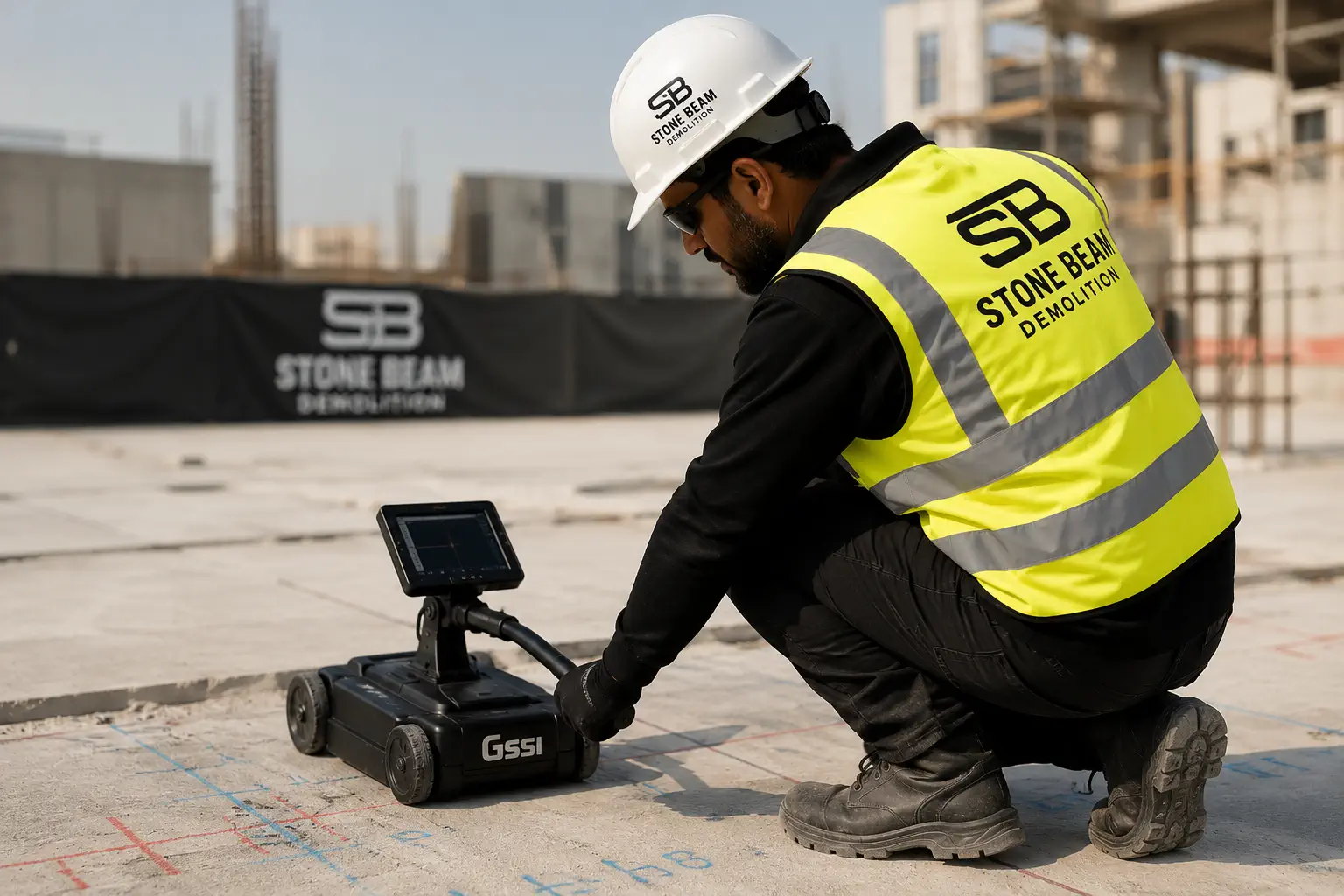
For this reason, Stone Beam incorporates advanced investigation methods including Ground Penetrating Radar (GPR) scanning to detect:
- Underground utilities
- Electrical conduits
- Water lines
- Drainage systems
- Reinforcement bars
- Structural components
This proactive approach allows our team to eliminate uncertainty and make informed decisions before demolition operations begin.
Projects requiring advanced utility detection can also benefit from our specialized Concrete Scanning and GPR Services.
Step 4: Risk Assessment & Safety Planning
Demolition projects involve numerous operational risks that must be carefully managed.
Our safety specialists perform comprehensive risk assessments before work begins, identifying potential hazards and implementing control measures designed to protect workers, equipment, surrounding properties, and the public.
Key safety planning activities include:
- Hazard identification
- Site-specific risk assessments
- Emergency response planning
- Equipment inspections
- Personnel training
- Exclusion zone establishment
- Environmental protection measures
This systematic approach ensures that safety remains integrated into every stage of the demolition process.
Step 5: Regulatory Compliance & Project Coordination
Demolition projects often require coordination with multiple stakeholders.
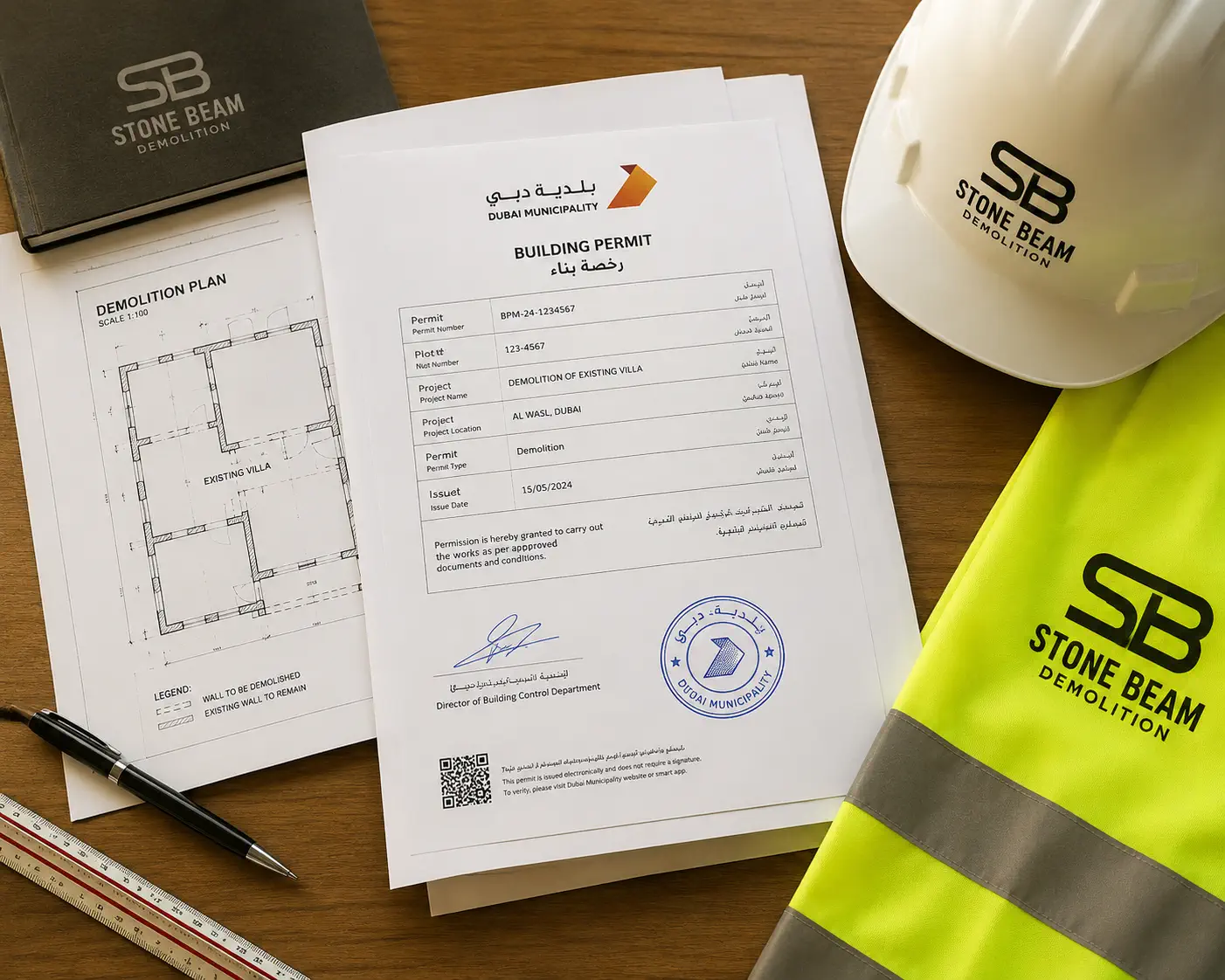
Depending on project scope, requirements may include approvals, permits, utility coordination, traffic management planning, environmental controls, and project documentation.
Our project teams work closely with clients, consultants, engineers, and relevant authorities to ensure all project requirements are properly addressed before execution begins.
Effective coordination reduces delays and helps maintain smooth project progression throughout the demolition lifecycle.
Step 6: Site Preparation & Mobilization
Once planning activities are complete, the site is prepared for demolition operations.
This stage typically includes:
- Utility disconnections
- Temporary barriers
- Safety fencing
- Equipment mobilization
- Access route preparation
- Environmental protection measures
- Site signage and controls
Proper site preparation creates a safer working environment and establishes the foundation for efficient demolition execution.
Step 7: Controlled Demolition Execution
With planning, safety controls, and site preparation complete, demolition activities can begin.
Our demolition specialists follow the approved demolition methodology and engineering sequence developed during earlier planning stages.
Depending on project requirements, demolition may involve:
- Mechanical demolition
- Controlled dismantling
- Selective demolition
- Robotic demolition
- Structural cutting
- Steel structure dismantling
Continuous monitoring allows our teams to verify progress, manage risks, and maintain compliance with project objectives throughout the demolition process.
Rather than focusing solely on speed, our objective is to deliver demolition operations safely, efficiently, and with maximum control.
Step 8: Waste Segregation, Recycling & Material Recovery
Modern demolition projects require more than structure removal.
Environmental responsibility has become an essential component of successful project delivery.
Following demolition activities, materials are separated and processed according to project requirements.
This may include:
- Concrete recycling
- Metal recovery
- Waste segregation
- Material transportation
- Approved disposal procedures
Our waste management practices help reduce environmental impact while supporting sustainable construction initiatives.
Step 9: Site Clearance & Handover
The final phase of the demolition process focuses on preparing the site for future development.
After debris removal and cleanup activities are completed, the site is inspected and prepared for handover.
Clients receive a cleared, organized, and development-ready site capable of supporting the next phase of construction or redevelopment.
This structured engineering-led methodology is one of the key reasons clients trust Stone Beam for demolition projects across Dubai and the UAE. By combining technical expertise, detailed planning, advanced technology, and disciplined execution, we help ensure every demolition project is completed safely, efficiently, and successfully.
Safety, Compliance & Risk Management
Safety is the foundation of every successful demolition project.
Regardless of the size, complexity, or location of a structure, demolition activities involve significant operational, structural, and environmental risks that must be carefully managed throughout the entire project lifecycle.
At Stone Beam, safety is not treated as a standalone procedure or administrative requirement. It is integrated into every decision, every process, and every stage of project execution.
From the earliest planning phases through final site handover, our teams follow strict safety protocols designed to protect workers, clients, neighboring properties, public infrastructure, and the surrounding environment.
This commitment to safety is one of the primary reasons clients throughout Dubai and the UAE trust Stone Beam to manage complex demolition projects.
Safety Begins Long Before Demolition Starts
Many project risks can be eliminated before demolition activities even begin.
Our engineering-led methodology focuses heavily on proactive risk management during the planning stage.
Before equipment arrives on site, our specialists conduct comprehensive evaluations that help identify potential hazards and determine appropriate mitigation measures.
This process includes:
- Structural assessments
- Utility investigations
- Site condition reviews
- Access evaluations
- Hazard identification
- Environmental assessments
- Emergency planning
- Method statement development
By identifying risks early, we are able to significantly improve project safety and reduce the likelihood of unexpected incidents during execution.
Comprehensive Risk Assessment Procedures
Every demolition project presents unique challenges.
A villa demolition project inside a residential community requires a different approach than an industrial dismantling project or a commercial redevelopment site.
For this reason, Stone Beam develops project-specific risk assessments tailored to the conditions and requirements of each site.
Our risk management process evaluates:
Structural Risks
Understanding how a structure behaves during demolition is essential.
Our engineers assess:
- Load-bearing systems
- Structural stability
- Existing damage
- Material conditions
- Potential collapse mechanisms
This information allows us to establish safe demolition sequences and controlled removal procedures.
Operational Risks
Demolition projects involve heavy equipment, vehicle movement, lifting operations, cutting activities, and debris removal.
Each activity is evaluated to ensure safe execution and proper coordination among project teams.
Environmental Risks
Environmental considerations play a critical role in modern demolition projects.
Potential concerns include:
- Dust generation
- Noise levels
- Vibration impacts
- Waste handling
- Air quality
- Water protection
Appropriate control measures are implemented to reduce environmental impact throughout project execution.
Public Safety Risks
Many demolition projects occur within active urban environments.
Our teams establish exclusion zones, protective barriers, traffic controls, and monitoring procedures designed to protect neighboring properties, pedestrians, road users, and public infrastructure.
Licensed Professionals & Qualified Personnel
The quality of a demolition project depends heavily on the people responsible for executing it.
Stone Beam employs experienced engineers, project managers, demolition supervisors, equipment operators, and safety personnel who understand the complexities associated with modern demolition operations.
Continuous training and professional development ensure our teams remain aligned with current industry standards, operational requirements, and best practices.
This investment in people helps maintain consistent quality and safety across all projects.
Regulatory Compliance Across Every Project
Demolition projects must comply with a wide range of technical, operational, and regulatory requirements.
Failure to meet these requirements can result in project delays, safety issues, financial losses, and legal complications.
Stone Beam places significant emphasis on compliance throughout the project lifecycle.
Our teams work to ensure that project documentation, demolition methodologies, safety procedures, and operational activities align with applicable regulations and project requirements.
This structured approach helps reduce risk while supporting efficient project delivery.
Safety Monitoring During Demolition Operations
Safety management does not stop once demolition begins.
Continuous monitoring is essential to maintaining a safe and controlled work environment.
Throughout project execution, our teams perform:
- Daily site inspections
- Equipment checks
- Safety observations
- Progress reviews
- Hazard monitoring
- Environmental monitoring
- Compliance verification
This ongoing oversight allows us to identify potential concerns early and take corrective action before they impact project performance.
Emergency Preparedness & Incident Prevention
Effective demolition contractors prepare for unexpected situations before they occur.
Stone Beam develops project-specific emergency response procedures that address potential operational scenarios and establish clear communication channels for project teams.
Preparedness planning supports rapid response capabilities while helping minimize risks associated with unforeseen events.
Our goal is not simply to respond to incidents—but to prevent them from occurring in the first place.
Protecting Adjacent Structures & Infrastructure
One of the biggest concerns for property owners, developers, and project stakeholders is the impact demolition activities may have on surrounding assets.
Our engineering teams carefully evaluate neighboring properties, roads, utility networks, and infrastructure systems before demolition begins.
Where necessary, monitoring programs and protection measures are implemented to reduce risks and maintain structural integrity within the surrounding environment.
This level of planning is particularly important for projects located in densely developed areas of Dubai.
Building Trust Through Safe Project Delivery
Clients choose demolition contractors based on more than equipment and pricing.
Trust is earned through consistent project performance, transparent communication, disciplined execution, and a proven commitment to safety.
At Stone Beam, we believe that successful demolition projects are built on preparation, accountability, and professional execution.
By combining engineering expertise, qualified personnel, advanced technology, rigorous safety management, and strict compliance procedures, we provide demolition solutions that clients can trust from project planning through final completion.
Our commitment to safety is not just part of the process—it is part of our company culture and one of the core principles that guides every demolition project we undertake throughout Dubai and the UAE.
Advanced Demolition Technology & GPR Scanning
Modern demolition projects require far more than heavy equipment and structure removal techniques.
As buildings become more complex and urban environments become increasingly dense, successful demolition depends on accurate information, advanced technology, and precise planning before any physical work begins.
At Stone Beam, technology plays a critical role throughout the demolition process. By integrating advanced scanning systems, utility detection technologies, structural investigation methods, and precision cutting solutions into our workflow, we help clients reduce risk, improve project efficiency, and make informed decisions before demolition activities begin.
This technology-driven approach allows us to deliver safer, more controlled, and more predictable demolition outcomes across residential, commercial, industrial, and infrastructure projects throughout Dubai and the UAE.
Why Technology Matters in Modern Demolition
One of the most common causes of project delays and unexpected costs during demolition is the presence of hidden conditions that were not identified during the planning stage.
These conditions may include:
Underground utility networks
Electrical conduits
Water pipelines
Drainage systems
Structural reinforcement bars
Post-tension cables
Hidden foundations
Buried structural elements
Without proper investigation, these hidden systems can create safety hazards, equipment damage, costly delays, and unexpected structural complications.
For this reason, Stone Beam incorporates advanced investigation and scanning technologies as part of our engineering-led demolition methodology.
By gathering accurate information before demolition begins, we help clients avoid unnecessary risks and maintain greater control over project execution.
GPR Scanning Before Demolition
Ground Penetrating Radar (GPR) scanning has become one of the most valuable technologies available within the demolition and construction industries.
GPR scanning allows engineers and demolition specialists to investigate concrete structures and subsurface conditions without causing damage to the structure being evaluated.
Using advanced radar technology, our specialists can identify hidden elements located within concrete slabs, walls, columns, foundations, and underground areas.
This information plays a crucial role when planning demolition sequences, structural modifications, concrete cutting activities, and utility protection strategies.
GPR scanning helps identify:
Reinforcement bars
Post-tension cables
Electrical conduits
Water lines
Underground utilities
Voids within structures
Hidden structural elements
The ability to visualize these conditions before demolition significantly improves safety and project planning accuracy.
Reducing Risk Through Utility Detection
Utility strikes remain one of the most significant risks associated with demolition and excavation projects.
Accidentally damaging electrical systems, communication networks, water pipelines, or drainage infrastructure can create major operational and safety concerns.
Our utility investigation process helps identify critical services before demolition begins.
This allows project teams to:
Verify utility locations
Protect critical infrastructure
Coordinate disconnections
Avoid service interruptions
Reduce project delays
Improve site safety
By understanding what exists beneath and within a structure before demolition starts, we can develop more effective and reliable project plans.
Concrete Scanning for Structural Decision Making
Every demolition project requires informed structural decision-making.
Concrete scanning provides valuable information regarding structural components and reinforcement layouts, allowing engineers to better understand how a structure is built before selecting a demolition methodology.
This information becomes particularly important when performing:
Partial demolition
Selective demolition
Structural modifications
Controlled dismantling
Core drilling
Concrete cutting operations
The more information available during planning, the safer and more efficient the demolition process becomes.
Supporting Controlled Demolition Operations
Controlled demolition requires a high degree of precision.
When specific structural elements must be removed while preserving surrounding components, advanced scanning technologies become essential.
GPR scanning and structural investigations help our engineering teams:
Identify critical structural members
Understand reinforcement patterns
Evaluate demolition sequencing
Minimize unintended damage
Protect retained structures
This information supports accurate planning and improves overall project control throughout demolition operations.
Precision Through Concrete Cutting & Core Drilling
Modern demolition often involves much more than complete structure removal.
Many projects require selective modifications, structural openings, slab removal, wall cutting, or utility access before demolition can proceed.
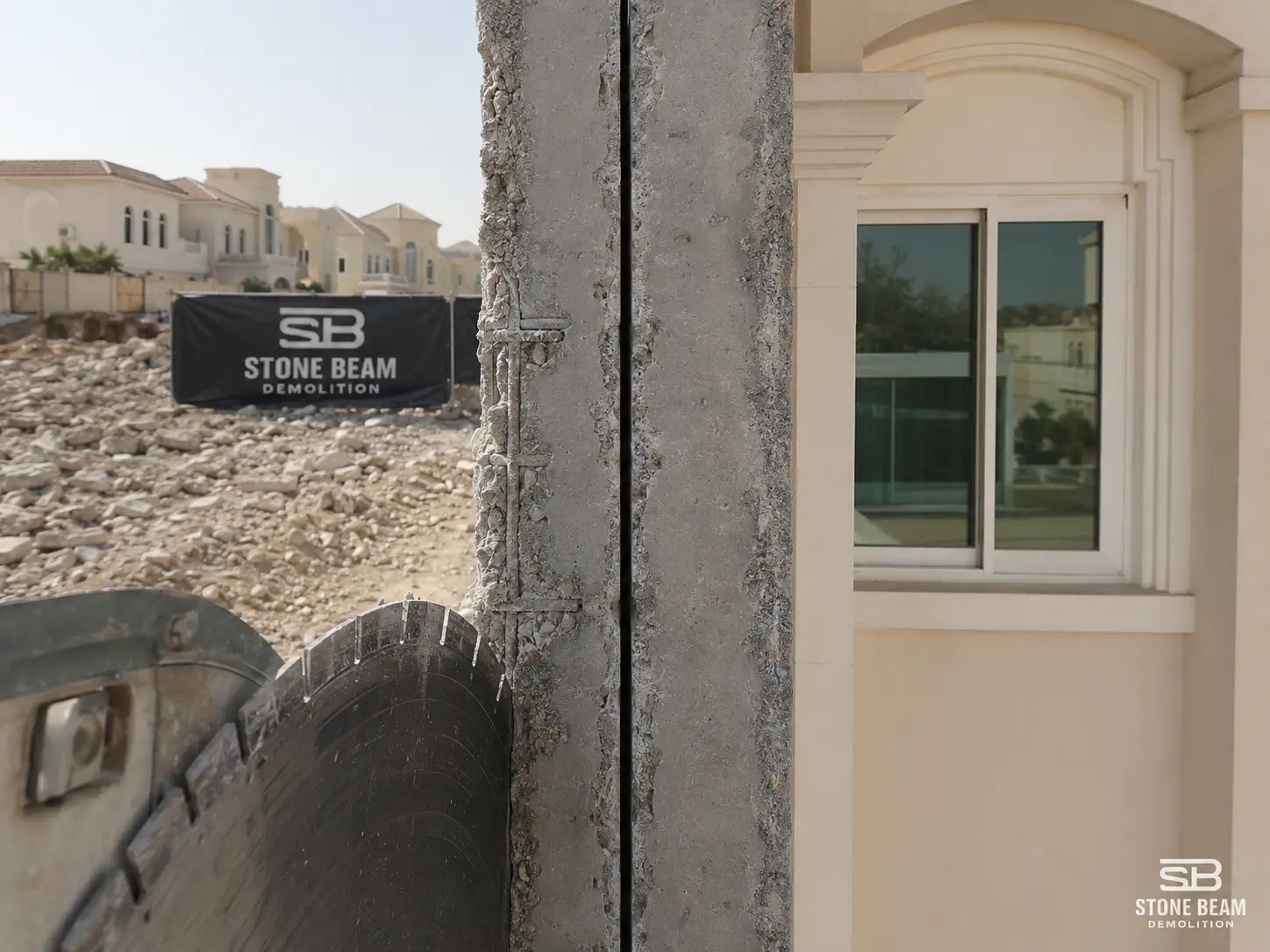
Stone Beam supports these requirements through specialized concrete cutting and core drilling solutions.
These services allow project teams to:
Create structural openings
Remove concrete sections
Access embedded services
Modify existing structures
Support redevelopment projects
When combined with concrete scanning technologies, precision cutting operations can be performed with greater accuracy and reduced risk.
Data-Driven Demolition Planning
At Stone Beam, technology is not used simply because it is available.
It is used because better information leads to better decisions.
Our engineering teams use data gathered from site investigations, structural assessments, scanning technologies, and project evaluations to develop demolition methodologies based on facts rather than assumptions.
This data-driven approach improves:
Safety performance
Project scheduling
Resource allocation
Risk management
Cost control
Operational efficiency
Ultimately, the goal is to provide clients with greater certainty and confidence throughout the demolition process.
The Future of Demolition Is Technology-Driven
The demolition industry continues to evolve as new technologies improve project planning, safety management, and operational performance.
Companies that rely solely on traditional demolition methods often face unnecessary risks and inefficiencies.
By embracing modern scanning systems, advanced investigation technologies, precision demolition techniques, and engineering-led planning methodologies, Stone Beam delivers demolition solutions that meet the demands of today’s increasingly complex construction environment.
Our commitment to innovation allows us to execute projects with greater accuracy, better safety outcomes, and improved project reliability, making us a trusted technology-driven demolition contractor for projects across Dubai and the UAE.
Concrete Cutting & Structural Modification Solutions
Modern demolition projects rarely involve the complete removal of structures from the very beginning.
In many cases, buildings require structural modifications, selective removals, controlled dismantling, utility access creation, or partial demolition activities before major demolition operations can begin.
These situations require a high level of precision and engineering control that cannot be achieved through conventional demolition methods alone.
At Stone Beam, we provide specialized concrete cutting and structural modification solutions that support demolition, redevelopment, renovation, and construction projects throughout Dubai and the UAE.
By combining advanced cutting technologies, structural expertise, and engineering-led planning, we help clients safely modify existing structures while maintaining control over project risks and structural integrity.
The Role of Concrete Cutting in Modern Demolition
Concrete cutting plays a critical role in many demolition projects.
Before structures can be removed safely, engineers often need to isolate specific structural sections, create controlled separation points, establish access openings, or remove designated concrete elements.
Without precision cutting solutions, demolition activities can create unnecessary stress on structural systems and increase project risks.
For this reason, concrete cutting is frequently incorporated into demolition planning to support controlled and predictable structure removal.
Our teams utilize specialized cutting techniques to help facilitate:
- Selective demolition projects
- Structural alterations
- Building modifications
- Controlled dismantling operations
- Redevelopment projects
- Infrastructure upgrades
- Industrial facility modifications
This precision-based approach provides greater control over demolition activities while reducing the potential for unintended structural damage.
Supporting Structural Modification Projects
Not every project requires complete demolition.
Many clients need to modify existing structures to accommodate redevelopment plans, building expansions, infrastructure upgrades, or operational improvements.
Structural modification projects often involve:
- Creating new openings
- Removing structural sections
- Expanding access points
- Modifying floor layouts
- Altering load-bearing systems
- Supporting refurbishment projects
These activities require careful engineering review before work begins.
Our teams evaluate structural conditions, reinforcement layouts, load paths, and project objectives to ensure modifications can be completed safely and effectively.
This planning-first methodology allows us to support redevelopment goals while maintaining structural stability throughout the modification process.
Precision Through Advanced Concrete Cutting Techniques
Every structure presents unique challenges.
Factors such as reinforcement density, structural thickness, accessibility constraints, and project requirements influence the cutting methodology selected.
Our specialists utilize modern cutting technologies designed to provide accurate and efficient results while minimizing disruption to surrounding areas.
Benefits of precision concrete cutting include:
- Improved accuracy
- Reduced vibration
- Cleaner structural separation
- Better control of demolition sequencing
- Reduced risk to adjacent structures
- Enhanced project efficiency
These advantages make precision cutting an essential component of many modern demolition and construction projects.
Core Drilling Solutions for Demolition & Construction Projects
Core drilling is another important service frequently used during demolition preparation and structural modification projects.
Core drilling creates precise circular openings through concrete and other structural materials, allowing project teams to install services, access utilities, perform investigations, and support redevelopment activities.
Typical applications include:
- Mechanical system installations
- Electrical service routing
- Plumbing access
- Utility investigations
- Structural testing
- Infrastructure upgrades
When combined with advanced scanning technologies, core drilling operations can be completed with exceptional accuracy and minimal risk.
The Importance of Concrete Scanning Before Cutting
One of the most critical steps before any cutting or drilling activity is understanding what exists within the structure.
Hidden reinforcement bars, post-tension cables, electrical conduits, and embedded utilities can create significant risks if not properly identified beforehand.
For this reason, Stone Beam integrates concrete scanning and structural investigation services into many cutting and drilling projects.
This allows our teams to identify:
- Reinforcement locations
- Post-tension systems
- Embedded utilities
- Structural components
- Hidden obstructions
Accurate information leads to safer operations, better planning, and reduced project risk.
Controlled Structural Removal During Demolition
In many demolition projects, entire structures cannot be removed at once.
Certain structural elements must be isolated and dismantled in a specific sequence to maintain stability and protect surrounding assets.
Concrete cutting technologies play an essential role in this process by allowing engineers to separate structural sections with precision.
This capability supports:
- Controlled demolition projects
- Partial demolition works
- Structural dismantling
- Building redevelopment
- Infrastructure modifications
By creating predetermined separation points, demolition activities can proceed more safely and efficiently.
Supporting Redevelopment & Renovation Projects
Dubai’s rapidly evolving construction market has increased demand for redevelopment and renovation services.
Many property owners choose to upgrade existing structures rather than construct entirely new facilities.
These projects often require a combination of:
- Selective demolition
- Structural modifications
- Concrete cutting
- Core drilling
- Utility alterations
Stone Beam supports these objectives by providing integrated solutions that bridge the gap between demolition and construction activities.
Our ability to coordinate engineering assessments, structural investigations, cutting operations, demolition works, and site preparation services creates a streamlined project experience for clients.
Engineering Precision for Complex Projects
The success of any structural modification or demolition project depends on precision.
Poor planning, inaccurate cutting, or incomplete structural information can create safety risks, delays, and unnecessary costs.
At Stone Beam, every cutting and modification project is supported by engineering expertise, advanced technology, and disciplined execution procedures.
By combining structural knowledge with modern cutting solutions, we help clients safely modify, dismantle, and redevelop structures with confidence.
Whether supporting a controlled demolition operation, a major redevelopment project, or a complex structural alteration, our teams provide the precision, experience, and technical capabilities required to achieve successful project outcomes throughout Dubai and the UAE.
Controlled Demolition vs Conventional Demolition
Not all demolition projects are the same.
One of the most important decisions during the planning phase is selecting the appropriate demolition methodology. The demolition technique used can significantly impact project safety, efficiency, cost, environmental impact, and overall project success.
At Stone Beam, we understand that every structure presents unique challenges. Factors such as building height, structural complexity, surrounding properties, accessibility, utility networks, environmental considerations, and redevelopment objectives all influence the demolition strategy that should be selected.
For this reason, our engineering team carefully evaluates each project before recommending the most suitable demolition approach.
The three primary methodologies commonly used across modern demolition projects include:
- Conventional Demolition
- Controlled Demolition
- Robotic Demolition
Each method serves a different purpose and provides unique advantages depending on project requirements.
Conventional Demolition
Conventional demolition remains one of the most widely used demolition methods throughout the construction industry.
This approach typically utilizes heavy machinery and specialized demolition equipment to remove structures in a safe and efficient manner.
Conventional demolition is often the preferred solution when:
- The structure is isolated from neighboring properties.
- Site access is sufficient for large equipment.
- Project timelines require efficient structure removal.
- Environmental and operational risks are manageable.
- Structural complexity is relatively low.
Because conventional demolition allows for rapid structure removal, it is often selected for:
- Villa demolition projects
- Warehouse demolition
- Industrial buildings
- Commercial structures
- Site redevelopment projects
When properly planned and managed, conventional demolition provides an effective balance between speed, safety, and cost efficiency.
However, conventional demolition may not always be appropriate for projects located in highly sensitive environments or areas with limited access.
Controlled Demolition
Controlled demolition is a highly specialized methodology designed for projects where precision, sequencing, and risk management are critical.
Unlike conventional demolition, controlled demolition focuses on carefully removing structural components according to a predetermined engineering plan.
Every stage of the demolition process is managed in a specific sequence to ensure stability and minimize impacts on surrounding assets.
Controlled demolition is commonly required when:
- Structures are located near neighboring buildings.
- Critical infrastructure must remain operational.
- Portions of a structure must be preserved.
- Structural modifications are required.
- Public safety concerns are significant.
- Access limitations restrict conventional methods.
Controlled demolition often involves:
- Structural separation techniques
- Precision cutting operations
- Sequential dismantling
- Partial demolition works
- Specialized engineering controls
The primary objective is to maximize control while minimizing risk.
This approach is frequently used in dense urban environments throughout Dubai where protecting surrounding structures is essential.
Benefits of Controlled Demolition
Controlled demolition provides several important advantages:
Increased Safety
By carefully planning each stage of structure removal, potential hazards can be significantly reduced.
Reduced Structural Risk
Controlled sequencing helps maintain structural stability throughout the demolition process.
Protection of Adjacent Assets
Nearby buildings, roads, utilities, and infrastructure can be better protected through precise demolition planning.
Improved Project Accuracy
Engineering oversight allows demolition activities to be executed according to clearly defined objectives.
Greater Flexibility
Controlled demolition supports selective removals, structural alterations, redevelopment projects, and renovation works.
For projects involving complex structural conditions, controlled demolition often delivers superior outcomes compared to conventional demolition methods.
Robotic Demolition
As demolition technology continues to evolve, robotic demolition has emerged as one of the most advanced solutions available within the industry.
Robotic demolition utilizes remotely operated machines capable of performing demolition activities within environments that may be difficult, hazardous, or inaccessible for conventional equipment.
These machines provide exceptional precision while reducing worker exposure to risk.
Robotic demolition is frequently used for:
- Interior demolition projects
- Industrial facilities
- Confined spaces
- Hazardous environments
- Structural modification works
- High-precision demolition operations
Because robotic systems are compact and highly maneuverable, they can operate in locations where larger equipment cannot safely access.
When Robotic Demolition Is the Best Option
Certain project conditions make robotic demolition particularly valuable.
These may include:
- Restricted access areas
- Operational facilities
- Sensitive structural environments
- Elevated work zones
- Safety-critical projects
- Precision removal requirements
By combining robotic technology with engineering-led planning, demolition activities can be completed with greater control and reduced operational risk.
Choosing the Right Demolition Method
Selecting the correct demolition methodology is one of the most important factors influencing project success.
A demolition strategy that works effectively for a warehouse may not be suitable for a high-rise structure. Similarly, a redevelopment project located within a busy urban district may require a completely different approach than an isolated industrial facility.
At Stone Beam, our engineers evaluate:
- Structural conditions
- Site constraints
- Project objectives
- Safety requirements
- Environmental considerations
- Accessibility challenges
- Regulatory requirements
before determining the most effective demolition solution.
This assessment ensures that every project benefits from a demolition methodology specifically tailored to its unique requirements.
Engineering Expertise Behind Every Decision
The difference between a successful demolition project and a problematic one often comes down to planning.
Rather than relying on assumptions, Stone Beam uses engineering analysis, site investigations, advanced technology, risk assessments, and operational expertise to determine the most appropriate demolition strategy for every project.
Whether a project requires conventional demolition, controlled dismantling, robotic demolition, or a combination of multiple techniques, our goal remains the same:
Deliver safe, efficient, and professionally managed demolition solutions that support successful redevelopment, construction, and infrastructure projects throughout Dubai and the UAE.
Industrial Demolition & Decommissioning Services
Industrial demolition projects are among the most complex operations within the demolition industry.
Unlike conventional building demolition, industrial facilities often contain heavy machinery, process equipment, steel structures, underground utilities, hazardous materials, operational systems, and critical infrastructure that require specialized planning and execution.
At Stone Beam, we provide comprehensive industrial demolition and decommissioning services throughout Dubai and the UAE, helping facility owners, developers, industrial operators, and project stakeholders safely prepare sites for redevelopment, modernization, expansion, or complete facility closure.
Our engineering-led approach allows us to manage complex industrial projects while maintaining the highest standards of safety, environmental responsibility, and operational efficiency.
Understanding Industrial Demolition
Industrial demolition involves much more than removing buildings.
Many facilities have been operating for decades and contain interconnected systems that must be carefully assessed before demolition activities begin.
Industrial demolition projects may include:
- Manufacturing facilities
- Processing plants
- Warehouses
- Logistics centers
- Production facilities
- Industrial compounds
- Utility infrastructure
- Mechanical installations
- Steel-framed structures
Each facility presents unique operational and engineering challenges that require project-specific planning and demolition methodologies.
This is why industrial demolition demands a higher level of expertise than traditional demolition projects.
Engineering Assessment Before Industrial Demolition
Before any demolition activities begin, our engineers conduct a comprehensive facility assessment.
The objective is to fully understand the existing infrastructure and identify any risks that could affect demolition operations.
Our evaluation process includes:
- Structural analysis
- Utility investigations
- Equipment assessments
- Access evaluations
- Environmental reviews
- Hazard identification
- Material assessments
- Site logistics planning
This information allows our team to develop a safe and efficient demolition strategy while minimizing project uncertainty.
Industrial Facility Decommissioning
In many cases, facilities must be decommissioned before demolition can begin.
Decommissioning involves the controlled shutdown, isolation, and removal of operational systems, equipment, utilities, and infrastructure.
This phase is critical because many industrial facilities contain systems that could create safety, environmental, or operational risks if not properly managed.
Our decommissioning services may include:
- Equipment shutdown
- Utility isolation
- Mechanical system removal
- Process line dismantling
- Asset recovery
- Material segregation
- Site preparation
Proper decommissioning helps ensure demolition activities can proceed safely and efficiently.
Plant Dismantling & Equipment Removal
Many industrial projects require selective dismantling rather than immediate building demolition.
Industrial facilities often contain valuable equipment, machinery, structural components, and assets that must be carefully removed before demolition begins.
Our teams provide systematic dismantling solutions that support:
- Machinery removal
- Production line dismantling
- Equipment relocation
- Structural separation
- Asset recovery programs
Through careful planning and sequencing, we help maximize recovery opportunities while maintaining project safety.
Steel Structure Dismantling
Steel-framed facilities require specialized demolition techniques.
Unlike conventional concrete structures, steel systems often rely on interconnected load paths that must be carefully managed during dismantling operations.
Our engineers evaluate:
- Structural connections
- Load distribution
- Stability requirements
- Dismantling sequences
- Equipment access
This allows us to safely remove structural steel components while maintaining control throughout the demolition process.
Steel structure dismantling is commonly required for:
- Warehouses
- Industrial plants
- Manufacturing facilities
- Storage facilities
- Processing plants
- Large-scale industrial compounds
Demolition of Active Industrial Sites
Some projects occur within facilities that remain partially operational.
These environments require exceptional coordination and planning to ensure demolition activities do not interfere with ongoing operations.
Our teams work closely with facility management, project stakeholders, and operational personnel to develop demolition strategies that minimize disruption while maintaining safety and productivity.
This capability is particularly valuable for phased redevelopment and facility expansion projects.
Environmental Management During Industrial Demolition
Industrial demolition projects often generate significant quantities of materials and waste.
Responsible environmental management is essential for maintaining compliance and reducing environmental impact.
Stone Beam incorporates sustainable practices throughout industrial demolition operations, including:
- Material segregation
- Steel recovery
- Concrete recycling
- Waste transportation
- Environmental monitoring
- Responsible disposal procedures
These initiatives help support sustainability objectives while reducing landfill waste.
Risk Management for Industrial Projects
Industrial environments present unique risks that require careful planning and continuous monitoring.
Potential challenges may include:
- Complex structural systems
- Heavy equipment operations
- Confined spaces
- Utility networks
- Elevated work areas
- Hazardous materials
- Environmental concerns
Our engineering and safety teams implement comprehensive risk management procedures designed to address these challenges before demolition activities begin.
This proactive approach helps improve safety, reduce project interruptions, and support successful project outcomes.
Preparing Industrial Sites for Redevelopment
The ultimate goal of most industrial demolition projects is to prepare the site for future use.
Whether the project involves redevelopment, expansion, modernization, infrastructure upgrades, or complete site transformation, our team focuses on delivering a clean, safe, and development-ready site.
Following demolition and decommissioning activities, we perform:
- Site clearance
- Debris removal
- Material recovery
- Ground preparation coordination
- Final project inspections
This enables clients to move efficiently into the next phase of development with confidence.
Trusted Industrial Demolition Partner in Dubai
Industrial demolition projects require a contractor capable of combining engineering expertise, technical planning, advanced equipment, safety management, and environmental responsibility.
Stone Beam provides the experience, resources, and operational capabilities necessary to successfully deliver industrial demolition and decommissioning projects across Dubai and the UAE.
From facility shutdown and equipment removal to structural dismantling and complete site clearance, our team delivers reliable solutions designed to support safe, efficient, and successful project execution from start to finish.
Case Studies & Project Experience
Successful demolition projects are measured by more than structure removal. They are measured by safety performance, project efficiency, engineering precision, environmental responsibility, and the ability to deliver results under challenging conditions.
At Stone Beam, our project experience spans residential, commercial, industrial, and infrastructure sectors throughout Dubai and the UAE. Over the years, we have supported developers, contractors, consultants, industrial operators, and property owners with demolition solutions tailored to a wide variety of project requirements.
Each project presents unique structural, operational, and environmental challenges. Our ability to assess these challenges and develop customized demolition strategies has enabled us to successfully execute projects ranging from residential villa demolitions to complex industrial decommissioning operations.
The following examples demonstrate how our engineering-led approach helps clients achieve safe and efficient project outcomes.
Residential Villa Demolition Project
Project Objective
A property owner planned a complete redevelopment of an existing villa located within an established residential community in Dubai.
The objective was to safely remove the existing structure while protecting neighboring properties, underground services, road infrastructure, and surrounding landscaping elements.
Project Challenges
The project presented several challenges, including:
- Limited working space
- Proximity to neighboring villas
- Existing utility networks
- Community access requirements
- Strict safety expectations
Our Solution
Our engineering team conducted a detailed site assessment before developing a controlled demolition strategy.
The project included:
- Utility investigation
- Site preparation
- Risk assessment
- Controlled demolition sequencing
- Waste segregation
- Complete site clearance
Result
The villa was safely demolished with minimal disruption to neighboring properties, allowing redevelopment activities to begin on schedule.
Commercial Building Demolition Project
Project Objective
A commercial property owner required the removal of an aging building to facilitate a new development project.
The site was located within a busy urban environment requiring careful planning to minimize impacts on surrounding businesses and infrastructure.
Project Challenges
Key considerations included:
- Urban location
- Pedestrian safety
- Utility coordination
- Traffic management
- Environmental controls
Our Solution
Stone Beam developed a project-specific demolition methodology that incorporated:
- Structural assessment
- Controlled demolition planning
- Dust suppression measures
- Waste management procedures
- Continuous site monitoring
Result
The structure was removed safely and efficiently while maintaining project timelines and protecting surrounding assets.
Industrial Facility Decommissioning Project
Project Objective
An industrial operator required the shutdown, dismantling, and demolition of an existing facility as part of a redevelopment initiative.
The facility contained equipment, steel structures, utility systems, and operational infrastructure requiring careful management before demolition could begin.
Project Challenges
The project involved:
- Equipment removal
- Utility isolation
- Structural dismantling
- Material recovery
- Environmental management
Our Solution
Our teams implemented a phased decommissioning strategy that included:
- Facility assessment
- Asset recovery planning
- Utility disconnection
- Equipment dismantling
- Structural demolition
- Site clearance
Result
The project was completed safely while maximizing material recovery and preparing the site for future development.
Steel Structure Dismantling Project
Project Objective
A large steel-framed facility required dismantling as part of a modernization program.
The project demanded a carefully engineered approach to ensure safe removal of structural components.
Project Challenges
Key challenges included:
- Structural stability management
- Heavy lifting operations
- Material handling
- Limited access areas
Our Solution
Stone Beam developed a detailed dismantling sequence supported by engineering analysis and specialized equipment.
The project involved:
- Structural assessment
- Controlled dismantling procedures
- Material segregation
- Recovery operations
Result
The steel structure was successfully dismantled while maintaining safety and operational control throughout the project.
Controlled Demolition in a Sensitive Environment
Project Objective
A redevelopment project required partial demolition of an existing structure while preserving designated sections that would remain part of the future development.
Project Challenges
The project required:
- High precision
- Structural protection
- Controlled sequencing
- Continuous monitoring
Our Solution
Our engineering team implemented a controlled demolition methodology incorporating:
- Structural investigations
- Precision cutting
- Controlled dismantling
- Continuous supervision
Result
The required sections were removed successfully while preserving the remaining structure exactly as planned.
What Our Project Experience Means for Clients
Every demolition project presents unique challenges, but successful outcomes consistently depend on the same principles:
- Thorough planning
- Engineering expertise
- Safety management
- Technology integration
- Skilled personnel
- Environmental responsibility
- Effective project execution
Our experience across multiple sectors enables us to identify potential risks early, develop effective mitigation strategies, and deliver demolition solutions tailored to each client’s specific needs.
Whether the project involves a residential villa, commercial development, industrial facility, bridge structure, warehouse, or complex redevelopment site, Stone Beam provides the expertise and operational capability required to deliver safe and successful results.
Building Long-Term Client Confidence
Clients choose Stone Beam because they need more than a demolition contractor.
They need a trusted project partner capable of managing risk, protecting assets, maintaining compliance, and delivering results.
Our project experience reflects a commitment to professional execution, continuous improvement, and engineering-led decision-making that supports successful demolition outcomes across Dubai and the UAE.
This commitment continues to drive every project we undertake, regardless of size, complexity, or sector.
Frequently Asked Questions About Demolition Services in Dubai
How much does demolition cost in Dubai?
The cost of demolition services in Dubai depends on several factors, including the size of the structure, demolition method, accessibility, site conditions, waste removal requirements, project complexity, and timeline. Every project is unique, which is why professional site assessments are essential before determining project costs.
Do I need a demolition permit in Dubai?
Most demolition projects require approvals and permits before work can begin. Requirements may vary depending on the project type, location, and structure involved. Proper planning and coordination help ensure compliance throughout the demolition process.
How long does a demolition project take?
Project duration varies according to building size, demolition methodology, permit approvals, structural complexity, waste removal requirements, and site conditions. Smaller residential projects may be completed relatively quickly, while large commercial or industrial projects often require more extensive planning and execution.
What is the difference between demolition and dismantling?
Demolition typically refers to the removal of an entire structure, while dismantling involves carefully removing specific structural elements, equipment, or building components in a controlled sequence. Dismantling is often used when materials must be preserved, recovered, or relocated.
What is controlled demolition?
Controlled demolition is a specialized demolition technique used when structures must be removed according to a carefully engineered sequence. This method is commonly used in urban environments, redevelopment projects, and situations where neighboring properties or infrastructure require additional protection.
What is conventional demolition?
Conventional demolition utilizes heavy equipment and mechanical methods to remove structures efficiently. It is often used when site conditions allow safe access, and there are fewer constraints associated with surrounding properties or infrastructure.
What is robotic demolition?
Robotic demolition uses remotely operated demolition machines capable of performing precision demolition work in confined spaces, hazardous environments, and structurally sensitive locations. These systems improve safety while maintaining high levels of control and accuracy.
Can only part of a building be demolished?
Yes. Partial demolition and selective demolition services allow specific sections of a structure to be removed while preserving other areas. This approach is commonly used for redevelopment, renovation, and structural modification projects.
Is demolition dangerous?
Demolition involves operational risks if not properly managed. Professional demolition contractors utilize engineering assessments, safety planning, risk management procedures, and continuous monitoring to ensure safe project execution.
What happens before demolition begins?
Before demolition starts, project teams typically perform site assessments, engineering evaluations, utility investigations, risk assessments, permit coordination, safety planning, and site preparation activities.
Why is engineering important in demolition projects?
Engineering plays a critical role in understanding structural behavior, identifying risks, developing demolition methodologies, and ensuring safe project execution. An engineering-led approach helps reduce uncertainty and improve project outcomes.
What is GPR scanning?
Ground Penetrating Radar (GPR) scanning is a non-destructive technology used to identify hidden utilities, reinforcement bars, post-tension cables, underground services, and structural elements before demolition, cutting, or drilling activities begin.
Why is concrete scanning important before demolition?
Concrete scanning helps identify embedded utilities and structural components that may not be visible from the surface. This information improves planning accuracy and reduces risks during demolition and structural modification activities.
Can demolition damage neighboring properties?
Without proper planning, demolition can potentially affect nearby structures. Professional demolition contractors implement engineering controls, monitoring procedures, protective measures, and controlled demolition techniques to minimize risk.
What equipment is used during demolition projects?
Demolition projects may utilize excavators, hydraulic breakers, crushers, demolition robots, concrete cutting systems, lifting equipment, core drilling systems, and specialized attachments depending on project requirements.
What is industrial demolition?
Industrial demolition involves the removal of factories, warehouses, production facilities, plants, and industrial infrastructure. These projects often require decommissioning, equipment removal, structural dismantling, and environmental management.
What is decommissioning?
Decommissioning is the process of shutting down, isolating, and removing equipment, utilities, and operational systems before demolition begins. It is commonly required for industrial and manufacturing facilities.
What is steel structure dismantling?
Steel structure dismantling involves the controlled removal of steel-framed buildings and structural components. These projects require detailed engineering analysis and carefully planned dismantling sequences.
Do demolition companies provide site clearance?
Yes. Professional demolition contractors typically provide debris removal, waste segregation, recycling coordination, and complete site clearance services following demolition activities.
What happens to demolition waste?
Materials generated during demolition are often sorted according to their recovery potential. Concrete, steel, metals, and other recyclable materials may be processed separately before transportation and disposal.
Can concrete be recycled after demolition?
Yes. Concrete is one of the most commonly recycled materials generated during demolition projects and can often be reused in future construction and infrastructure applications.
How do demolition contractors manage environmental impacts?
Environmental management may include dust suppression, waste segregation, recycling initiatives, vibration monitoring, noise management, and responsible disposal procedures.
Do demolition projects require utility disconnections?
In many cases, utility services must be identified, isolated, disconnected, or protected before demolition begins. Proper utility coordination helps improve project safety and reduce operational risks.
What industries require demolition services?
Demolition services are commonly used within residential construction, commercial development, industrial operations, infrastructure projects, government developments, and urban redevelopment initiatives.
How do I choose the right demolition contractor in Dubai?
When selecting a demolition contractor, consider factors such as engineering expertise, project experience, safety performance, equipment capabilities, environmental responsibility, regulatory compliance, and the ability to manage projects of similar complexity.
Why choose Stone Beam for demolition projects?
Stone Beam combines engineering expertise, advanced demolition technologies, strict safety standards, environmental responsibility, and comprehensive project management capabilities to deliver professional demolition solutions across Dubai and the UAE.
Do you provide demolition services outside Dubai?
Yes. Stone Beam provides demolition, dismantling, decommissioning, concrete cutting, scanning, excavation, and site preparation services across Dubai, Abu Dhabi, Sharjah, Ajman, Ras Al Khaimah, Fujairah, and Umm Al Quwain.
Can Stone Beam support large-scale redevelopment projects?
Absolutely. Our team has the engineering expertise, equipment resources, and project management capabilities required to support complex redevelopment, infrastructure, industrial, and commercial demolition projects throughout the UAE.
What is the final stage of a demolition project?
The final stage typically involves debris removal, waste management, recycling coordination, site clearance, final inspections, and preparation of the site for future construction or redevelopment activities.
Contact Dubai’s Trusted Demolition Company
Every successful demolition project starts with the right planning, the right expertise, and the right contractor.
Whether you are preparing for a residential redevelopment, commercial property upgrade, industrial facility closure, infrastructure improvement, or large-scale construction project, choosing an experienced demolition partner can significantly impact project safety, efficiency, timelines, and overall success.
At Stone Beam, we provide more than demolition services, we provide complete project support from initial consultation through final site handover.
Our engineering-led approach ensures every project benefits from:
- Comprehensive site assessments
- Professional engineering analysis
- Advanced demolition methodologies
- Strict safety management
- Regulatory compliance support
- Environmental responsibility
- Efficient project execution
No two demolition projects are identical.
Every structure presents unique challenges that require careful evaluation and customized planning. Our team takes the time to understand project objectives, site conditions, operational constraints, and redevelopment requirements before recommending the most appropriate solution.
Whether your project requires:
- Building Demolition
- Villa Demolition
- Controlled Demolition
- Industrial Demolition
- Facility Decommissioning
- Steel Structure Dismantling
- Concrete Cutting
- Core Drilling
- GPR Scanning
- Site Clearance
Stone Beam has the experience, equipment, and technical expertise required to deliver safe and successful outcomes.
Speak With Our Demolition Specialists
Our team is ready to discuss your project requirements, answer technical questions, evaluate site conditions, and recommend the most effective demolition strategy for your development.
Contact Stone Beam today to schedule a consultation and discover why developers, contractors, consultants, facility owners, and project managers across the UAE trust us for professional demolition services.
Let’s Build the Next Stage of Your Project Together
Safe Planning.
Controlled Execution.
Engineering Excellence.
Professional Demolition Solutions Across Dubai and the UAE.