Concrete Scanning Dubai
An Interpretation Service, Not Permission to Cut
Concrete scanning in Dubai is a non-destructive GPR investigation locating and mapping likely embedded features before cutting, coring, drilling, or anchoring begins.
GPR · Rebar location · Investigation





















Overview
Detection and interpretation, not execution
GPR sends electromagnetic pulses into concrete and records reflected energy from interfaces and embedded objects. The radar data is interpreted to estimate the likely location, depth, and orientation, not to confirm identity with certainty.
A radar return is never automatically labelled "rebar," "live cable," "PT tendon," or "water pipe"; the likely object type is inferred from its response, geometry, continuity, depth, and relationship to available records. Results are strongest when radar patterns are correlated with structural drawings, PT shop drawings, MEP as-builts, visible entry/exit points, and scans in two perpendicular directions.
Ownership rule
Scanning owns the investigation intent. Cutting and drilling are separate execution activities carried out only once the release gate is passed — the two are never treated as one continuous step.
Request a demolition quote
Use this form layout on the live page to qualify leads before a call.
Used to support a specific decision, not every task by default
Scanning is risk-based and selected where concealed reinforcement, tendons, or services materially affect the proposed work.
Reduces uncertainty on the proposed line or hole before the blade or bit is committed.
Locates likely reinforcement and services along the fixing route.
Supports proposed opening layout ahead of structural review.
Flags likely conduits and service routes before penetration.
Maps likely tendon bands as one input to a decision the engineer still makes.
Local verification where records are missing, outdated or unreliable.
A credible contractor explains limitations before the scan
GPR does not independently prove: every concealed object has been detected · a marked area is structurally safe to cut · a cable or conduit is live or dead · the voltage, pressure or contents of a service · the force in a post-tension tendon or whether it may be cut · concrete strength, bond quality, crack activity or structural capacity · the exact position of objects beyond usable detection depth or hidden beneath dense reinforcement.
Confidence class
High confidence
Moderate confidence
Low confidence / congested
Not scanned / inaccessible
Six checks before the drill, saw or breaker starts
If any check is unresolved, the work stops at the investigation stage rather than transferring uncertainty to the operator.
Check
Scope & location
Scan limitations
Structural acceptance
PT / reinforcement status
MEP / service status
Worksite re-verification
Scope, element, and access, not a flat per-scan rate
Manufacturer data (Hilti PS 1000, planning reference only, verified per project) shows why depth and resolution are system-specific, not a universal capability.
Scope & quantity
Element & depth
Structural/service complexity
Access & surface
Deliverable level
Complementary investigation
Not a fixed rate
An itemised, project-specific quotation reflects the scope, element, deliverable level and any complementary verification required.
An engineered service, not equipment for hir
The method is selected after reviewing the structure, access, and risk, not chosen because it's the tool on the truck that day.
The method, sequence and controls are confirmed from the actual site condition before any machine or tool is mobilised.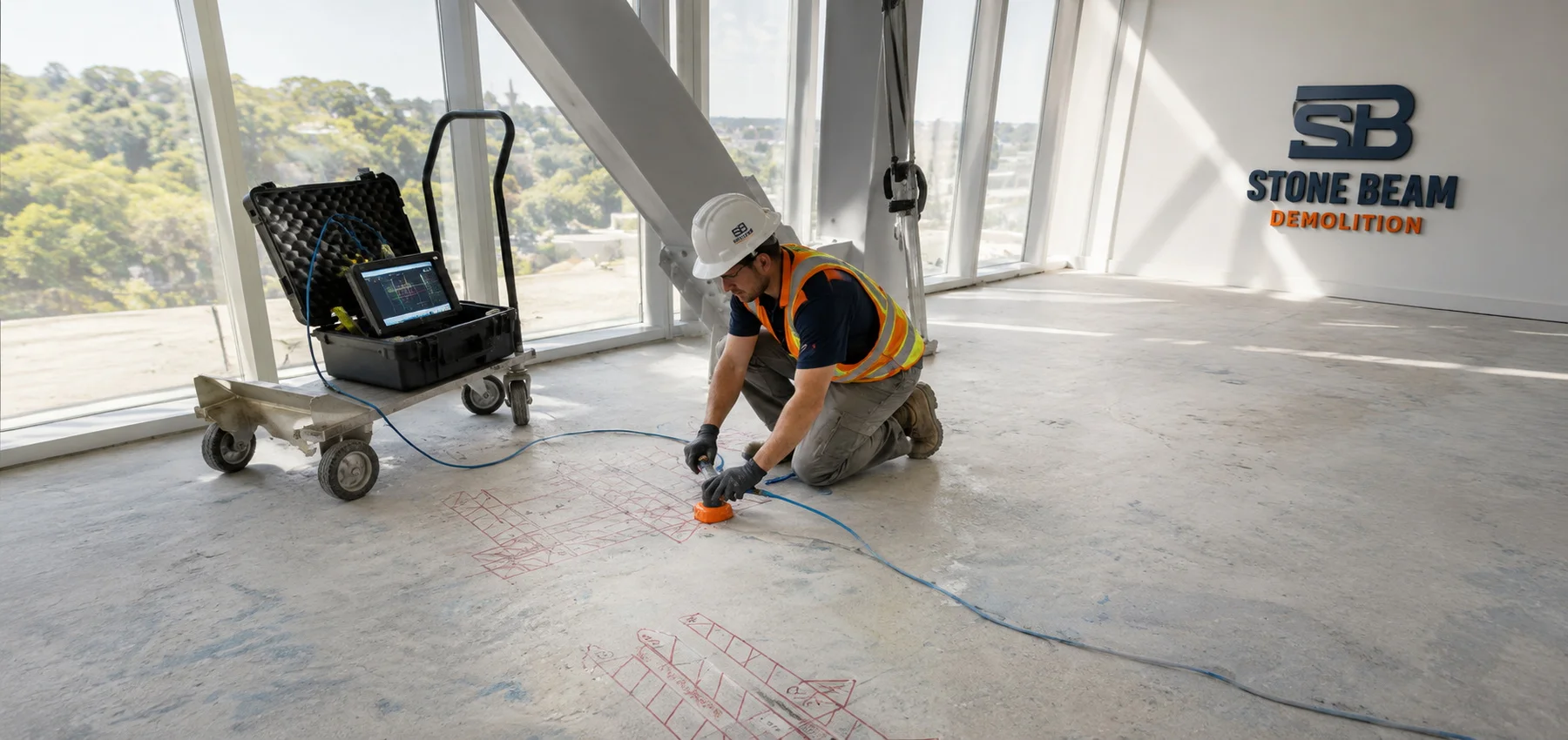
Cutting, scanning, temporary support, lifting and waste handling coordinated under one plan, not fragmented between separate contractors.
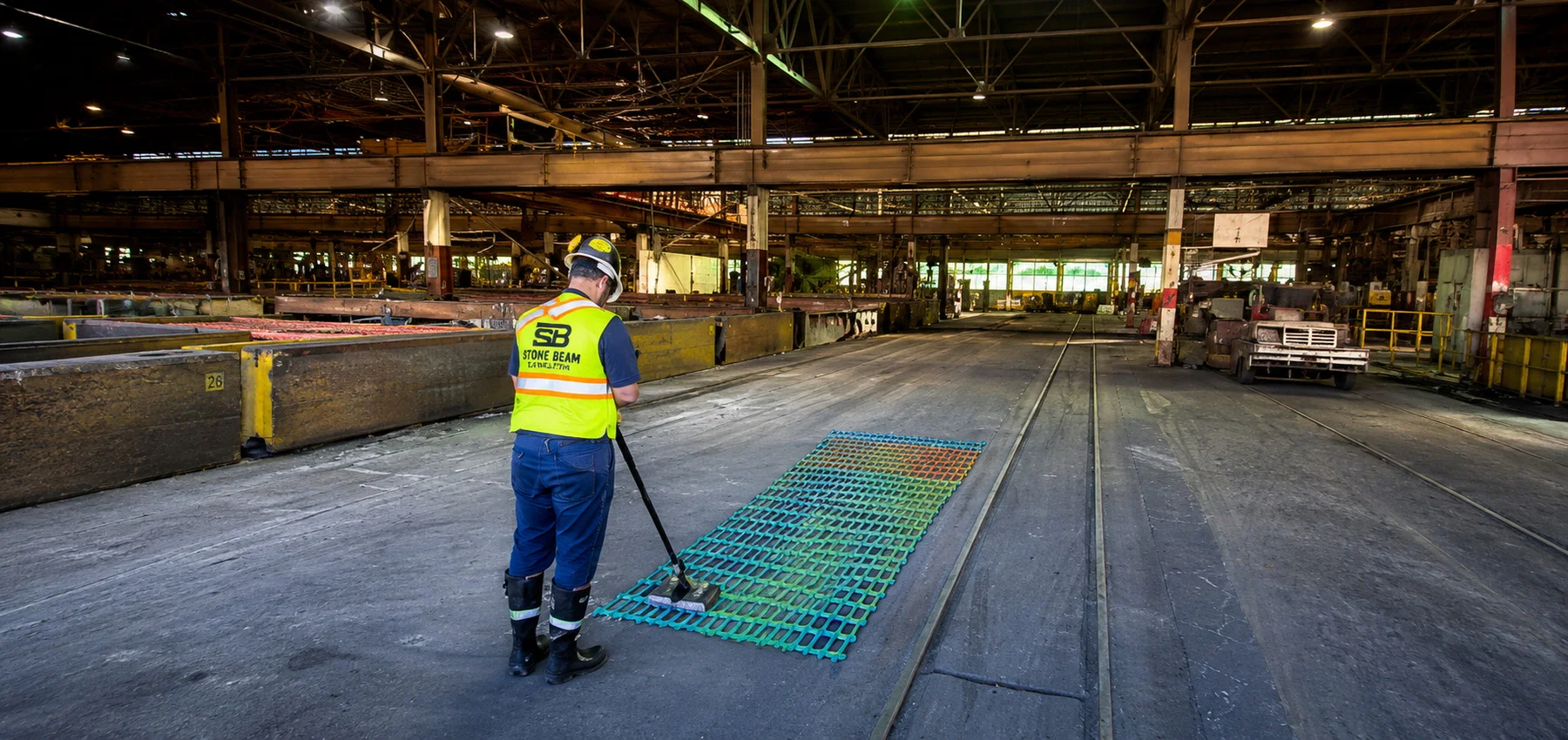
Scope, exclusions, assumptions and handover condition are stated in the quotation — not hidden inside a single lump-sum line.
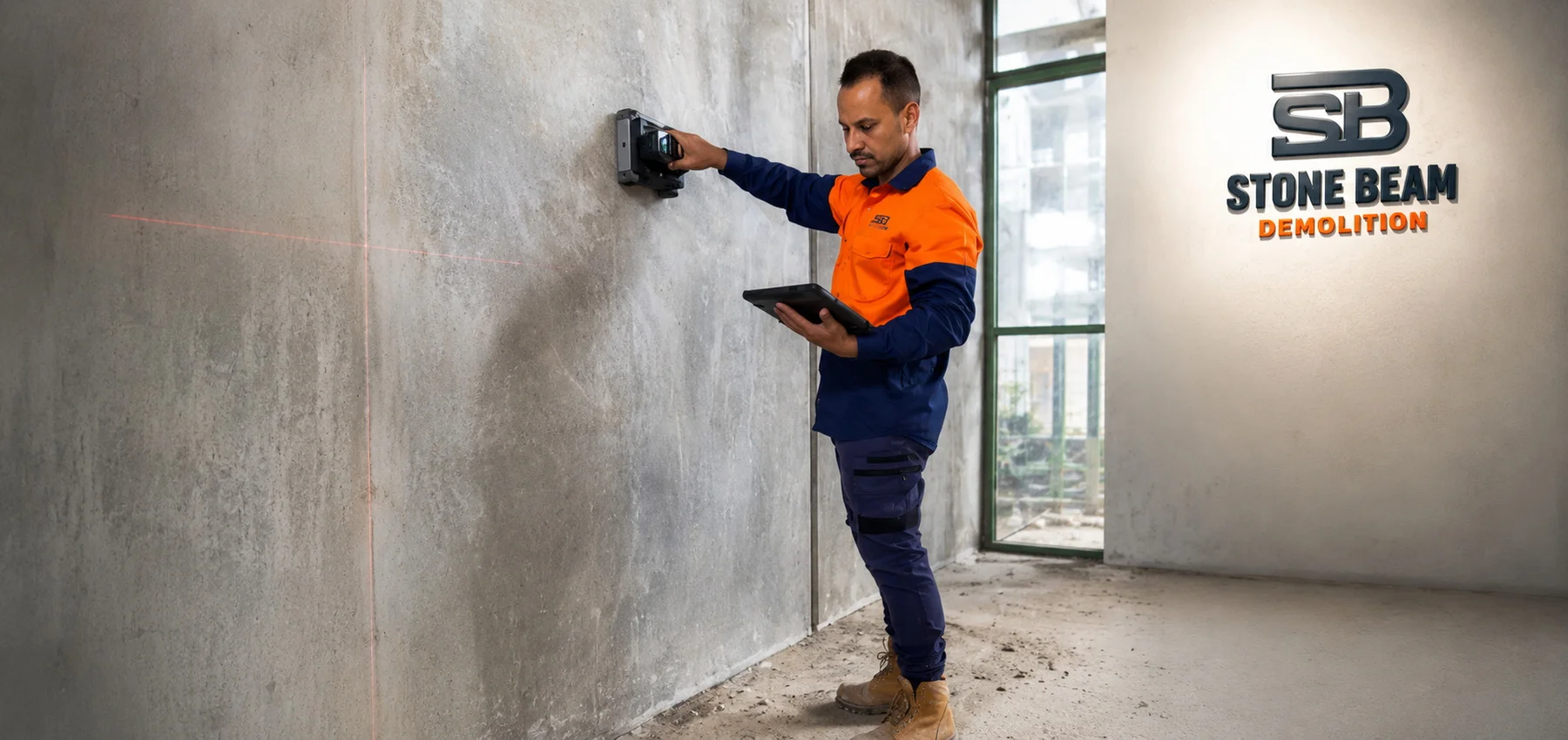
Equipment, certifications, and capability are stated only where current records support them, never a generic "we do everything" promise.
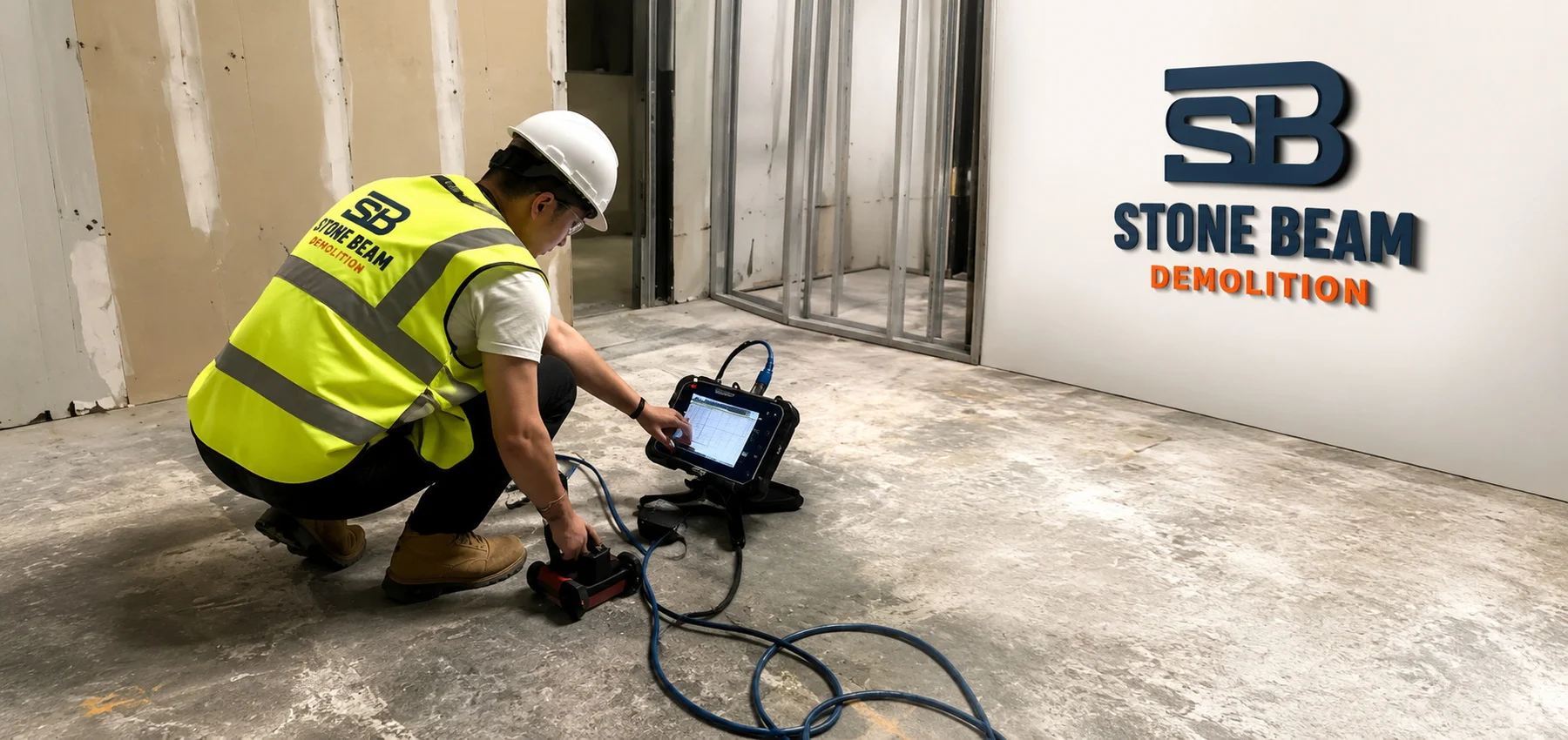
Common questions, answered straight
What contractors and consultants ask before they call.
Non-destructive investigation of a concrete element using GPR or complementary methods to locate and map likely embedded features before intrusive work.
It can indicate a likely tendon route from its radar response, but this never authorises cutting — tendon position, force and cutting acceptability stay with the responsible engineer.
No. GPR can show a likely conduit or service route, not its energised or isolation status — that confirmation comes from the responsible MEP party.
No. Accuracy depends on equipment, concrete condition, reinforcement density and access — findings are reported by confidence class, not as a guaranteed result.
No. A clear scan means no target was detected within the stated scan limitations — the proposed hole still needs to be structurally acceptable and address service status separately.
No. Scanning is risk-based, used where concealed reinforcement, tendons or services materially affect the proposed cut or hole.
GPR can sometimes indicate anomalous areas or possible voids — confirmation as a diagnosed defect needs other testing, local exposure or structural assessment.
It can often estimate thickness from the back-wall reflection, though results vary with concrete condition and access — not guaranteed in every case.
Still have questions?
