Tank demolition after readiness is proven, not assumed

Structural dismantling of storage tanks in Dubai — physical removal begins only after release, isolation, cleaning and atmosphere evidence are recorded by the responsible parties.

Steel · concrete · above & underground

Overview

"Remove the tank" is not a defined scope

It can describe anything from shell-only dismantling to a complete package including platforms, nozzles, bund walls, foundations, buried pipework, excavation and reinstatement.

A project-specific scope can include the shell, roof, bottom plates, internal framing, stairs, platforms, handrails, selected nozzles, supports and civil bases. The same phrase should never silently include operational shutdown, product transfer, specialist cleaning, degassing, atmospheric certification, contaminated-soil remediation or engineered backfill — those activities may be required, but their accountable party, competence and commercial basis must be identified separately.

Request a demolition quote

Use this form layout on the live page to qualify leads before a call.


    Two scopes, kept deliberately separate

    The demolition crew must not become the default owner of operational isolation, process cleaning or certification just because it performs the final cutting and lifting.

    Scope
    What it covers
    Who owns it
    Tank decommissioning
    Product transfer, draining, depressurisation, isolation, line blinding, disconnection, formal release
    Facility decommissioning plan
    Cleaning & atmosphere prep
    Residue removal, ventilation, degassing, atmospheric verification
    Named competent specialist
    Structural dismantling & removal
    Stability, cut sequence, temporary restraint, lifting, falling-object control, waste segregation
    Stone Beam — this page's scope

    Five risks in one work front

    A water tank, diesel tank, chemical tank and underground tank are not variations of one generic method statement.

    Draining a tank doesn't establish the internal atmosphere or surfaces are suitable for the next task — product history and SDS data are part of the input package.

    Entry avoided where work can be completed externally; where required, permit, testing, ventilation, attendant and rescue are all defined per task.

    Hot cutting is a method option, not a default — mechanical methods reduce one risk category but are never "spark-free."

    Removing rings, roof sectors or supports changes the shell's stiffness — sequence must control buckling and uncontrolled plate movement.

    Large roof sectors and shell plates can behave like sails once released — wind limits are part of the lift plan, not an afterthought.

    Smaller pieces reduce crane demand but add cutting time and exposed release points; larger pieces shorten cutting but raise crane radius and sail area.

    Seven tank classes, seven method focuses

    Pressurised vessels, LPG tanks and live process equipment don't fall under one standard storage-tank method.

    Tank type
    Typical issue
    Method focus
    Above-ground welded steel
    Plate stability, work at height, large-section handling
    Sequenced sectional dismantling with support/lifting
    Bolted / sectional steel
    Connection condition, panel weight, corrosion
    Controlled unbolting or mechanical separation
    Underground storage tank
    Excavation, utilities, groundwater, lifting
    Expose, verify readiness, lift or section, treat void
    Reinforced-concrete tank
    Thick walls/slabs, reinforcement, confined access
    Sawing, crushing or sectional lifting under sequence
    Water / fire-water tank
    Structural & confined-space risk, fewer hydrocarbon controls
    Structural demolition with entry/isolation controls
    Fuel / oil / chemical tank
    Residue, vapour/toxic atmosphere, hot-work restrictions
    Readiness & atmosphere controls before method selection
    Tank farm / multi-tank
    SIMOPS, shared lines, staged release, waste logistics
    Tank-by-tank hold points, phased plan

    Operating facilities

    Never promised before the operator's interfaces are understood

    The strongest control isn't claiming operations continue undisrupted — it's showing the exact interfaces, hold points and recovery plan.

    Boundary definition
    Shared pipework, electrical, firewater, drainage and access routes may cross the released/live boundary.
    Operating restrictions
    Hot work, crane setup, vehicle movement, noise, hours and emergency access — different on a live site than an empty plot.
    Defined stop-work
    If release can't be obtained, atmosphere changes, wind exceeds limits, or an unexpected live connection is found — the work front stops.

    Not one pile of scrap

    Steel, concrete, residual product, sludge, coatings and suspect soil need different classification, containment and destinations.

    Dubai's waste framework is currently based on Law No. 18 of 2024 and its 2026 implementing bylaw, Administrative Resolution No. 34 of 2026. The project waste plan identifies the producer, the party classifying each stream, the approved carrier, receiving facility, records and the ownership/credit mechanism for recoverable metal.
    Scrap ownership is contractual — the client can retain recovered steel, transfer it to the contractor, or agree a measured credit. A headline scrap credit without a documented basis can hide more cost than it saves. Hazardous or regulated residues follow a separate route from ordinary demolition waste, using the authorised chain required by material and jurisdiction.

    The contracted condition — not "clean and certified"

    Filling a void with mixed demolition debris because the tank is gone can create avoidable problems for piling, slabs or utilities.

    Handover option
    What it can mean
    Must be stated separately
    Tank-free structure
    Shell/structure and listed accessories removed
    Foundations, residues, soil, backfill, testing may remain excluded
    Tank + civil base removal
    Plinth/bund/foundation removed to an agreed level
    Extent of concrete removal, reinforcement, final level
    UST excavation handover
    Tank removed, excavation left accessible for inspection
    Temporary support, water control, backfill responsibility
    Backfilled handover
    Void filled to specified level with approved material
    Fill source, lift thickness, moisture, compaction, testing party
    Tested / surveyed platform
    Backfill and levels supported by specified evidence
    Acceptance criteria, laboratory/survey responsibility
    Environmental closure
    Separate investigation/remediation deliverable
    Sampling plan, laboratory, remediation criteria, acceptance

    Two tanks, same diameter, different price

    Process history, preparation status, structural condition and site constraints decide it — not a generic price per tank.

    Former contents & prep
    Specialist preparation or verification required.
    Tank dimensions
    Diameter, height, plate thickness, roof type, condition.
    Location
    Above-ground vs. underground, excavation/dewatering interface.
    Access
    Cranes, excavators, trucks and landing areas.
    Piece size & cutting
    Work-at-height exposure and number of lifts.
    Operating-facility restrictions
    PTW, hot-work controls, SIMOPS windows.
    Connected structures
    Platforms, stairs, pipework, bund walls, foundations.
    Waste & scrap
    Classification, residue handling, ownership, evidence.
    Reinstatement
    Backfill, compaction, testing, final survey.

    Not a fixed rate

    A tank can be structurally simple but delayed by release, cleaning or permits. Stone Beam separates pre-demolition readiness from physical dismantling duration when presenting a programme.

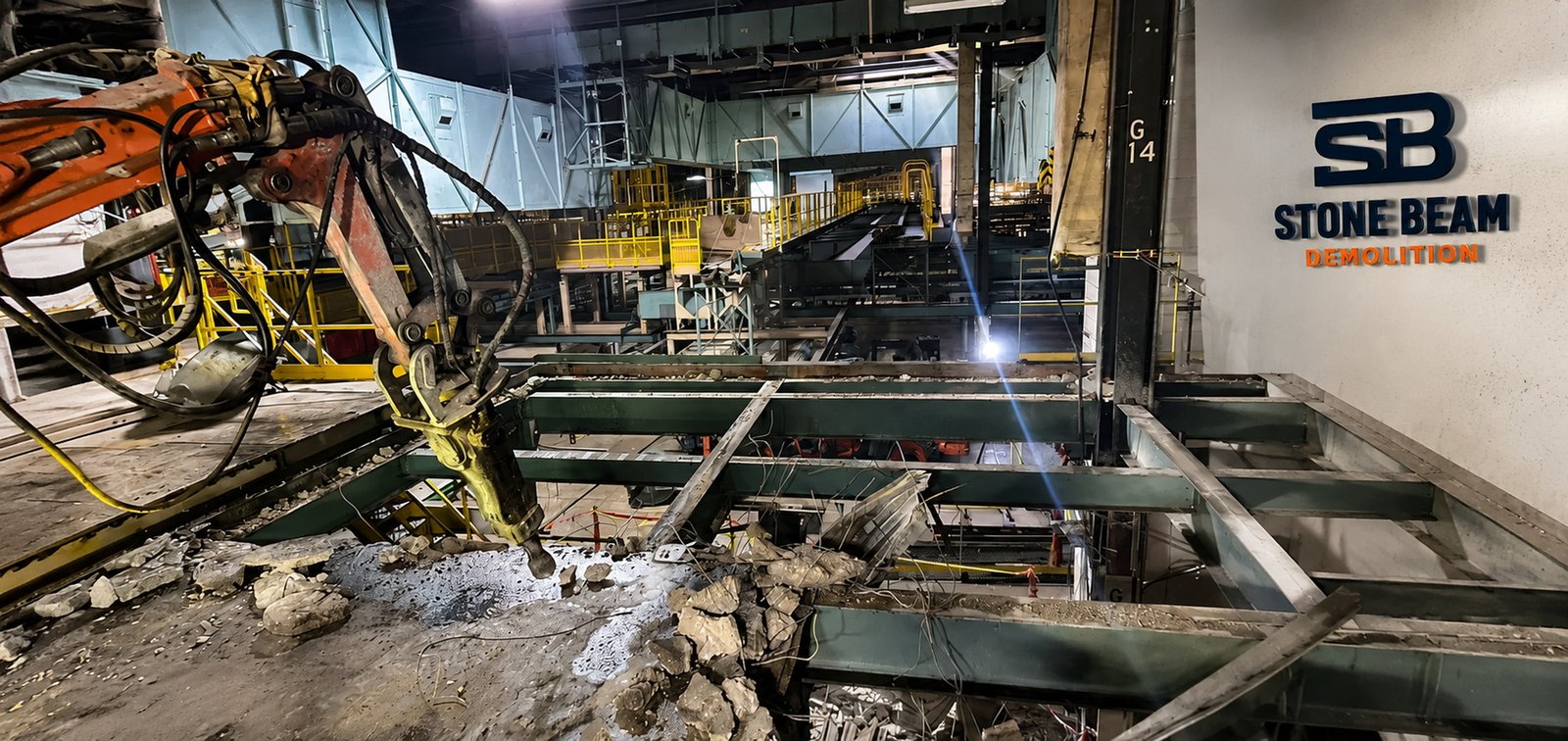
    Structural removal, clearly bounded

    Not a claim of owning every specialist capability on the project.

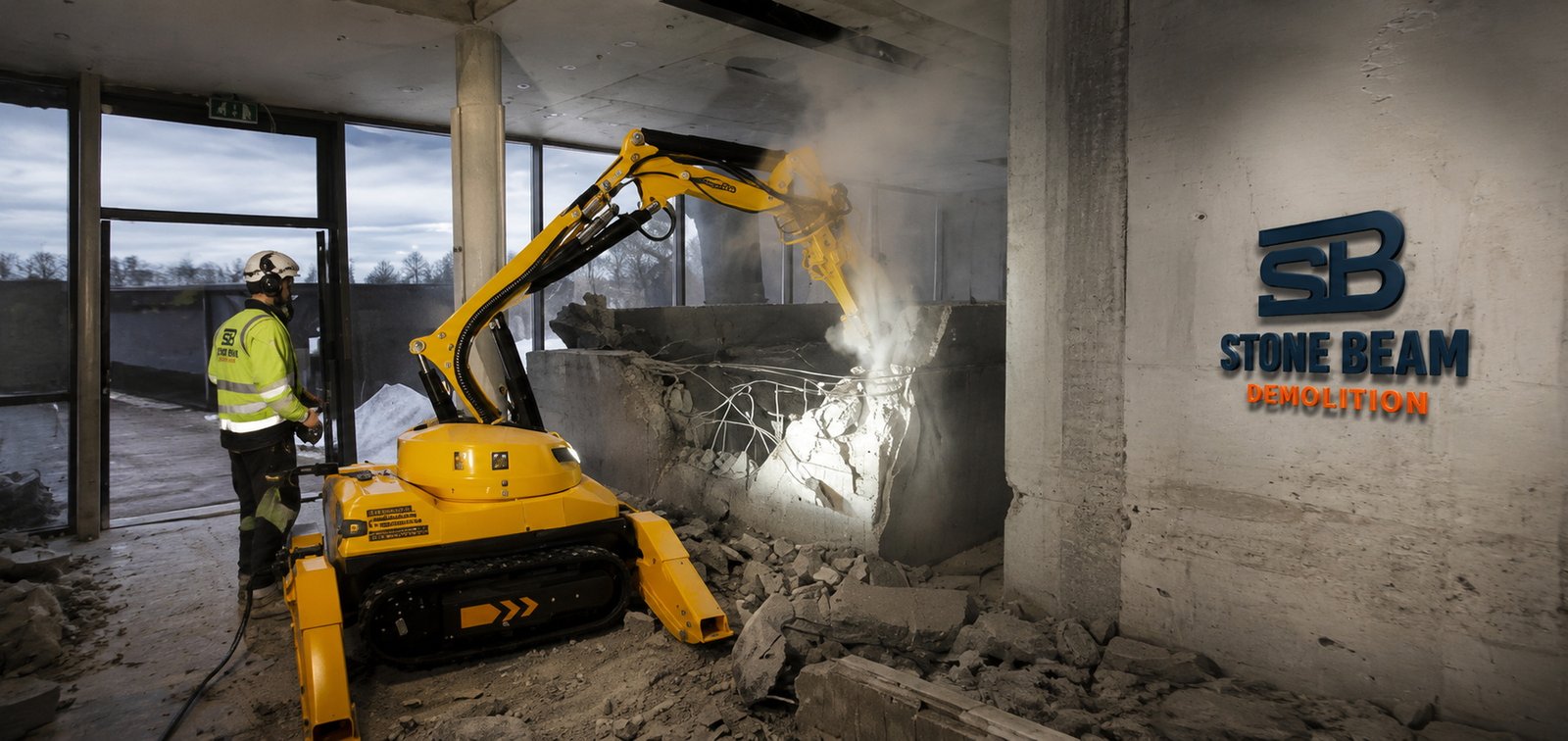
    Release evidence checked against the responsibility matrix before structural work begins.


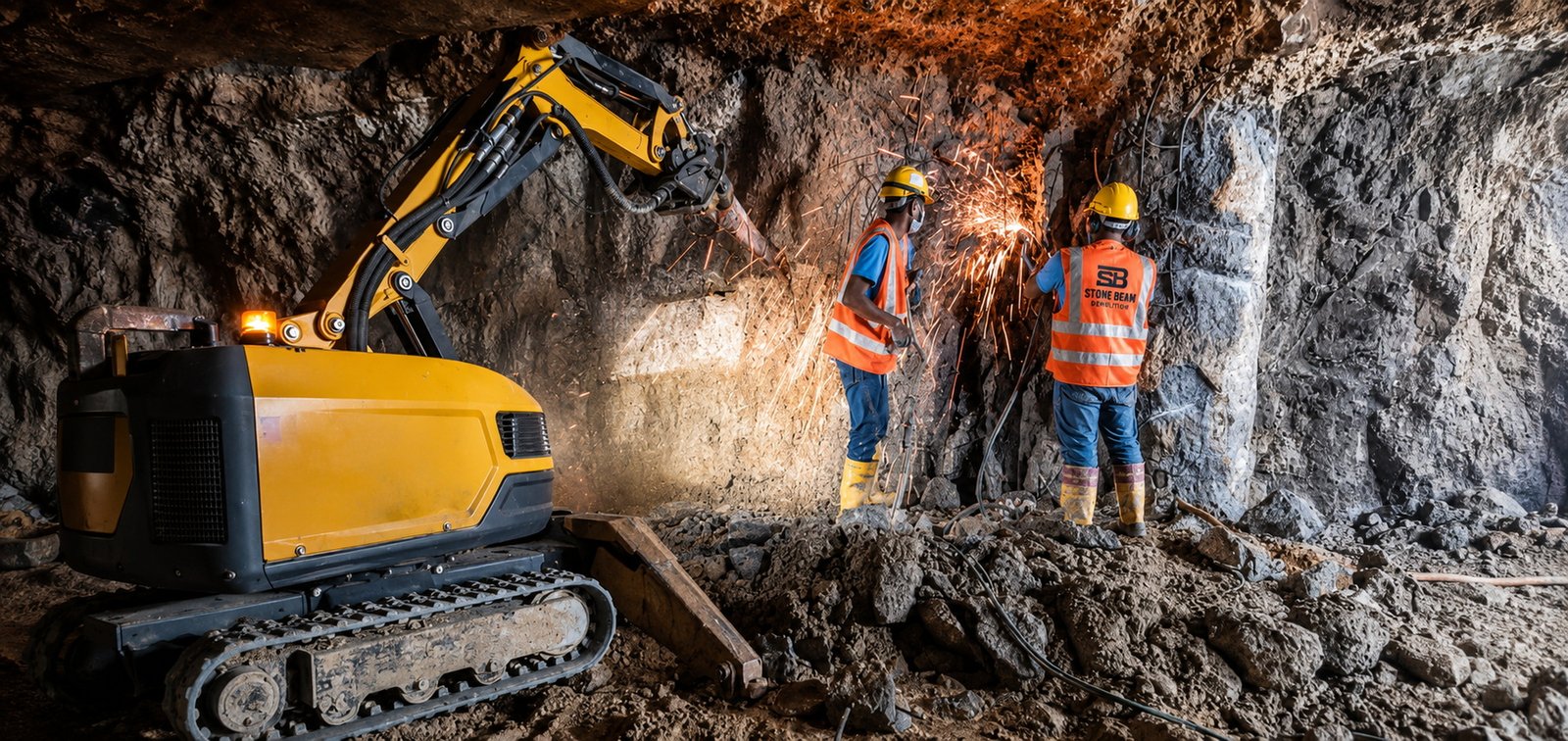
    Above-ground, underground and concrete tanks each get a purpose-built sequence.
    Structural scope, waste, scrap ownership and handover condition stated explicitly.
    The authorised waste chain is used and named — never an unverified claim of independent hazardous-waste licensing.
    Why Stone Beam

    Common questions, answered straight

    What plant owners and operators ask before they call.

    Not automatically. "Empty" is a visual description — atmosphere testing, residue checks and a current gas-free certificate from the named competent party are needed before hot work.
    The certificate is issued by the designated competent person under the site's PTW system — Stone Beam's structural scope begins once that release evidence is recorded.
    Yes, once excavation, utility verification and readiness conditions are confirmed — the tank is lifted whole or removed sectionally depending on verified weight and condition.
    Where verified weight, geometry, structural condition, lifting points, crane radius and route all support it — otherwise sectional removal is used.
    Yes — primarily a reinforced-concrete removal problem, though confined-space and service-isolation controls still apply even without hydrocarbon history.
    No. Mechanical methods reduce one category of ignition risk but should never be described as universally spark-free or risk-free.
    Only when the demolition zone and live operations can be separated through approved SIMOPS, isolation and access controls — feasibility depends on the actual plant, never promised in advance.
    Ownership is contractual — retained by the client, transferred to the contractor, or credited on a measured basis. This is defined before removal, not assumed.
    The team stops disturbing the affected area and routes the condition to the appointed environmental specialist — demolition alone can't certify soil or groundwater is clean.

    Still have questions?