Interior strip-out, defined by the handover — not the label
Planned dismantling and removal of fit-out elements while the agreed structure, envelope and retained services stay in place — the endpoint written down before pricing.
Fit-out removal · office · lease handback
























Overview
Non-structural — after that's been verified, not assumed
Planned dismantling and removal of specified fit-out elements from an existing building while the agreed structure, envelope, core, common systems and retained services remain.
The market also uses soft strip, fit-out removal, office reinstatement, interior demolition and back to shell — these phrases aren't automatically interchangeable. One landlord may mean exposed soffit and slab by "back to shell"; another may require a retained ceiling grid, capped base-build services, fire stopping and reinstatement drawings. The endpoint must be written down before pricing.
Scope Freeze Gate
Before mobilisation, the removal/retention/making-good schedule should be agreed. Ambiguous items become hold points — not assumptions. This protects both the retained building and the commercial position at final inspection.
Request a demolition quote
Use this form layout on the live page to qualify leads before a call.
Five handover models, five different critical questions
The right model comes from the lease, landlord standard or client requirement — never assumed from the word "strip-out" alone.
Handover model
Partial strip-out
Back to shell
Lease reinstatement
Clear-for-fit-out
Phased handover
"Complete strip-out" hides more than it states
May be included: partitions, doors, glazing and ceilings within the approved boundary; floor and wall finishes to the specified substrate; joinery, furniture and tenant assets identified for removal; selected MEP and specialist systems after the responsible party has released them.
Walls, slabs, stairs, beams, columns, façades or new openings need a separate selective/controlled demolition or cutting scope.
Live-service isolation, test-for-dead, draining or certification stays with the responsible competent party.
Temporary arrangements, impairment or reinstatement follow the building operator's process, not general strip-out speed.
Surveys, specialist removal and disposal are a separate specialist scope, not a strip-out inclusion by default.
Landlord, authority, developer or consultant fees and refundable deposits sit outside the physical works.
Storage, insurance, resale or transport of salvage only where ownership and responsibility are written into the scope.
Unknown services are treated as potentially live
Strip-out frequently exposes systems installed by different tenants over many years — drawings may be incomplete, labels wrong, services crossing the unit boundary. Status is established by the responsible competent party before removal, not assumed.
Isolation point & authorised person
Removal endpoint
Making good & retained function
"Low-disruption" isn't a method — specific rules are
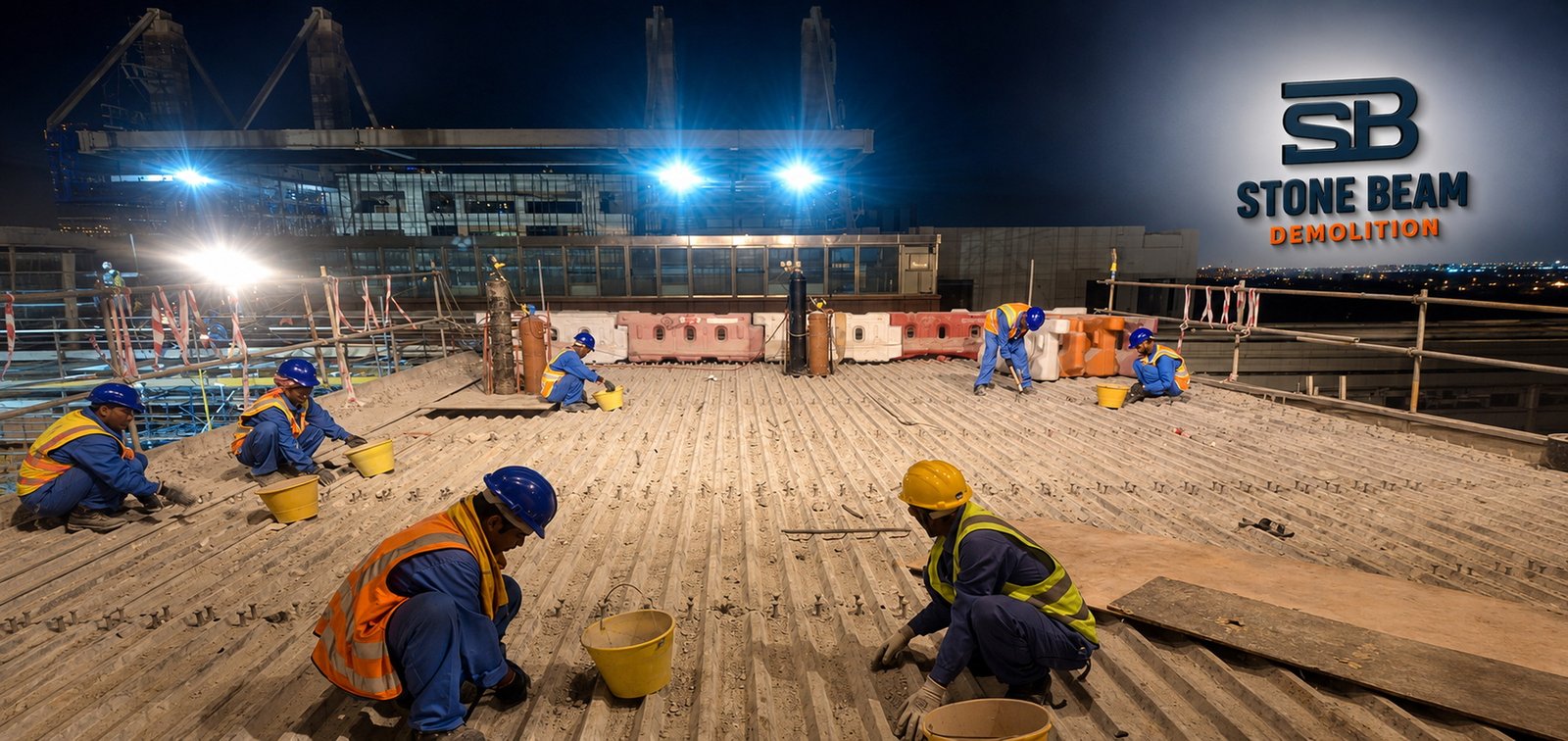
A generic promise isn't enough; the project needs operating rules for access windows, public/tenant separation, dust, noise, life safety and daily reopening.
Why a universal AED/m² rate is weak
Two units of the same area can carry very different fit-out density, MEP content and access constraints.
Fit-out density
MEP content
Access & logistics
Protection requirements
Waste route
Making good & documentation
Not a fixed rate
An itemised, project-specific quotation reflects the measured scope, MEP content, access and required handover documentation.
An engineered service, not equipment for hir
The method is selected after reviewing the structure, access, and risk — not chosen because it's the tool on the truck that day.
The method, sequence and controls are confirmed from the actual site condition before any machine or tool is mobilised.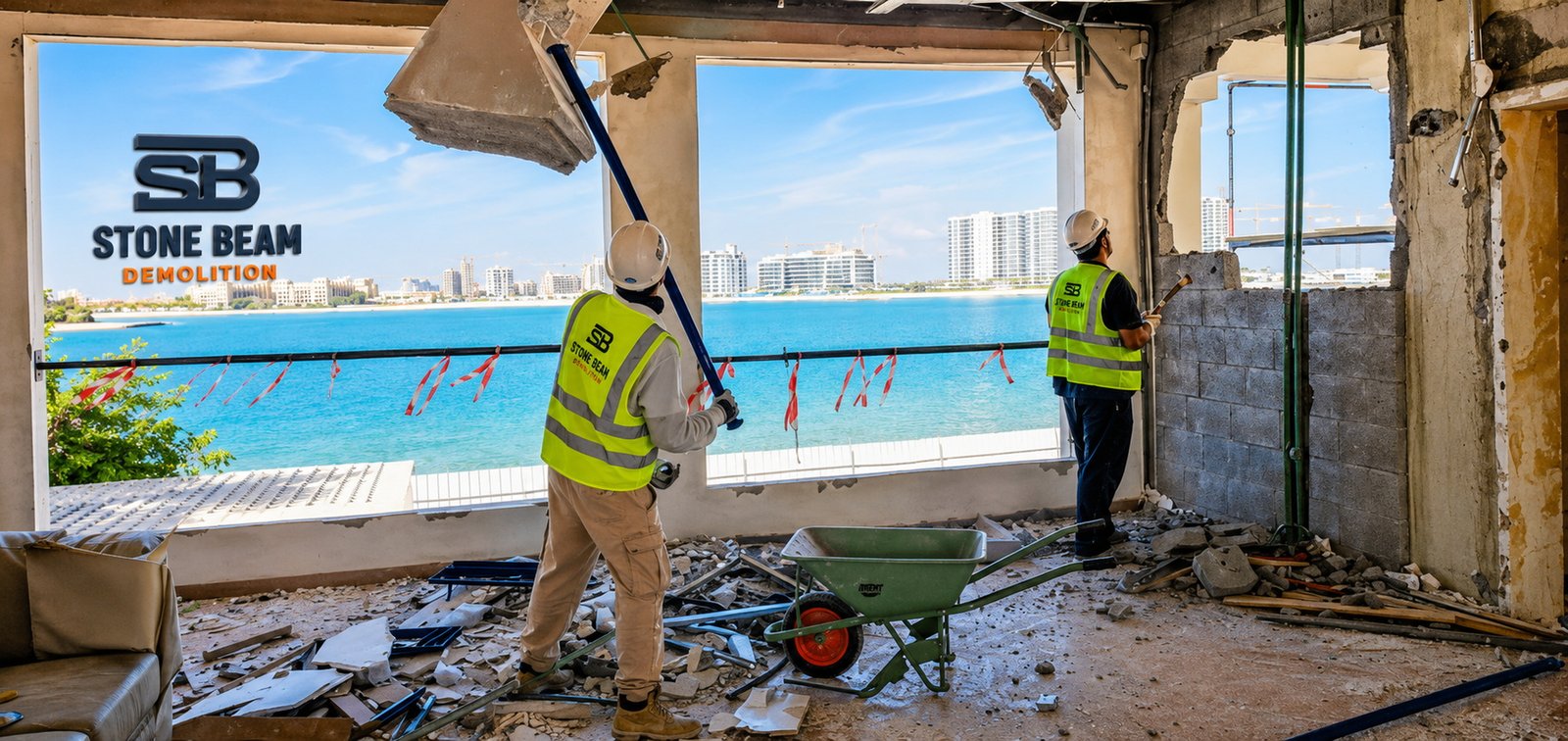
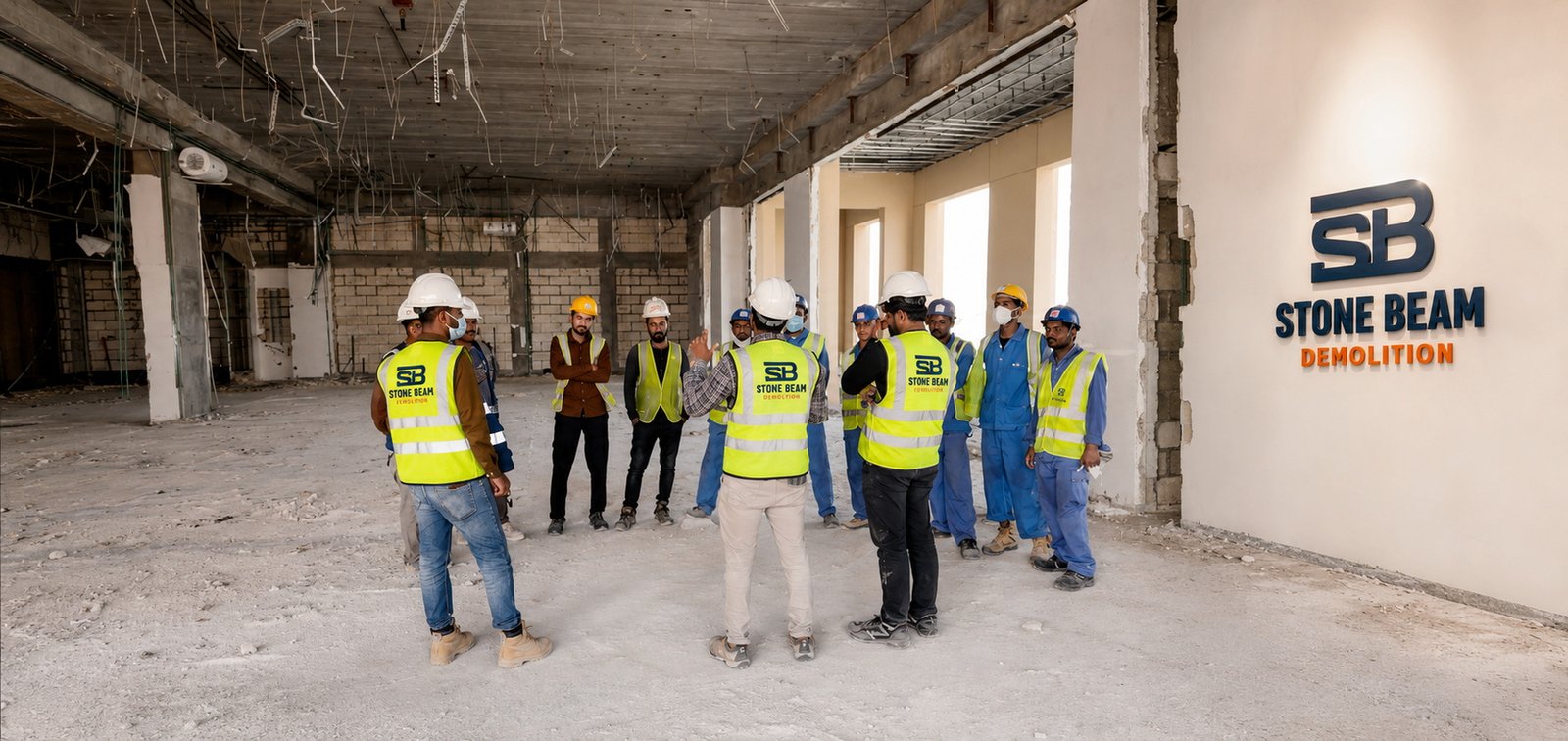
Cutting, scanning, temporary support, lifting and waste handling coordinated under one plan, not fragmented between separate contractors.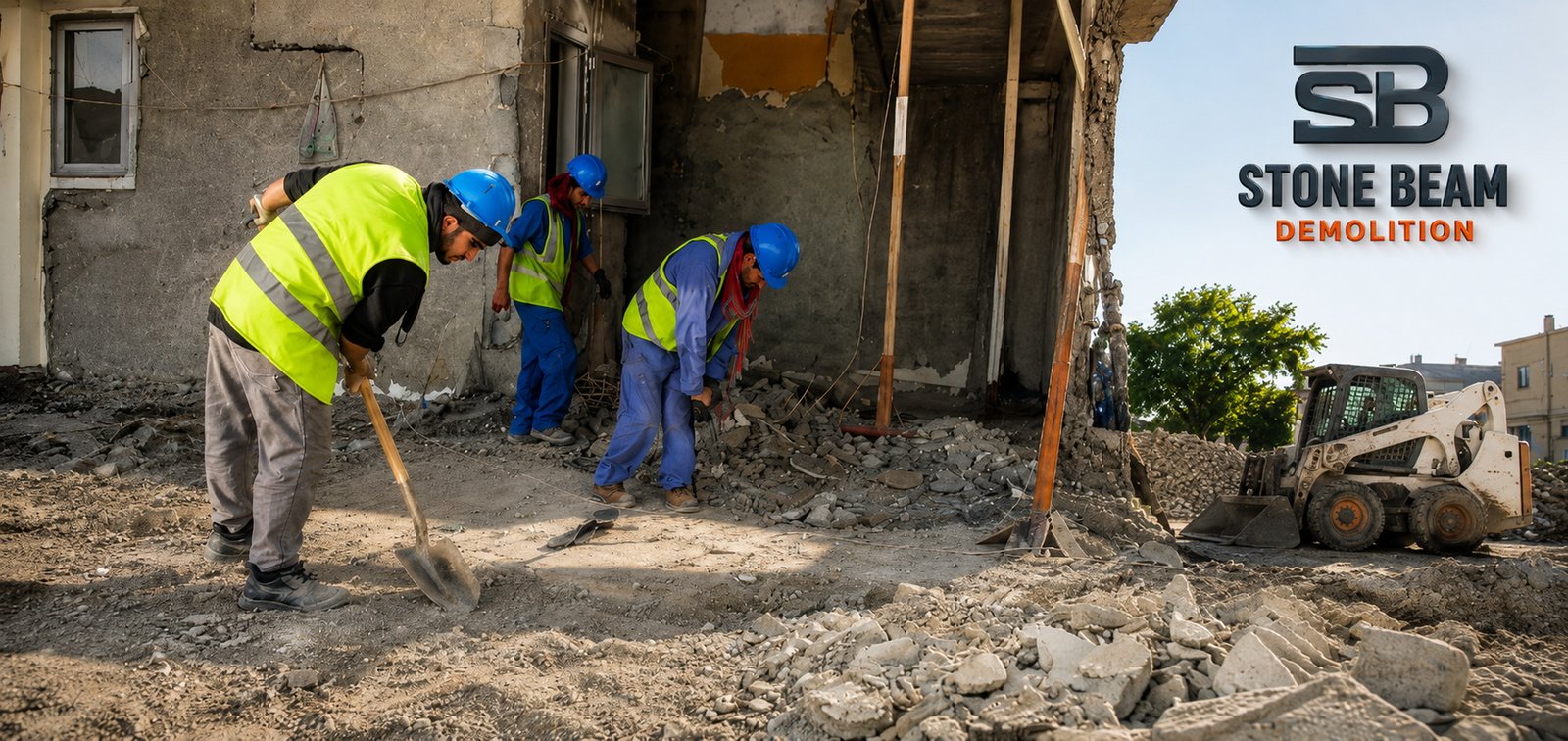
Scope, exclusions, assumptions and handover condition are stated in the quotation — not hidden inside a single lump-sum line.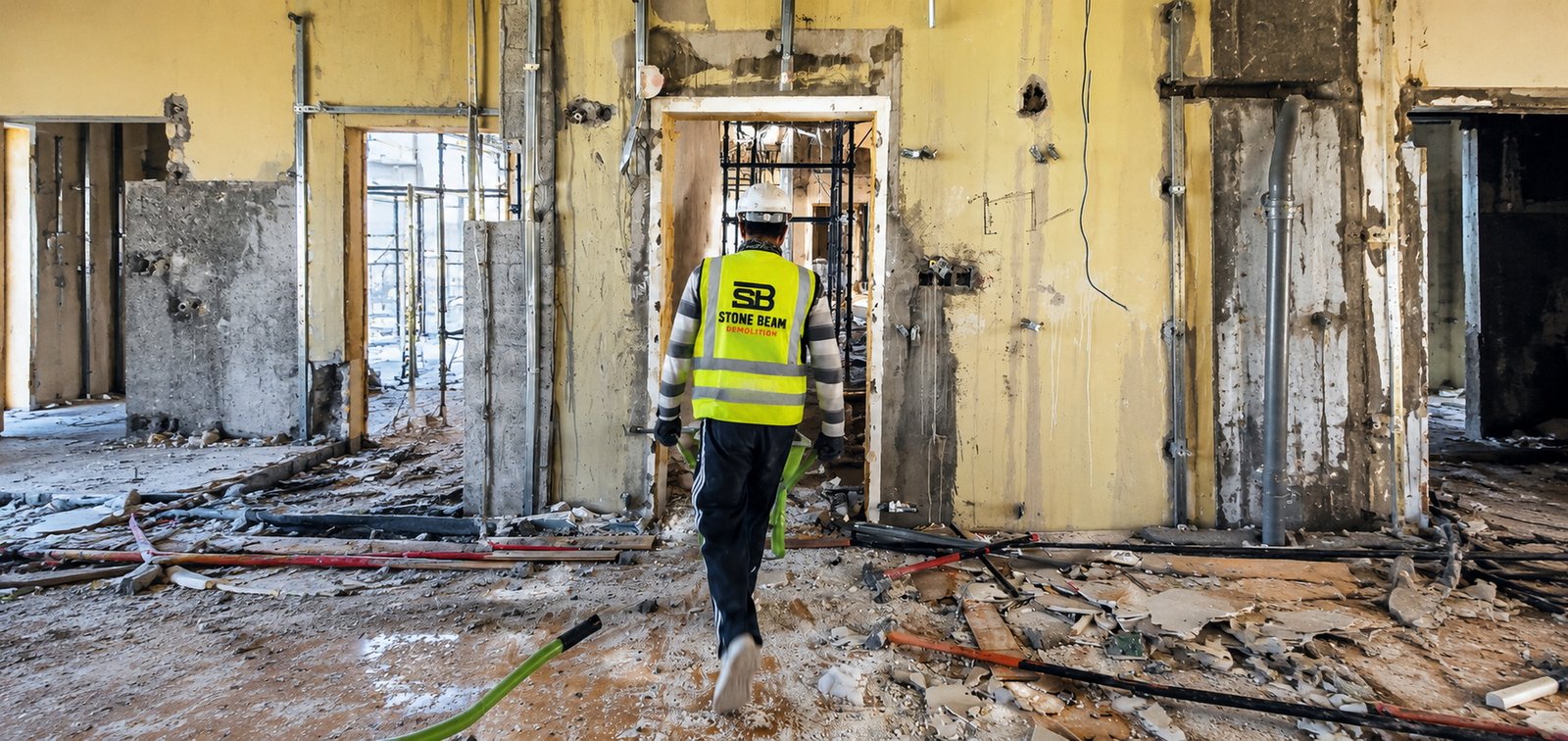
Common questions, answered straight
What tenants, landlords and facility managers ask before they call.
Strip-out removes specified fit-out while retaining the agreed structure and building systems. Structural or potentially structural removal belongs to a separate selective/controlled demolition scope with the required engineering and approvals.
There's no single universal finish — it may mean exposed slab and soffit, retained base-build systems, capped tenant services, or another lease-defined condition. The endpoint should be written into the scope before pricing.
Depends on the building, jurisdiction and scope — landlord approval is common, and formal fit-out, structural, fire-system or utility approvals may also apply.
Yes, where the operator accepts the method and the project controls access, dust, noise, life-safety systems, debris movement, work windows and reopening criteria.
Depends on system ownership, building rules and contract — facility management, a building-appointed contractor, the utility provider or another competent specialist. Removal starts only after required release evidence is confirmed.
Only when an approved impairment/isolation/reinstatement arrangement identifies that scope — life-safety systems aren't disabled simply to accelerate strip-out.
Only as a separately approved structural/selective-demolition or concrete-cutting interface — never implied as routine non-structural work.
No contractor controls the landlord's lease decision — Stone Beam works to the agreed reinstatement scope and provides the specified close-out evidence, but the acceptance criteria and decision-maker belong to the lease.
Still have questions?
