Infrastructure demolition, verified before it's touched
Controlled removal of civil assets that support transport, drainage, utility, water and public-realm networks — planned around live interfaces, work windows and a defined handback, not a preferred machine.
Culverts · chambers · duct banks · live networks
























Overview
The interface defines the project, not the concrete
The asset may be redundant, conflict with a new alignment, need replacement, obstruct a new service route, or be temporary works that must come out once permanent works have taken load.
The defining feature is the interface with a live or protected network. A permit or NOC is part of the control system, but it doesn't prove the physical location of a buried service, guarantee temporary stability, define the demolition limit, or establish who accepts the asset at handback — those issues are resolved through project information, survey, engineering review and an approved execution sequence.
Request an infrastructure demolition review
Send the marked demolition drawings, asset and utility information, site photographs, access constraints, required work window and handover condition. Stone Beam will identify the demolition boundary, missing information and interfaces that must be resolved before a reliable method and quotation can be prepared.
Request a demolition quote
Use this form layout on the live page to qualify leads before a call.
Five categories, one shared discipline
Bridge decks, spans, piers and marine structures need dedicated methodologies and live on their own pages — kept separate for engineering clarity.
Box culverts, headwalls, channels, catch pits and aprons — method addresses water flow, excavation stability, buried services and final trench condition.
Redundant manholes, valve chambers, encasements and equipment plinths — demolition starts only after service status and release process are established.
Barriers, gantry/sign foundations, ramp slabs and abandoned foundations — routine asphalt/kerb work stays with the pavement workstream.
Never treated as redundant just because the permanent structure looks complete — the load-transfer sequence must be confirmed first.
Wet wells, pump-station structures and channels — demolished only after isolation, drainage, cleaning and release for intrusive work.
Decks, spans, piers, jetties, quay walls and underwater structures need dedicated bridge or marine-demolition methodologies.
Where infrastructure demolition ends
Six adjacent workstreams — infrastructure demolition owns the live-network civil interface, not everything nearby.
Workstream
Bridge demolition
Controlled demolition
Road & pavement removal
Facility decommissioning
Excavation / compaction
Waste management / clearance
Why live-network demolition is different
Four reasons the method can't be generic
Each one changes what "ready to demolish" actually means.
The work window is a control, not a promise
Temporary conditions keep changing
Record drawings are evidence, not proof
Public interfaces raise the stakes
Eight information sets, resolved first
Method selection starts with the temporary state, live interfaces, access, fragment size and handback — not a preferred machine.
Information set
Jurisdiction & ownership
Demolition boundary & end state
Structural information
Utility information
Ground & water
Access & logistics
Hazardous conditions
Acceptance criteria
6. Establish temporary condition
Shoring, diversion, bypass, propping — hold points passed.
7. Separate
& remove in stages
Cutting, mechanical, robotic or lifting methods, debris controlled.
8. Segregate & remove material
Source, carrier and receiving records maintained throughout.
9. Complete
reinstatement
Trimming, capping, backfill or preparation where expressly included.
10. Pass the
handback gate
Survey, records, photographs and interface list submitted for acceptance.
1. Freeze
the boundary
Removed, retained, protected and reinstated elements marked.
2. Close
information gaps
Structural, utility, ground/water and hazmat uncertainty resolved.
3. Confirm
responsibility matrix
Traffic, isolation, temporary works, lifting and acceptance allocated.
4.Establish
the protected zone
Barriers, access controls, lighting, signage and emergency arrangements.
5. Verify
& protect live networkst
Mark, expose, protect and obtain release before intrusive work.
Ten stages, boundary to handback
A controlled discovery process at every stage, not a race to expose concrete.
Selected from actual failure modes, never copied
Instruments, trigger values, reporting frequency and stop-work authority come from the approved project plan, not a generic template.
Monitoring
Waste traceability
Traffic & right-of-way
Same quantity, different interface cost
A small chamber beside a live cable corridor can need more planning than a much larger isolated structure.
Asset & structural condition
Fragment / lifting size
Access & transport
Utility status
Closures & windows
Temporary works
Sensitive-interface work
Waste route
Reinstatement
Not a fixed rate
No reliable universal rate per m², m³ or tonne. The handback gate checks the demolition boundary, temporary-works status, capped services, debris removal, survey records and formal acceptance before the site is considered returned.
Built around interfaces, not capability claims
Infrastructure work rewards clear interfaces more than broad capability statements.
Demolition boundary, protected network, temporary condition, access and handback defined before the method is selected.
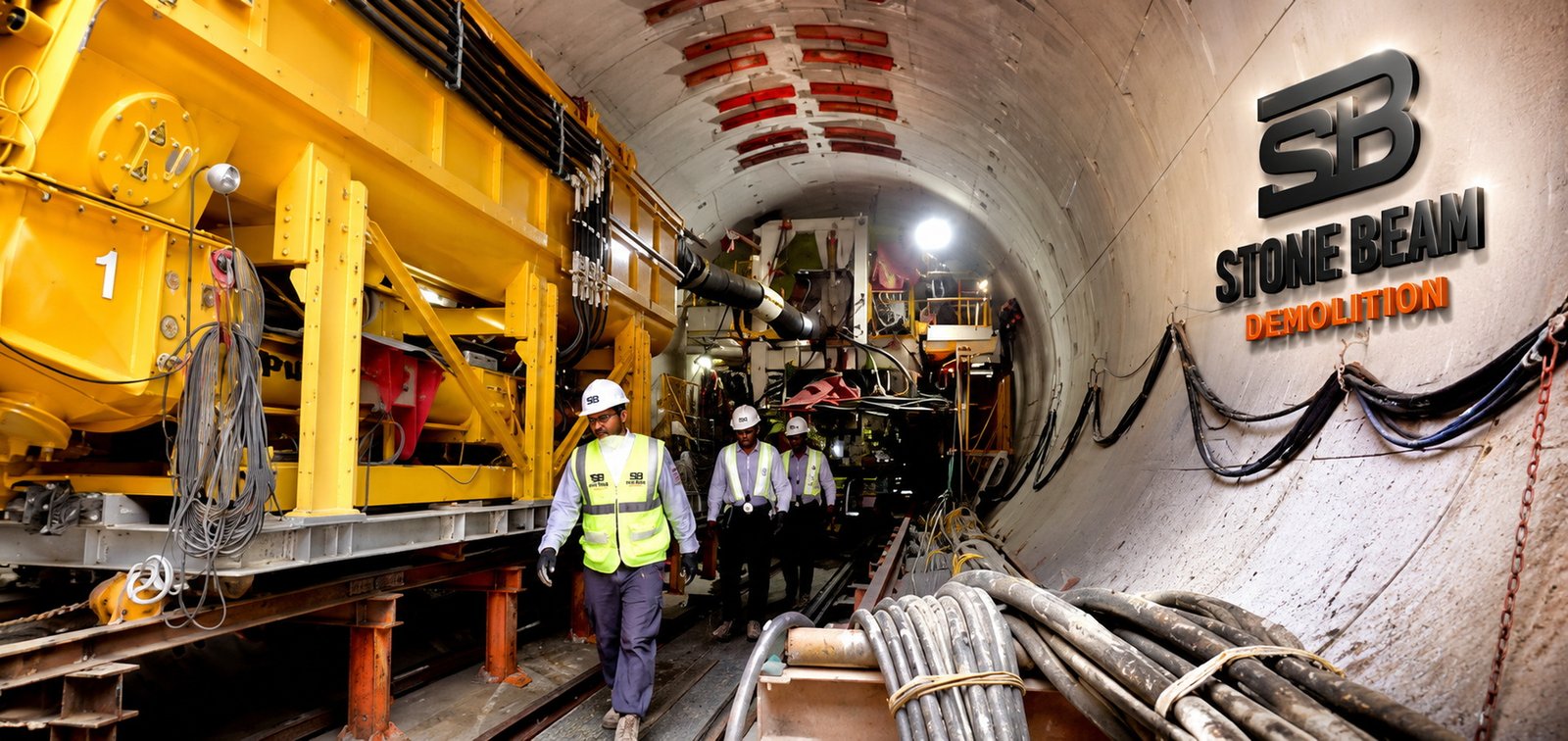
Concrete cutting, scanning, excavation, waste management and controlled demolition coordinated when expressly included.
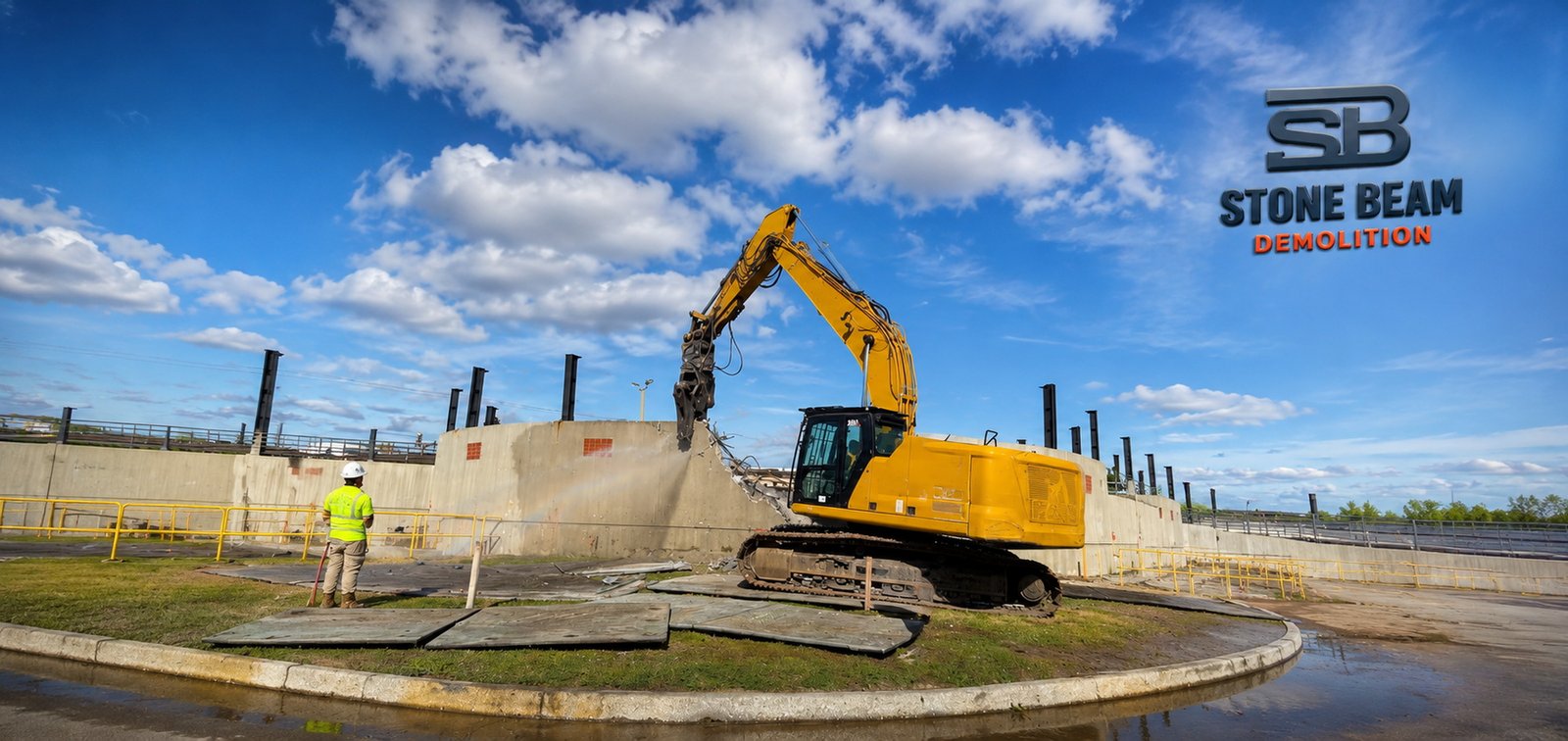
The quotation states who provides permits, traffic design, isolation, temporary works, lifting, monitoring and reinstatement.
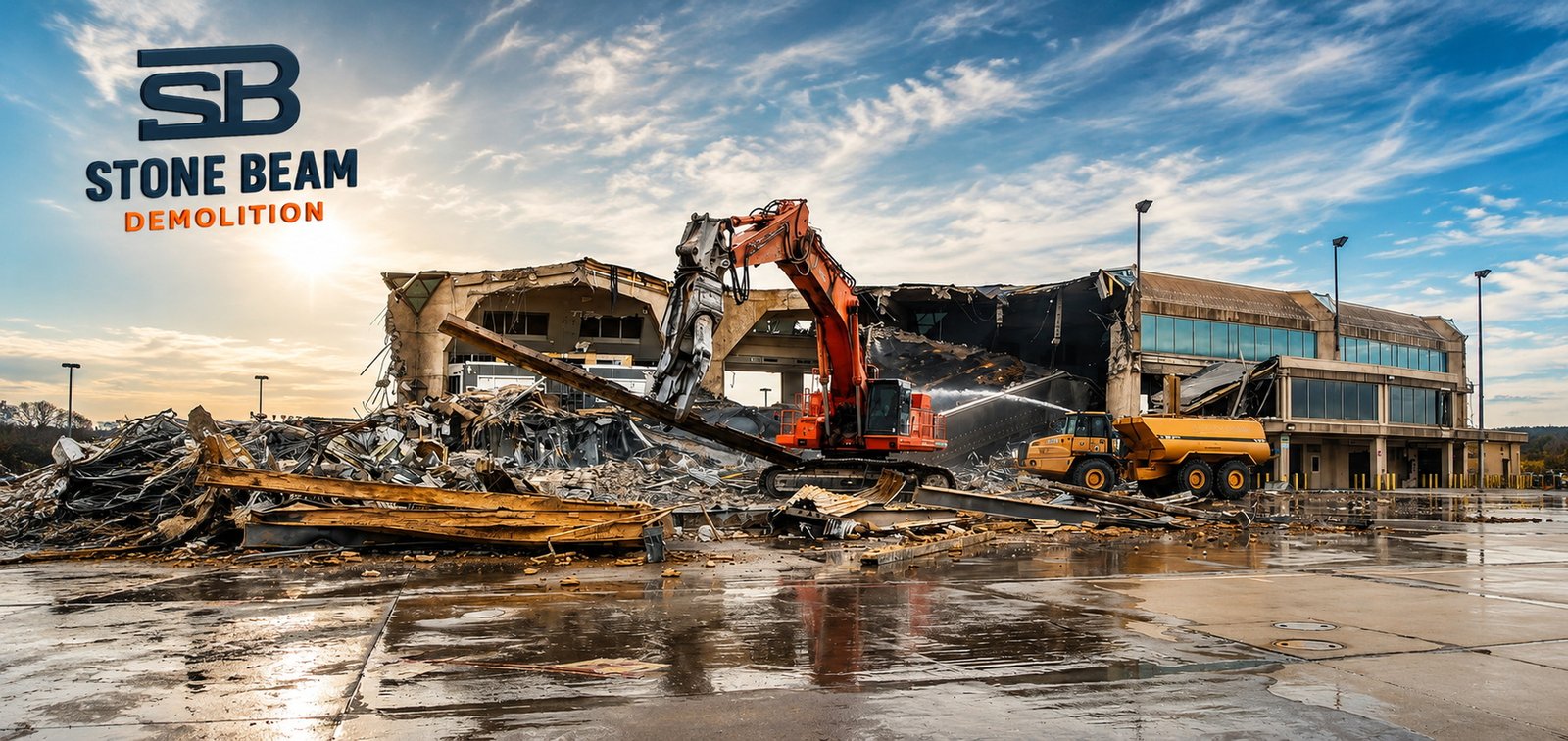
A defined scope makes proposals comparable — a headline rate that excludes the real controls doesn't.
Common questions, answered straight
What asset owners and main contractors ask before they call.
The controlled removal of civil assets such as culverts, chambers, duct banks, utility structures and roadside structural concrete, where live networks and defined handback conditions affect the method.
Bridge work can form part of a wider package, but decks, spans, girders, piers and abutments need a dedicated bridge-demolition methodology, owned by that service page.
Potentially, under a project-specific protection and verification plan. Drawings and scanning alone don't prove a zone is safe — locating, trial exposure and controlled methods may also be needed.
Depends on the project contract and jurisdiction. Stone Beam provides demolition methodology and coordinates agreed submission inputs, but the responsibility matrix identifies the formal applicant and designer.
May be possible where the temporary structural, traffic, drainage and excavation conditions have been engineered and approved — depends on the arrangement and asset-owner requirements.
No. GPR supports detection and interpretation but has limitations — higher-risk interfaces normally use layered verification: records, locating, trial pits, controlled exposure and owner confirmation.
Only where processed, suitable, tested as required and accepted by the receiving specification and responsible authority — never marketed as automatically approved.
Yes, when drawings, levels, material requirements, layer criteria, testing responsibility and handover condition are defined — not automatic inclusions of the phrase "infrastructure demolition."
Marked demolition drawings, as-builts, utility information, site photographs, access and work-window constraints, temporary-works or water information, and the target handover condition.
Still have questions?
