Conventional Demolition Dubai
Mechanical demolition, matched to the structure
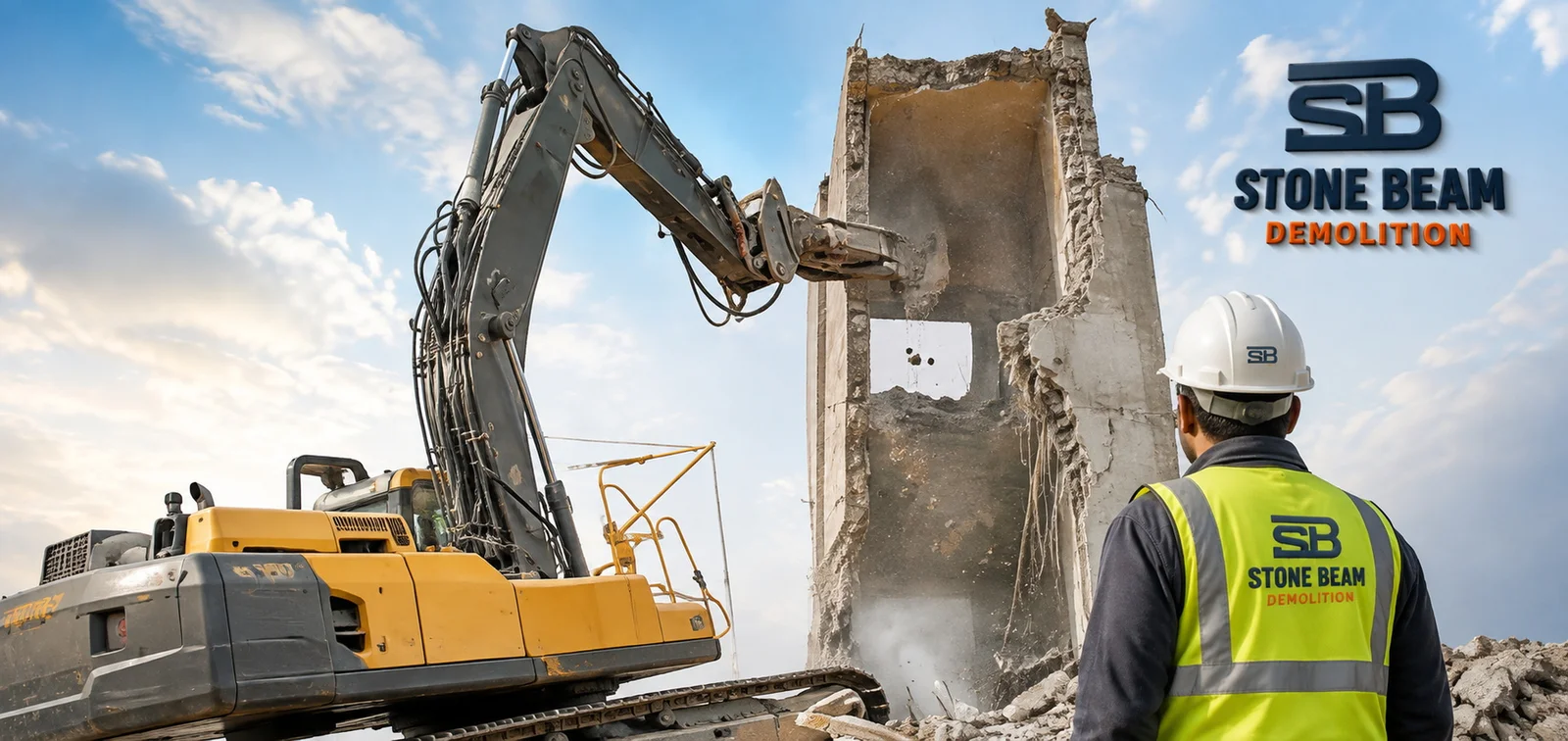
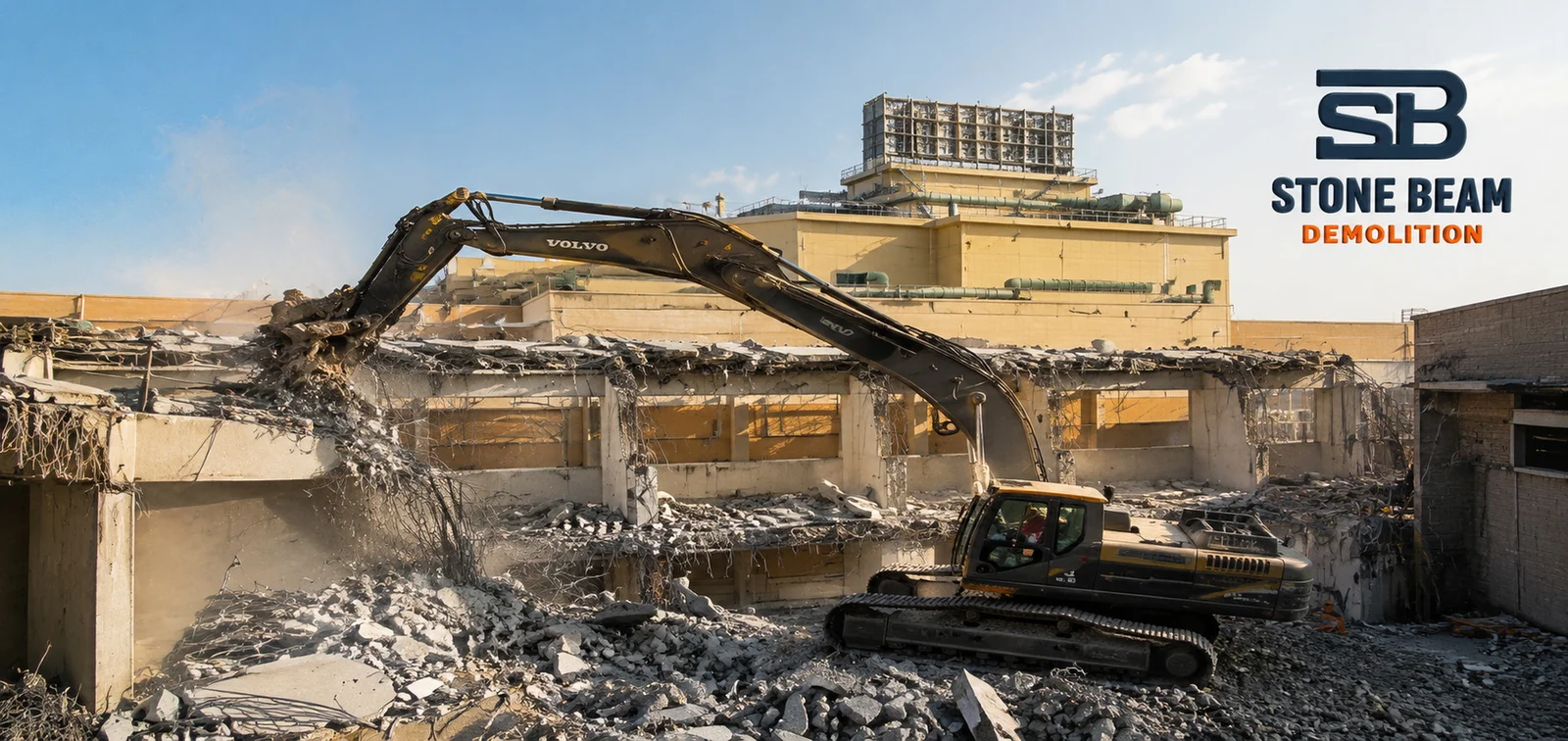
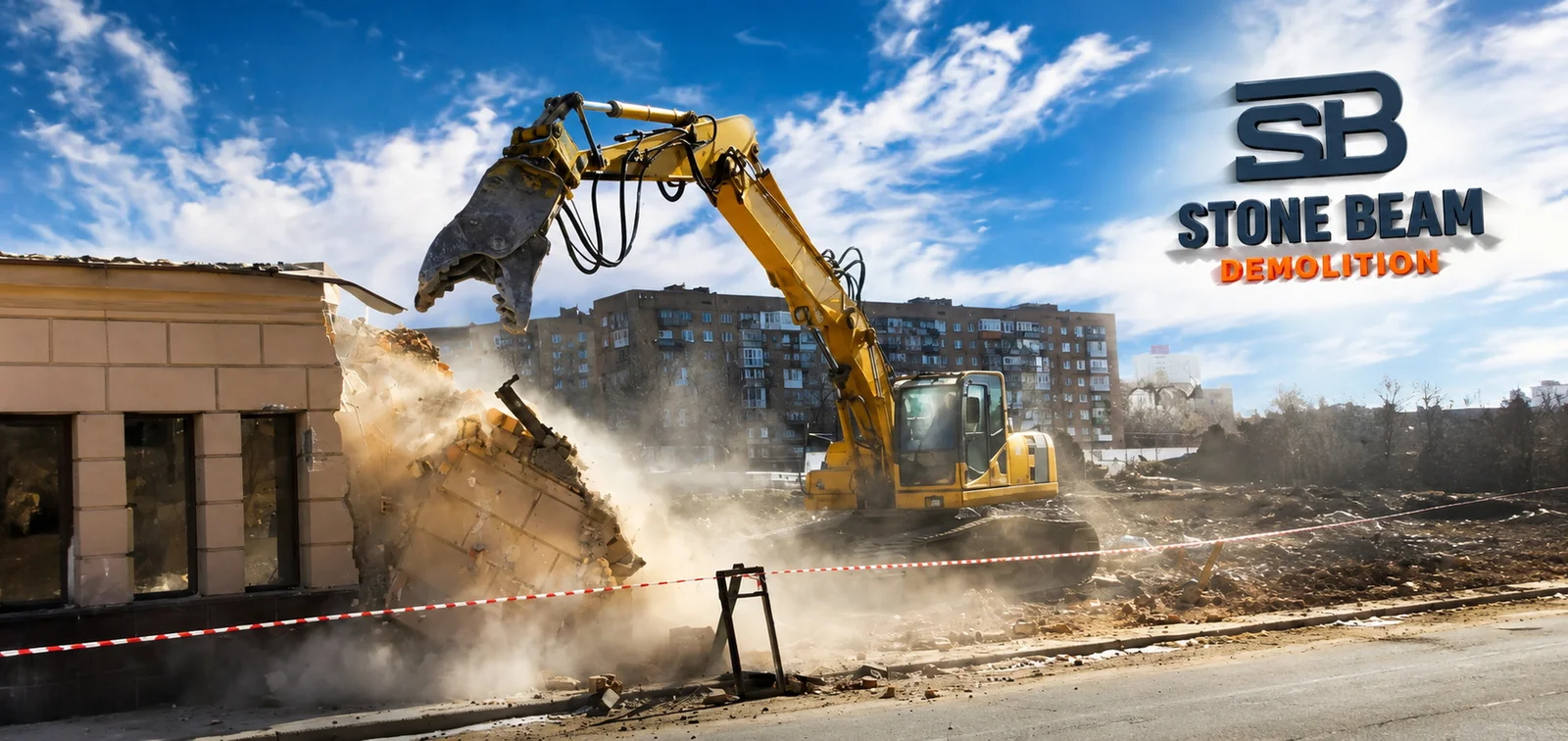
Conventional demolition in Dubai for villas, warehouses and free-standing buildings, delivered through an engineering-led approach that defines the demolition sequence, machine method, permits, waste route and final handover before the excavator arrives.
Excavators · crushers · engineered sequence






















Overview
Not "an excavator knocking down a building"
Conventional demolition is often the most productive option for a structure that can be safely reduced with excavators, but a free-standing building doesn't make the method automatically suitable.
The decision depends on the structural form, condition, height, access, ground capacity, exclusion space, proximity to roads and services, the direction the material may fall, and the final condition the client needs. A professional project is a documented engineering operation in which load paths are understood, stability-sensitive elements identified, utilities isolated, plant positions set, and the waste route agreed before the first structural element is removed.
Stone Beam provides conventional mechanical demolition for suitable villas., warehouses, industrial sheds and free-standing buildings across Dubai and the UAE, coordinated with permits, soft strip, hazardous-material management, concrete cutting, site clearance, foundation removal and waste records where expressly included.
Request an itemised demolition review
Send the project location, building use, number of floors, drawings, site photographs, access dimensions, basement or foundation details, neighbouring assets and required handover condition.
Request a demolition quote
Use this form layout on the live page to qualify leads before a call.
Conventional is a method, not a building type
A villa may suit machine demolition on one plot and require controlled separation on another. Neither method is inherently "more professional"; both need competent planning.
Factor
Typical use
Main equipment
Boundary strategy
Cost basis
Method decision
Suitable when the site allows a defined safe system
Applied to villas, warehouses, low-rise free-standing buildings, slabs/foundations, and open industrial sites after the survey confirms it fits.
Full removal of detached villas may suit mechanical demolition where the plot has working room and neighbours can be protected.
Often effective on open plots after assessment for unstable roof members, prestressed components, and process services.
Progressive reduction where equipment reaches the working face without undermining the structure or risking uncontrolled collapse.
Breakers, crushers and excavators for slabs and boundary structures, subject to service, shoring and groundwater checks.
Conventional plants after isolation, decontamination, and dismantling, controls being open, don't remove the hazmat check.
Space for plant/debris, safe access, verified platform, compatible height, stable sequence, isolated utilities, clear waste route.
Attachments
The attachment controls how force is applied
None of these is used simply because it's available on site.
Progressive reduction
Crush concrete and expose reinforcement with controlled reduction where jaw size and carrier capacity suit the element.
Heavy sections
Repeated impact for slabs, foundations and heavily reinforced concrete — not used simply because they're available.
Steel work
Cut structural steel and reinforcement sequencing matters, since bracing may carry global stability.
Handling
Controlled handling, timber/cladding removal and waste segregation are never used to pull unknown elements blind.
Flexible
Jaw changes for concrete, steel and mixed work; every configuration changes weight and centre of gravity.
Logistics
Loaders, misting units, sweepers, generators and trucks kept out of the demolition machine's operating zone.
Five mechanical methods, selected by structure
Many projects are safest when the method changes as the structure changes.
Method
Progressive ground-based
High-reach demolition
Floor-by-floor top-down
Steel dismantling
Combination method
Debris is a structural load, not just mess
Accumulated debris can impose high loads on suspended slabs, basement roofs and transfer structures — the plan defines maximum debris depth, stockpile locations and removal frequency.
Debris load limits
Stability-sensitive elements
Exclusion & debris zones
Stop-work conditions
6. Plant mobilisation
Equipment, operator competence and exclusion zones verified before production.
7. Structural demolition
Progressive reduction under the approved method and change-control process.
8. Secondary processing
Concrete/steel processed and material streams separated safely.
9. Below-ground & external
Slabs, foundations, tanks removed only where included and services addressed.
10. Cleaning & handover
Grading, backfill, survey, waste records and close-out documentation delivered.
1. Scope
& handover
Structures removed, elements retained, final level and close-out defined.
2. Document
& authority review
Competent authority, consultant, drawings, insurance confirmed.
3. Survey
& method selection
Structural condition, access, ground capacity, collapse mechanism assessed.
4. Isolation
& pre-demolition
Utility disconnection, hazmat removal, soft strip and salvage completed.
5. Site
establishment
Hoarding, access control, dust systems and emergency arrangements installed.
Ten stages, scope to handover
The exact sequence changes with the structure and scope — this is the reliable basis.
A rate per square foot can mislead
There's no official universal rate — different quotations often include different scopes. A credible quotation is built from structure, method, quantities and logistics.
Structural quantities
Plant & attachment
Access & platform
Authority & consultant
Hazardous materials
Waste & scrap
Below-ground scope
Final handover
Not a fixed rate
Send location, drawings, built-up area/floors, photos, access width, basement/foundation details, elements to retain and required final level for an itemised proposal with assumptions, inclusions and exclusions.
An engineered service, not equipment hire
The plant and attachment are selected after reviewing the structure, access, neighbours, ground and handover requirements.
Plant and attachment chosen after the survey, not before it.
Concrete cutting, scanning, robotic demolition, temporary support and lifting coordinated where needed.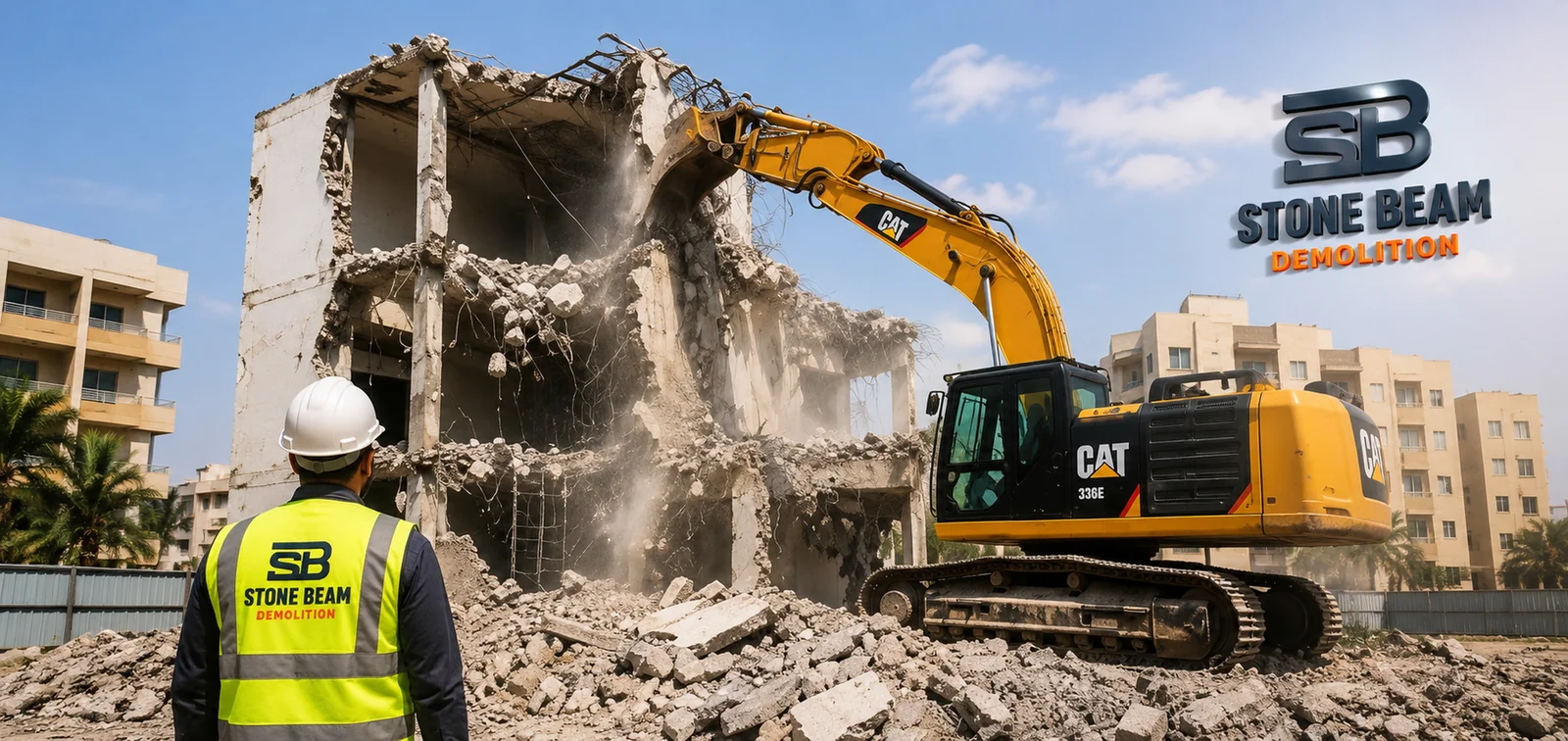
Demolition limits, below-ground items, permits, waste, scrap and final level named in the proposal.
Owned equipment, approvals and recycling rates published only where the evidence supports them.
Common questions, answered straight
The questions villa owners and developers ask before they call.
The progressive removal of a structure using excavators and mechanical attachments — crushers, breakers, shears, grapples — within an approved sequence and exclusion zone.
The terms describe the same general machine-led approach — standard excavators, high-reach equipment, shears, crushers or other attachments selected for the structure.
No. It can be efficient on suitable sites, but access restrictions, specialist plant, basements, foundations and working-hour limits can materially affect cost.
Where structures are attached, retained areas remain, the building is occupied, boundaries are sensitive, or cutting/temporary support is required.
No. High-reach uses a long-boom machine from ground level; floor-by-floor top-down often uses small plant working on the floors. Engineering analysis decides which fits.
No. Suitability depends on height, geometry, attachment capacity, working radius, ground conditions and the ability to keep debris inside the approved zone.
Not automatically — selected by risk, especially where cutting, partial removal, post-tension systems or concealed services affect the work.
Classified and segregated where practicable, then transported through the approved route to authorised facilities. Recycling performance is supported by project records, not assumed.
Still have questions?
