

Buildings are designed for a service life; once that life is consumed — or when redevelopment makes better sense — demolition becomes the safest, most economical path forward. In dense districts across Dubai, Sharjah, Abu Dhabi, and the Northern Emirates, precision and control are non-negotiable. Demolition is not merely bringing a structure down. It blends engineering judgment, strict HSE, methodical sequencing, and stakeholder coordination. The objective is a controlled deconstruction that protects workers, the public, adjacent assets, and critical utilities — while maximizing material recovery and minimizing noise, dust, traffic disruption, and environmental footprint.
For clients searching for a demolition company in Dubai, or appointing a demolition contractor in Dubai among trusted demolition contractors in Dubai, this guide offers a clear, UAE-ready playbook — from surveys and method selection to safety, waste segregation, and handing over a clean site. It is written with SEO in mind, using natural language aligned with real-world decision making and Yoast SEO best practices for readability and topical depth.
Table of Contents
ToggleUAE Context: Dense Sites, High Standards, and Real-World Constraints
In the UAE — especially Dubai — demolition often happens in live urban environments. Residential towers, retail frontages, hotels, schools, hospitals, and transport corridors can sit meters away from the workface. Success therefore depends on a proactive strategy that anticipates real-world constraints: limited lay-down areas, shared access, strict noise and working-hour limitations, and protection of utilities. The approach must reconcile speed and productivity with public protection and compliance.
This guide keeps the needs of interior demolition, office demolition , and strip out services in sharp focus — because these service lines dominate fit-out cycles and asset repositioning. For building demolition in Dubai , the same logic applies: start with facts through surveys, manage risks through engineering controls, pick the right method (top-down/manual/mechanical/ball/implosion), and document everything through HSE, permits, inspections, and monitoring.
Pre-Demolition Surveys and Intelligence Gathering
Every safe demolition begins with data. Two complementary surveys typically set the tone: a building and architectural survey that catalogs materials, finishes, sensitive equipment, and services; and a structural survey that studies the primary frame, load paths, diaphragms, cores, and cantilevers, while checking drawings, as-built changes, and maintenance history. Selective openings verify rebar and slab thicknesses. Non-destructive tests and targeted probes reduce uncertainty. The output is a demolition method statement and sequence that reverse the original erection logic: from the top down and from secondary elements toward primaries, with stability preserved at all times.
Hazardous Materials: Identify, Remove, and Document
Before any cutting, crushing, or dismantling, potential hazards must be identified and cleared by certified teams. Legacy asbestos in old insulation or boards, hydrocarbon residues around generator rooms, chemicals in laboratories, or rarer radiological sources require controlled removal, transportation, and disposal via licensed channels. Chain-of-custody paperwork and photographic records are essential. Beyond compliance, hazardous material clearance protects workers and prevents contamination of construction and demolition waste streams destined for recycling.
Method Selection: Matching Technique to Structure and Setting
Choosing the right method is an engineering and logistics decision. Key drivers include the structural system, site constraints, sensitivity of neighbors, allowable noise and vibration, schedule, equipment availability, and haulage capacity. In most urban projects, a sequential top-down strategy is preferred to keep gravity loads aligned and control debris trajectories. Below are established approaches used by demolition contractors in Dubai.
Top-Down Manual Demolition
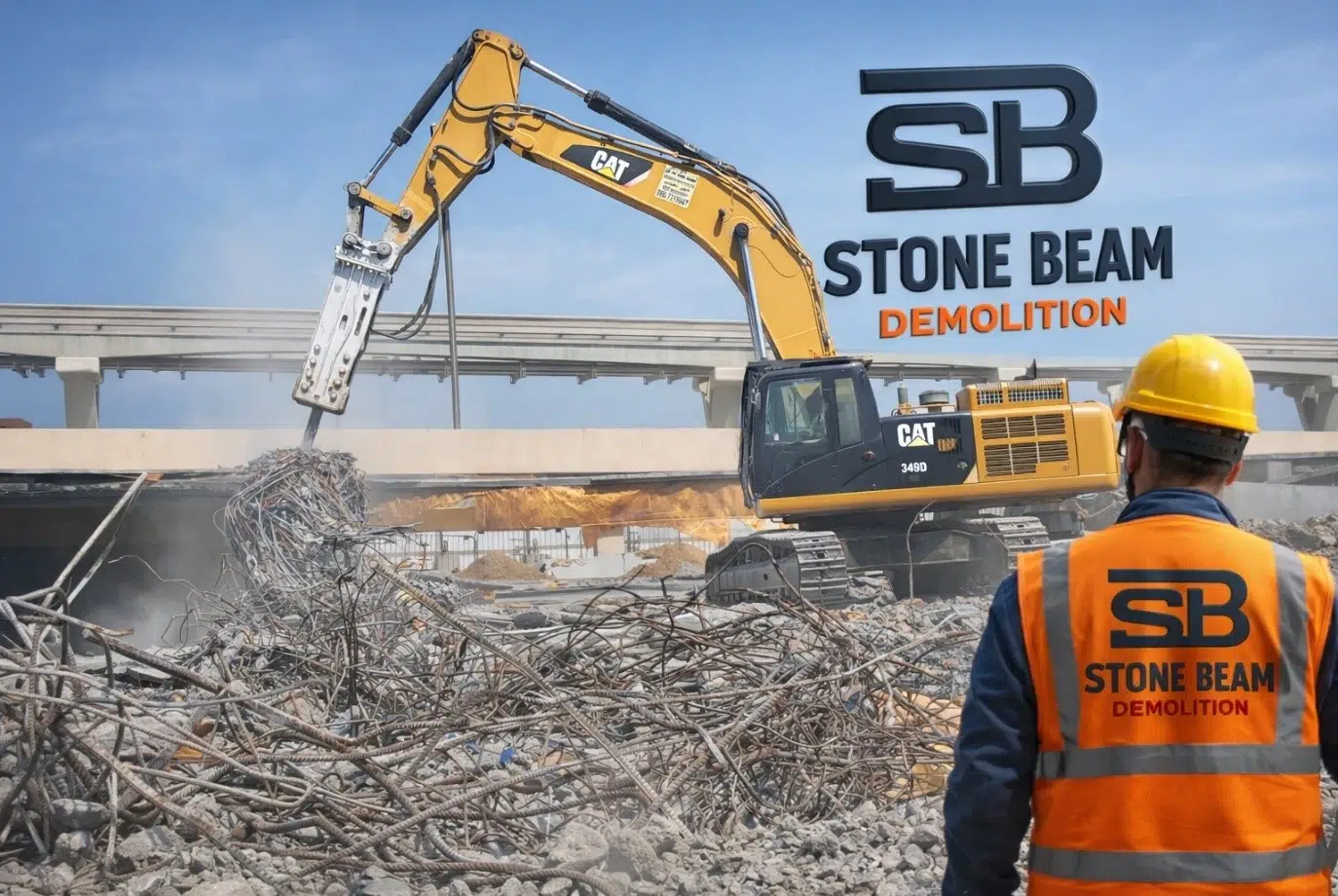
Manual top-down starts from the roof and works downward. Facades and parapets are removed under controlled conditions. Cantilevers and balconies are reduced by relieving loads and breaking concrete progressively from the outer edge inward to supporting beams. Slabs are cut and broken in small panels while rebar is kept intact until the concrete is removed, then reinforcement is cropped. The sequence maintains stability and keeps personnel and debris within exclusion zones.
Slabs, Beams, and Internal Elements
Interior demolition requires careful isolation of openings, shafts, and penetrations. Temporary covers, nets, and barriers prevent falls and protect building services that remain live in occupied towers. Where vibration limits are tight, saw-cutting and coring control noise and dust and allow precise removals around MEP and finishes.
Top-Down by Machines
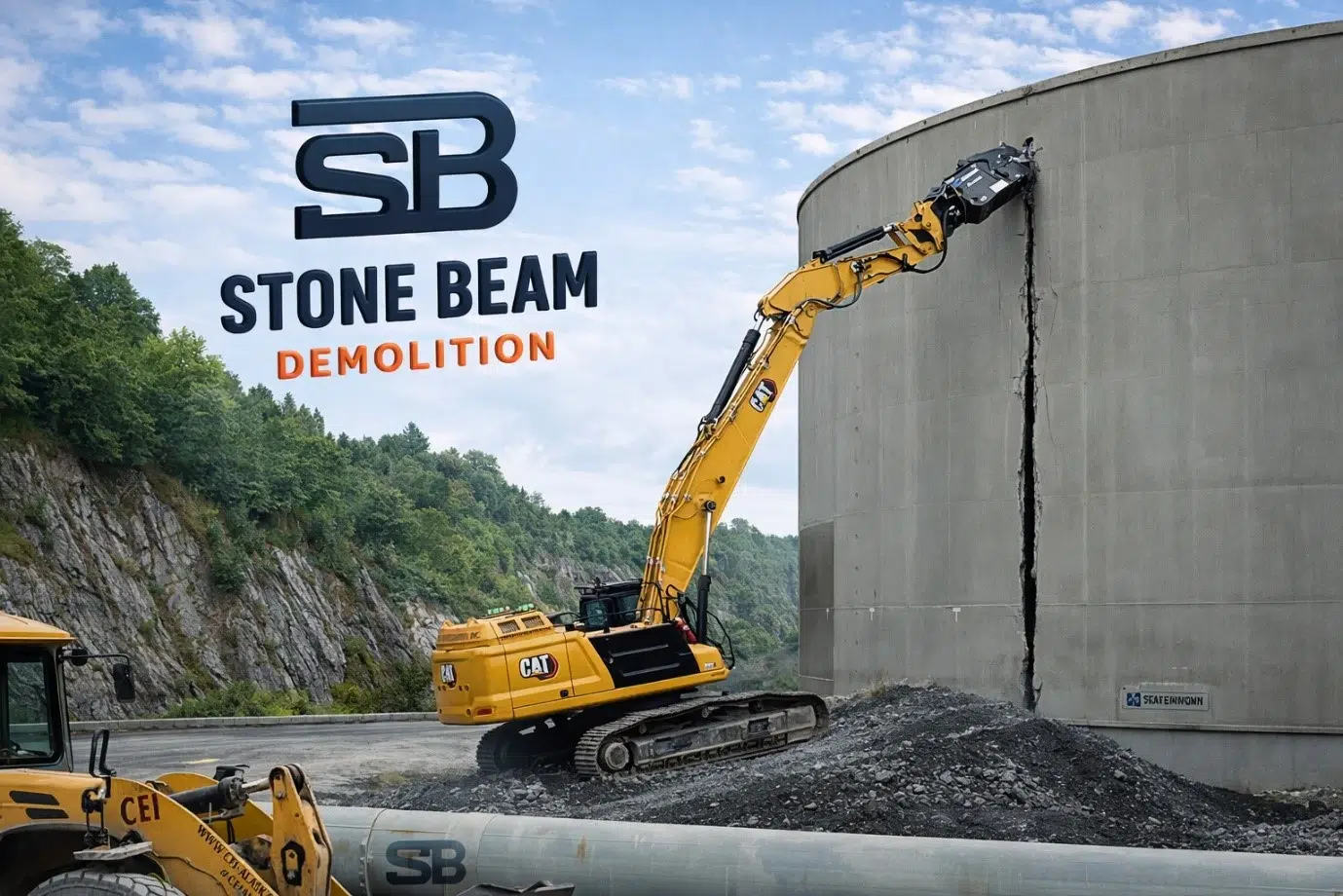
When roof loading permits, compact excavators, crushers, and hydraulic shears are craned or ramped onto upper floors. Loads are verified in a stability report. Equipment is tethered or controlled so that operators remain outside the danger zone. Segmenting slabs with saw-cuts reduces transfer of vibration to neighbors and yields neater stockpiles for recycling and cart-away.
Wrecking Ball
The classic ball — suspended from a crawler crane — remains effective on certain simple frames. Two maneuvers exist: a vertical drop or an in-line swing along the boom. Both require generous clearances, accurate control to avoid rebound, and robust exclusion perimeters. In constrained UAE sites, the technique is less common but still part of the toolbox.
Implosion (Controlled Collapse)
Implosion weakens critical supports using precisely timed charges so the structure collapses inward. Success depends on pre-weakening that preserves stability until firing, calculated fall directions, staging that limits each fall to one or two storeys at a time, trenching or berms to contain debris if no basement exists, and thorough evacuation of the influence zone. This is a specialist method with multi-agency coordination, public notifications, and exhaustive risk controls.
Safety and Public Protection
Demolition safety is an integrated system involving planning, competence, permits, supervision, and monitoring. Lock-out and tag-out isolates electrical and mechanical energy. Fall edges are protected. Lifting equipment is inspected on schedule. Scaffold systems over 4 m are erected, altered, and dismantled by certified scaffolders. Catch platforms and debris nets are installed where elevations are worked. Internal traffic plans define plant movement, banksmen roles, and pedestrian routes. Toolbox talks, method briefings, and point-of-work risk assessments keep crews aligned with evolving conditions.
PPE and Workforce Welfare
Crews receive continuous training and wear helmets, safety footwear, eye protection, gloves, hearing protection, fall arrest where applicable, and respiratory protection matched to dust and chemical risks. Heat-stress programs, shaded resting areas, hydration, and emergency drills are routine in the UAE climate.
Interior Demolition, Office Demolition, and Strip-Out Services
Interior demolition, office demolition, and strip out services restore spaces to warm-shell or shell-and-core. Typical tasks include removing partitions, suspended ceilings, raised flooring, glazing, joinery, kitchens, and redundant MEP. Airborne dust is controlled with water-suppressed cutting and negative-pressure zones using temporary zipper doors and HEPA filtration. Work often occurs during off-peak hours to minimize disruption to tenants and the public.
Environmental Controls: Dust, Noise, and Vibration
Urban demolition depends on environmental controls. Water sprays and local extraction suppress respirable dust. Noise is managed through tool selection, acoustic barriers, and shift planning. Vibration thresholds guide the selection of cutting methods and the use of damping accessories. Instrumentation may be deployed to record and trend conditions, with corrective actions triggered by alarms. These controls protect neighbors and build confidence with authorities.
Logistics and Traffic Management
Careful logistics reduce cost and complaints. Plans define truck routes, delivery windows, loading points, wheel-wash provisions, and gate security. Within towers and malls, hoists and service corridors are booked in coordination with facility management. Debris chutes and internal skips are used where safe and efficient. Otherwise, mechanical handling and small-panel removal keep loads light and predictable.
Waste Segregation and Circular-Economy Outcomes
Demolition generates high volumes of inert waste, but most of it has value. Early segregation produces cleaner streams: concrete for recycled aggregate, steel for smelting, timber for reuse, and fixtures or fittings for resale. Smart sorting reduces tipping fees, lowers environmental impact, and can improve project economics. Photographic records and weighbridge tickets complete the audit trail.
Risk Management, Permits, and Inspections
A living risk register sits at the heart of demolition control. It links hazards to controls, ownership, and check-frequency. Permit-to-work systems coordinate hot works, confined spaces, lifting, and live-service interventions. Daily inspections verify scaffolds, edges, nets, plant condition, and housekeeping. Stability reports reassure all stakeholders that structural integrity is preserved throughout each phase.
How to Choose a Demolition Company or Contractor in Dubai?
When shortlisting demolition contractors in Dubai, look for experience on comparable assets, clear method statements, solid HSE statistics, strong references, and a credible recycling plan. Transparent pricing, realistic durations, and a communication plan for neighbors and authorities are hallmarks of professionals who deliver. Whether you need building demolition in Dubai, interior demolition, office demolition, or strip out services, insist on end-to-end accountability — from survey to handover.
FAQs
Q: What services do demolition companies in Dubai typically provide?
A: Scope usually includes full or partial demolition, interior and office strip-outs, structural alterations, material recovery, dust and noise and vibration control, waste segregation and recycling, and full documentation.
Q: Is demolition feasible next to occupied buildings?
A: Yes — if planned with stringent exclusion zones, environmental controls, and considerate scheduling with early notifications to neighbors and facility management.
Q: Which demolition method is best?
A: There is no single best method. The correct approach depends on structure, site, neighbors, vibration limits, and schedule. Most urban projects favor sequential top-down techniques with precision cutting.
Q: Do contractors offer strip out services for retail and offices?
A: Absolutely. Strip-outs are among the most frequent service lines, returning spaces to shell-and-core or warm-shell.
Q: How is hazardous material managed?
A: Competent specialists survey, remove, transport, and dispose via licensed channels with full chain-of-custody records.
Pre-Demolition Checklist (Client-Side)
- Confirm drawings, surveys, and access constraints.
- Agree sequencing and exclusion zones with the contractor.
- Verify hazardous material clearance scope and documentation.
- Approve environmental controls and working hours.
- Align logistics: hoists, chutes, routes, loading windows, gate control.
- Set KPIs for recycling rates and audit records.
- Nominate client representative for daily coordination and sign-offs.
Next Steps
If you are searching for a demolition company in Dubai, comparing a demolition contractor in Dubai, or reviewing shortlists of demolition contractors in Dubai for interior demolition, office demolition, or strip out services, this guide gives you a practical lens. Use it to brief suppliers, validate proposals, and set expectations. A disciplined process builds safer sites, happier neighbors, and cleaner, faster handovers.