Controlled demolition Dubai
for structures that must stay standing
Controlled demolition in Dubai for partial structural removal, occupied buildings, attached structures and sensitive sites where protecting retained and neighbouring assets is critical.
Cutting · robotics · monitoring























Overview
A methodology, not a machine
Controlled demolition doesn't describe one piece of equipment, and it doesn't automatically mean explosives, it's a project methodology combining survey, temporary works, separation, cutting, lifting and monitoring in one approved sequence.
It's used when a project needs tighter control over structural stability, falling material, vibration, noise, dust, access and the effect of demolition on retained or neighbouring assets, most strongly associated with partial demolition, where part of the structure must remain.
In Dubai this is particularly relevant to partial structural alterations, twin or attached villas, operating commercial buildings, hotels, industrial facilities, congested plots and projects close to live utilities or sensitive infrastructure. The method is selected from the actual structural system and access restrictions, not from a generic promise of "low vibration."
Request a technical review
Send the location, marked drawings, concrete thicknesses, elements to be retained, available access, working-hour restrictions and photographs of the work area. Stone Beam confirms the survey information required before preparing an itemised proposal.
Request a demolition quote
Use this form layout on the live page to qualify leads before a call.
Selected for the risk, not for being "more advanced
On the right project, controlled demolition is the practical way to achieve the scope without transferring uncontrolled risk elsewhere on site.
Twin villas, terraces and party walls can share slabs and foundations; the interface must be separated without transferring load into the retained property.
Hotels, offices, malls, hospitals and industrial facilities that must stay partly operational through phasing, fire/life-safety and dust containment.
Removing a floor, staircase, wall, or façade element changes the temporary structural condition, so the propping sequence must precede the first cut.
Full-size machinery may not suit a suspended slab compact, or robotic equipment still needs weight, reaction, and travel route checked.
Monitoring near fragile finishes, labs, data centres, medical equipment or heritage fabric under project-specific vibration limits.
Where material can't fall outward or cross the boundary, top-down dismantling, small sections, or planned lifting is used instead.
Techniques
A toolkit, matched to the problem
Technique selection follows the structural and logistical problem; none of these tools is automatically mandatory for every project.
Straight cuts
Defined cuts that separate retained and demolished zones don't remove the need for temporary support before the final cut.
Large sections
Suits thick walls, rafts, large beams and heavily reinforced foundations where an engineered wire path and lifting plan are needed.
Access & rigging
Completes saw-cut corners and creates lifting access and service penetrations and requires scanning near post-tension or dense reinforcement.
Confined spaces
Keeps the operator off the breaking face, not automatically vibration-free; still a percussive tool with an attachment.
Progressive reduction
Hydraulic crushers reduce concrete with less repeated impact, useful near separation lines and manageable sections.
Progressive reduction
Verified weight, designed lifting points, rigging plan, and exclusion zone. Cutting without a removal plan creates an unstable suspended load.
6. Support & separation
Temporary support installed; separation cuts and cores completed in approved order.
7. Controlled removal
Elements crushed, cut and lifted in stages, stopping at defined hold points.
8. Debris & waste handling
Removed without overloading remaining floors or blocking emergency routes.
9. Verification & handover
Retained structure inspected; photographs, records and test results closed out.
1. Define scope & final condition
Demolition boundary, retained assets and handover documentation confirmed.
2. Survey
& investigation
Records reviewed, structure and neighbours surveyed, gaps identified.
3. Design the temporary condition
Sequence, temporary works, floor loads, cut sizes and stability checks developed.
4. Permits,
NOCs & isolation
Authority and asset-owner requirements confirmed and submitted.
5. Site
establishment
Hoarding, pre-condition survey, monitoring baseline, dust and slurry containment.
Nine stages from scope to handover
Not every project needs every step, but this sequence is a strong basis for planning.
Managed and measured, never promised at zero
Controlled demolition does not promise zero impact. It defines how impacts are reduced, measured, and managed.
Vibration monitoring
Noise control
Dust control
Slurry control
Seven areas decide the number
Two removal zones with the same concrete volume can be priced very differently because of access, structural role, and temporary condition.
Engineering & survey
Cutting & sectioning
Temporary works
Removal & lifting
Robotic / compact equipment
Monitoring & occupied-site controls
Logistics & waste
Not a fixed rate
A site-specific quotation should state its assumptions and exclusions instead of hiding uncertainty inside a flat rate. Send the location, marked demolition drawings, concrete thicknesses, retained elements, access, permitted hours, and monitoring requirements for an itemised quotation.
Coordinating what has to work together
The value is combining methods, documents and inspections under one accountable plan.
Retained structure, limits, access and final condition defined before the method is priced.

Cutting, scanning, robotic plant, conventional machinery and lifting coordinated in one sequence.
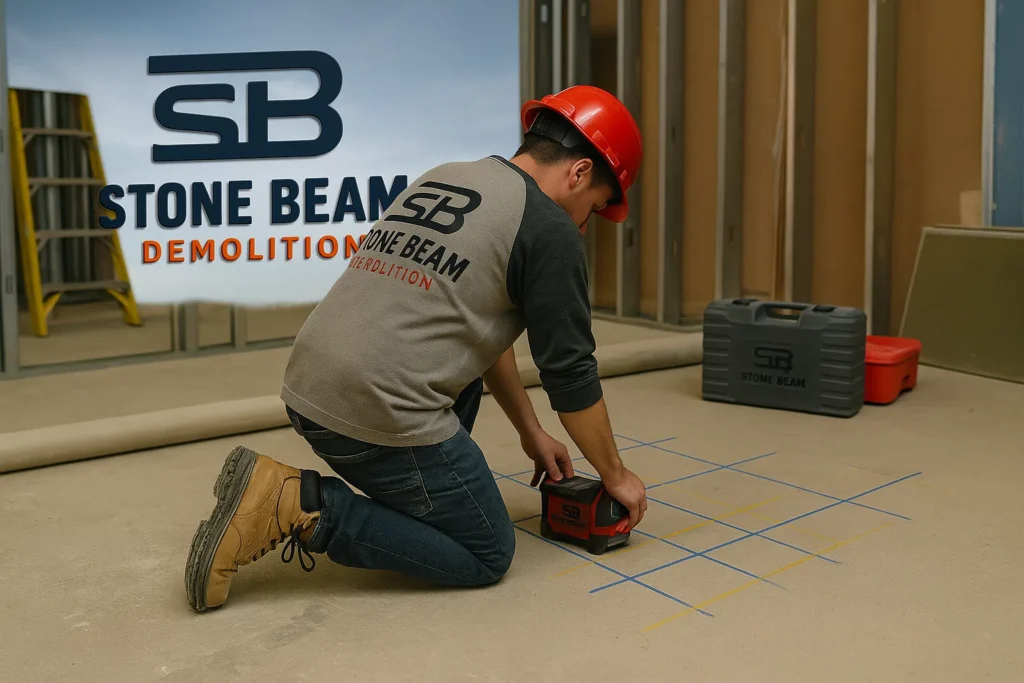
Engineering, temporary works, plant, monitoring, waste and finish stated in the quotation.

Project-specific technical documents prepared for consultant and authority review.
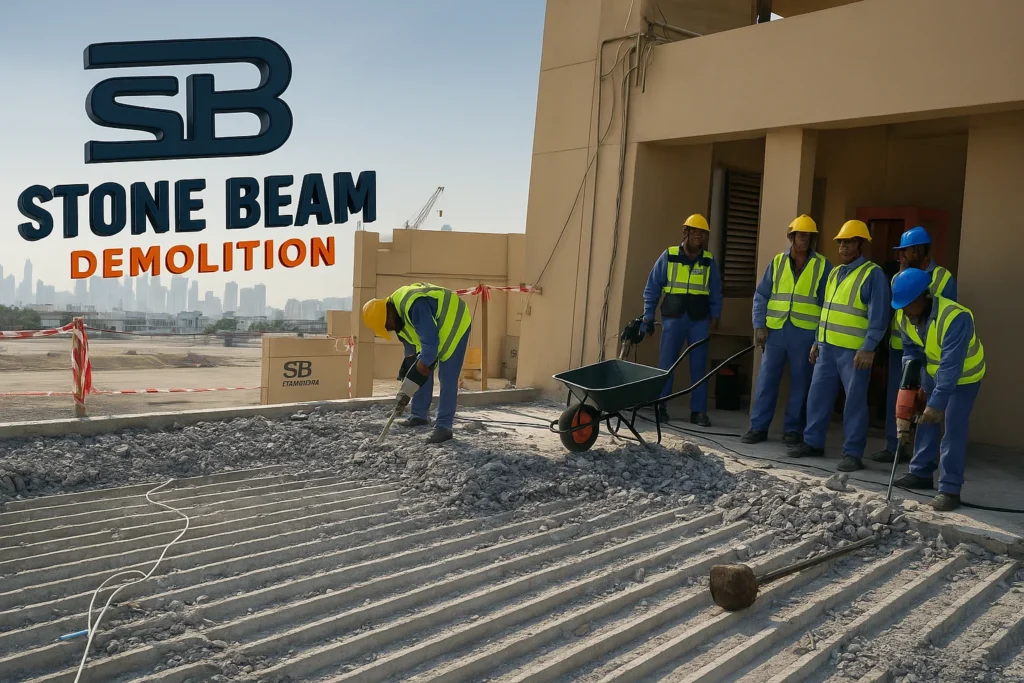
Final condition, retained elements, cleaning and monitoring records agreed before mobilisation.
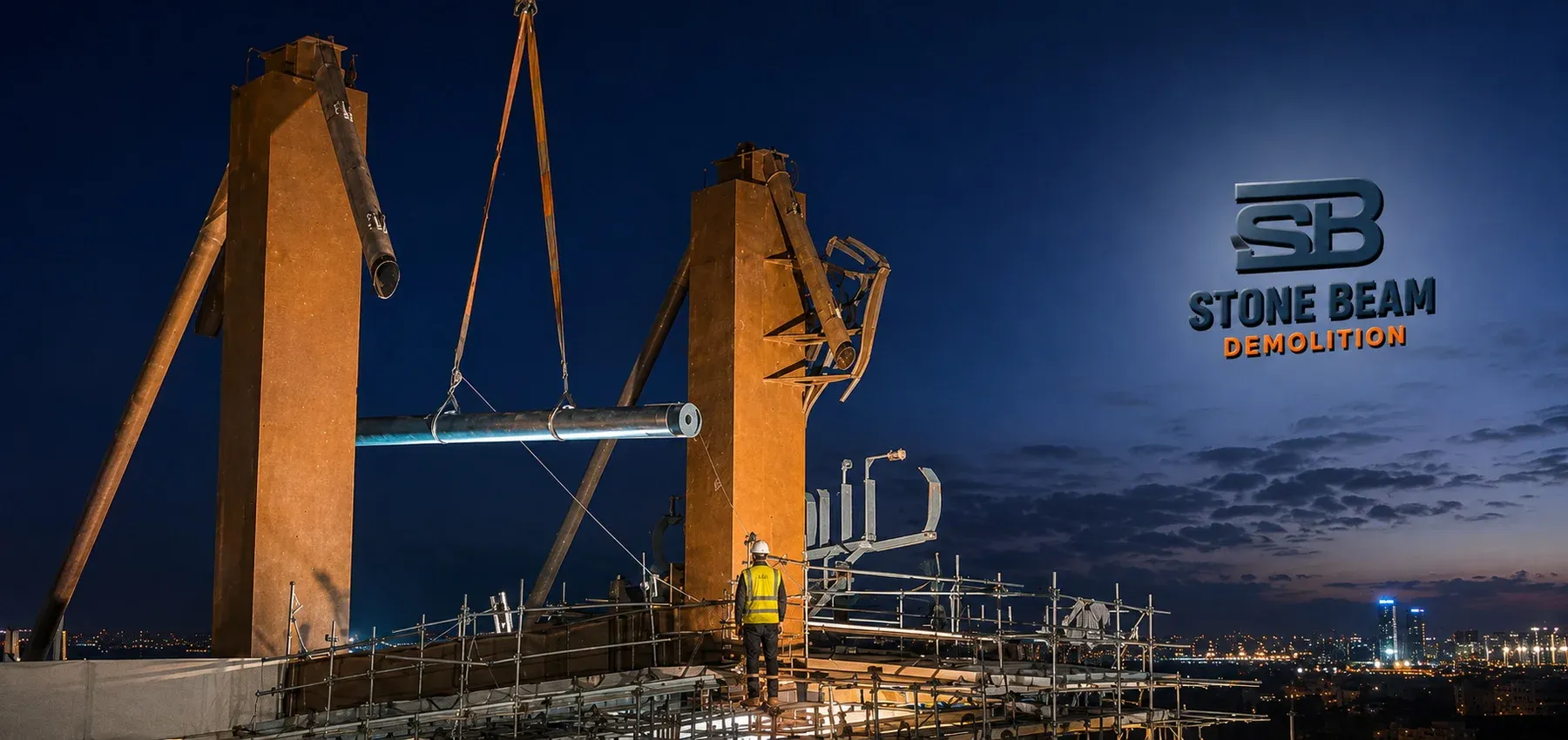
Send marked drawings and site details to start a technical review.
Common questions, answered straight
The questions villa owners and developers ask before they call.
An engineered method of removing a structure or selected elements in a defined sequence while maintaining stability and managing effects on retained buildings, neighbours, services and operations.
No. Controlled demolition is a broad methodology commonly carried out with mechanical equipment, saw cutting, robotics, crushing, lifting and temporary works. Explosive demolition is a separate specialist method needing project-specific engineering and authority approval.
Especially for partial demolition, attached structures, occupied buildings, sensitive equipment, restricted sites and work close to live infrastructure or retained assets.
No method should be marketed as universally vibration-free. Vibration depends on the tool, energy, element, distance and structural path — projects reduce percussion and use monitoring with project-specific limits.
Sometimes, subject to an approved phasing plan addressing structure, fire/life safety, services, access, dust, noise, vibration and emergency routes.
No. It's selected by risk — particularly useful before cutting or coring retained concrete and where reinforcement or post-tension tendons may affect the work.
Not automatically. Remote control improves operator separation and access, but vibration still depends on the attachment and task — a robotic breaker remains percussive.
The panel is supported or restrained before the final cut. Weight, lifting points, crane capacity, rigging and landing area are set out in an approved lifting plan.
Depends on engineering, temporary works, cutting quantities, segment weights, lifting, equipment, access, monitoring and waste. Marked drawings and a site survey are required for a reliable quotation.
Still have questions?
