Industrial demolition after the site is released
Engineered removal of factories, process buildings and heavy industrial structures — built around temporary stability, live-site interfaces, lifting, asset recovery and a defined handover.
Plants · factories · process interfaces























Overview
Not just a bigger empty building
The defining challenge isn't the size of the building — it's the number of structural, mechanical, electrical, environmental and operational systems connected to the work area.
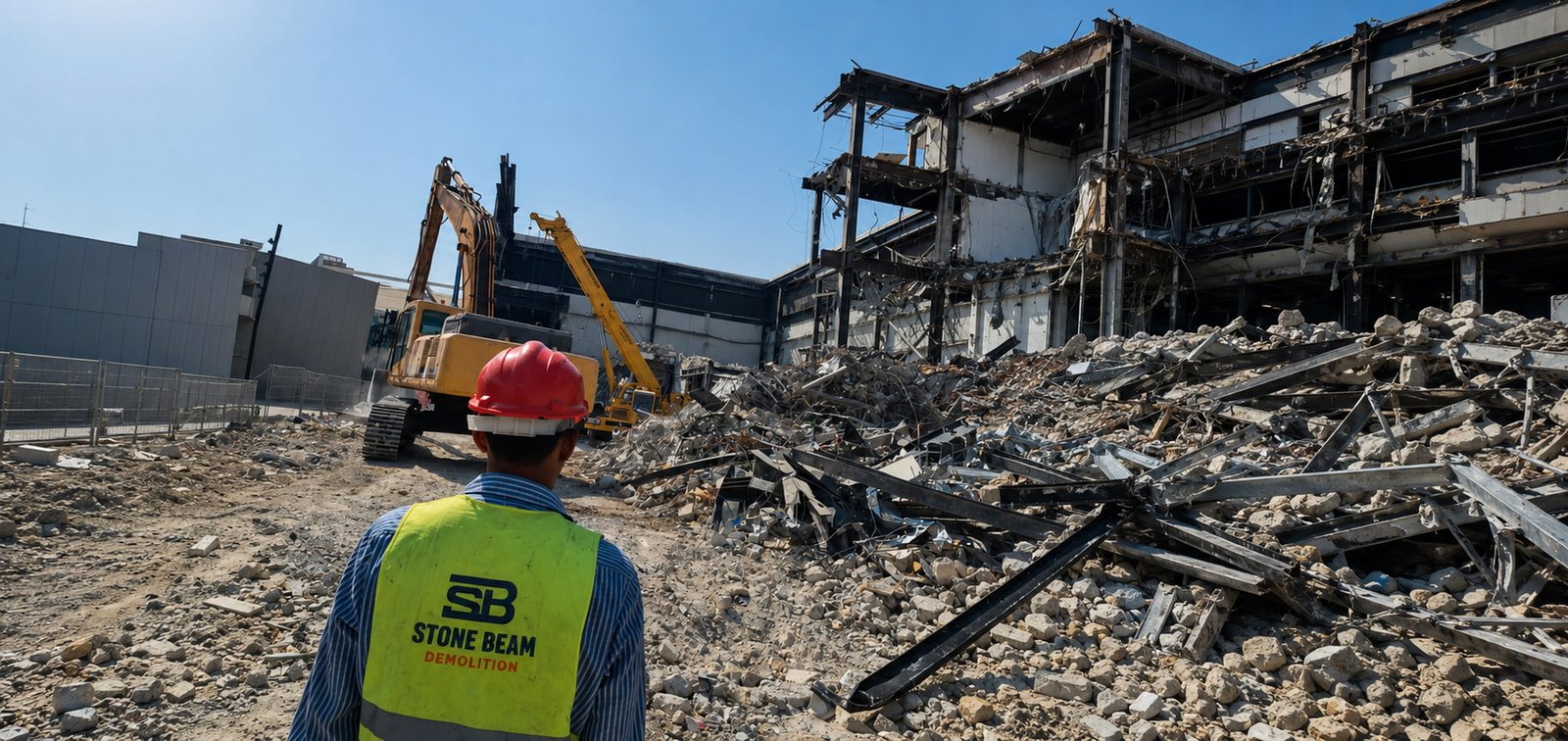
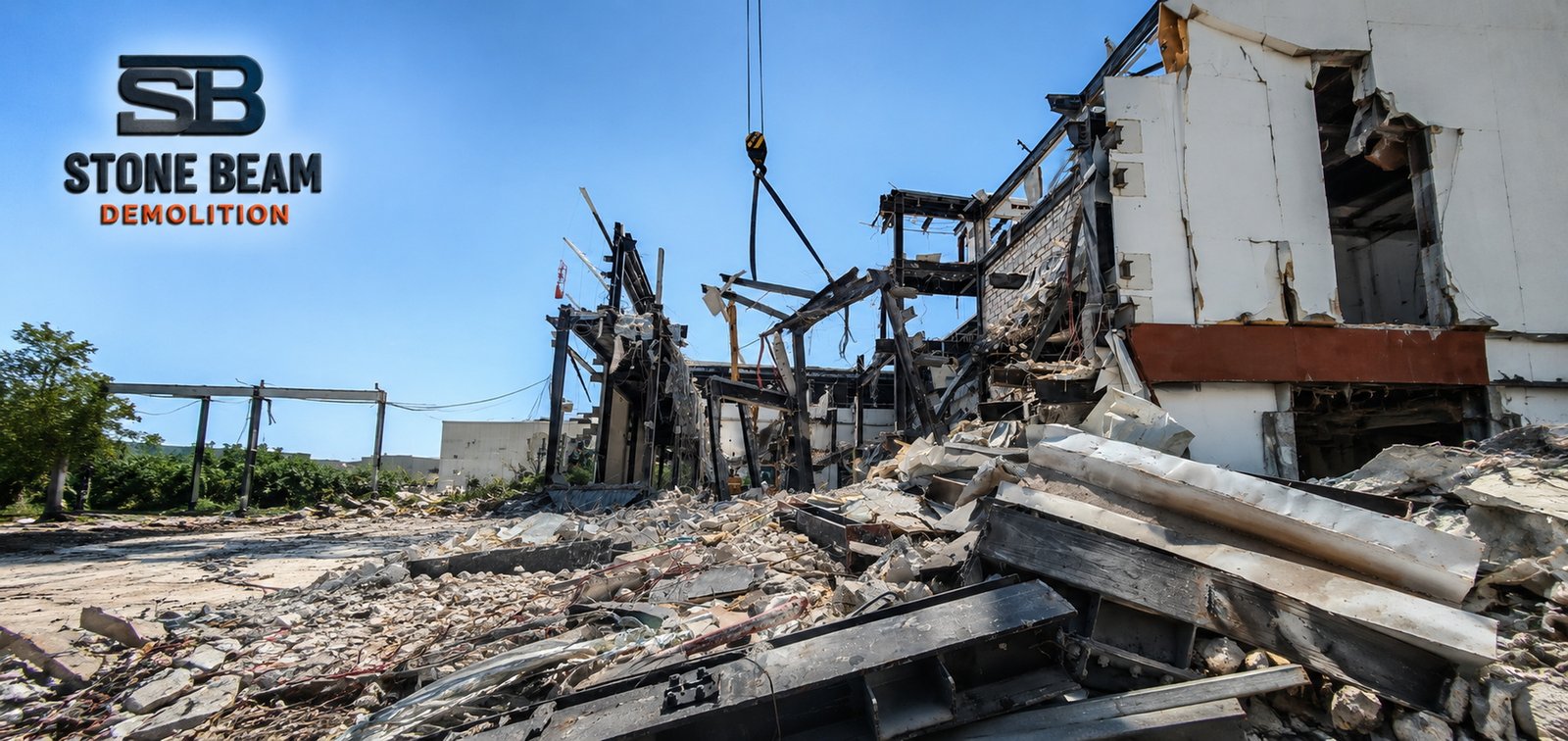
A production facility can contain steel frames supporting equipment, pipe racks with retained services, overhead cranes, deep machine bases, tanks, pits, undocumented modifications and utility systems that stay operational outside the demolition zone. Industrial demolition begins only when the work area is released for the intended intrusive activity — never assumed safe just because production has stopped.
Stone Beam develops project-specific industrial demolition scopes across Dubai and the UAE, combining structural demolition, selective dismantling, machinery removal, concrete cutting, lifting, heavy-foundation removal, material recovery and waste management as the approved scope requires.
Request an industrial demolition review
Send the facility location, current or previous use, plot authority, available drawings, asset list, release status, hazardous-material information, shutdown window, site photographs and required final handover.
Request a demolition quote
Use this form layout on the live page to qualify leads before a call.
Five site types, five sets of constraints
Large open floors don't automatically mean the frame is simple to dismantle.
Portal frames, overhead cranes, service gantries and heavy floor slabs — lateral-stability system and equipment loads identified before removal.
Structural steel, pipework and retained utilities in the same elevation — released services distinguished from retained ones before any cut.
Demolition, dismantling or asset-preservation — the method changes entirely if a machine must be relocated rather than scrapped.
Anchor systems, embedded plates and vibration-isolation details — heavier than ordinary slabs, often needing cutting over breaking.
Require a dedicated hazard and stability review — this page explains the interface but doesn't replace the specialist methodology.
Controlled cutting at a live interface, crane-assisted steel dismantling, then conventional plant once the structure is free-standing.
Six site conditions, six likely method families
Equipment power alone is not a selection criterion. Method selection follows the sequence, not the other way around.
Site condition
Open, released factory structure
Steel frame / pipe rack as sections
Heavy concrete beside retained equipment
Restricted internal area / suspended floor
Partial demolition beside live operations
Machinery for relocation or resale
Not a generic certificate that "the factory is safe"
A project control identifying which systems are isolated, which hazards remain and how long the release is valid.
Release item
Work area boundary
Isolation status
Residual materials
Retained live systems
Validity & change control
Execution sequence
Eight stages, information to handover
Each stage finishes with a clear output so the next doesn't begin on unchecked assumptions.
Define boundary
Confirm release
Survey structure
Plan lifting & routes
Remove in stages
Below-ground removal
Segregate & reconcile
Handover
Managed as an interface problem
Who can work where, what can change during the shift, what triggers a stop or re-plan.
Temporary stability
Hot work
Confined spaces
Lifting & dropped objects
Dust, noise & vibration
Live interfaces
A rate per square foot can mislead
There's no official universal rate — different quotations often include different scopes. A credible quotation is built from structure, method, quantities and logistics.
Scope boundary
Release condition
Structural quantities
Asset-recovery objective
Access & lifting
Operating constraints
Hazardous materials
Waste route & scrap
Final handover
Best RFQ package
A marked plan + latest site photographs + asset/retention schedule + known release status + required handover condition produces a far more reliable scope discussion than a factory area in square metres alone.
Coordination, with clear boundaries
The value isn't a claim that one team does everything — it's accountability for what's included and what needs a specialist.
Structural sequence, specialist interfaces, cutting and lifting planned together.
Decommissioning, steel dismantling and tank work stay with their own specialists.
What's included, what needs a separate deliverable, and what's still missing — visible.
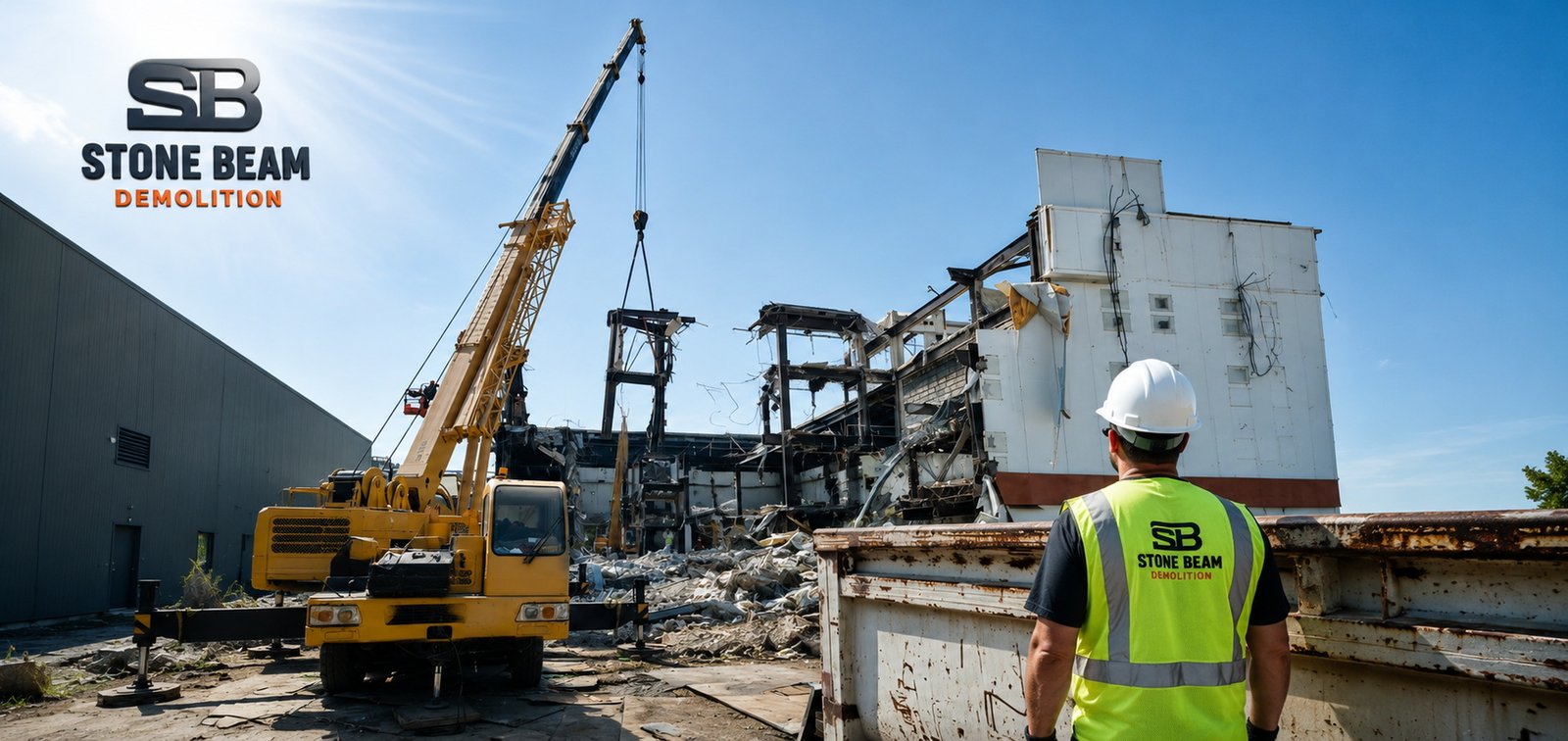
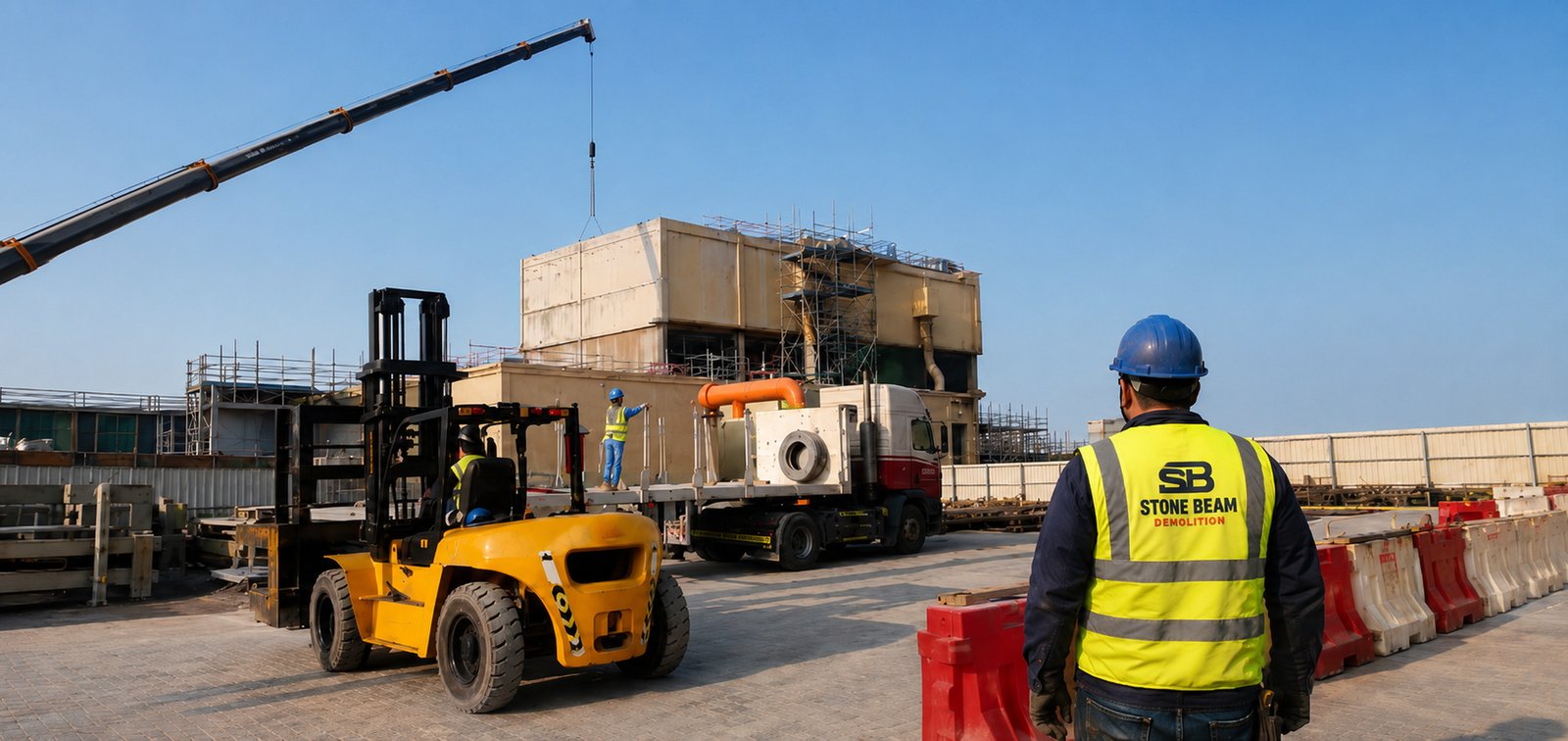
Project photographs, real reconciliation examples and a named technical reviewer.
Common questions, answered straight
What plant owners and developers ask before they call.
Physical removal of factories, plants and process structures under a project-specific sequence, normally starting after the work area is released for intrusive work.
Potentially, through an approved SIMOPS plan, physical protection and controlled access — feasibility depends on the specific facility and should never be promised without understanding the interfaces.
Yes, when expressly included. The method changes if equipment is scrapped versus preserved for relocation — isolation, lifting points and centre of gravity are reviewed first.
Coordinated within a project, but tanks need a separate hazard-led scope — empty doesn't mean gas-free or residue-free.
Depends on size, reinforcement, embedded services and proximity to retained assets — mechanical breaking, cutting, wire sawing or sectional lifting, with removal depth defined before pricing.
Yes — the applicable competent-entity approval route, which depends on the plot, development or free zone.
The affected activity stops and the area is protected. Competent identification, classification and an approved handling route follow — never treated as ordinary waste.
Still have questions?
