Facility decommissioning, defined before it's "made safe"

Structural dismantling of storage tanks in Dubai — physical removal begins only after release, isolation, cleaning and atmosphere evidence are recorded by the responsible parties.

Systems · assets · release · handover

Overview

Begins with operational questions, not equipment ones

Which energy sources still reach the work area? Which systems hold pressure, liquids, gases, refrigerants or residues? Which assets stay, move, sell, or get scrapped? Who's authorised to isolate and release each one?

There's no single close-out certificate that covers every UAE facility. The required evidence depends on the asset, the jurisdiction, the contract, the operator's permit-to-work system and the planned next use. A reliable plan defines the release criteria and document owner for each work package before mobilisation.

Request a demolition quote

Use this form layout on the live page to qualify leads before a call.


    Five scopes that often meet, never merge

    These occur on the same project constantly — but treating them as interchangeable is where liability gets lost.

    Scope
    Main purpose
    Typical output
    Facility decommissioning
    Retire systems, control hazards, manage assets, prepare area for next use
    Documented system/area release, asset records, defined handover
    Industrial demolition
    Remove buildings, slabs, foundations, process structures after make-safe
    Demolished structure, cleared work area
    Steel structure dismantling
    Remove a frame or component in a stability-controlled, lift-controlled sequence
    Reusable members or segregated steel scrap
    Interior strip-out
    Remove non-structural finishes, partitions, ceilings, selected services
    Space prepared for refurbishment or reinstatement
    Tank demolition
    Address tank-specific residue, atmosphere, access and cutting hazards
    Removed or treated tank under an approved method

    When work could touch stored energy or regulated waste

    A conventional strip-out may be enough for a simple commercial space with no process plant — the correct scope comes from a records review and site survey, never the building label alone.

    Fixed machinery, conveyors and process lines change the release sequence long before demolition starts.

    MEP

    Stored energy and interconnection make isolation ownership the first real decision.

    Refrigerants, security and information-handling requirements bring their own release criteria.

    Live network interfaces need the same layered verification as any protected asset.

    Only part of the site is retiring — segregation from what stays live is the core problem.

    Owners need a verifiable record of removed assets and wastes, not a verbal assurance.

    Not "what equipment?" — "what condition at the end?"

    That answer changes survey depth, isolation boundaries, preservation effort, dismantling sequence, waste route and close-out evidence.

    End-state option
    What it means for the project
    Typical evidence needed
    Demolition-ready facility
    Systems/areas released so structural demolition can start under its own method
    Release register, isolation status, residual-risk list, interface handover
    Retained shell
    Selected plant, services and interiors removed while the shell remains
    Retention drawings, service-boundary record, photographs, outstanding-items list
    Asset-recovery package
    Identified equipment removed for relocation, sale or client retention
    Asset ID, condition record, lifting/transport record, custody handover
    Cleared industrial area
    Equipment, structures and materials removed to a defined boundary
    Clearance survey, waste/asset reconciliation, retained-below-ground schedule
    Phased live-site closure
    One zone retires while adjacent systems stay operational
    SIMOPS plan, interface register, temporary-service plan, activity releases

    Our decommissioning scope

    Eight workstreams, built around the required end state

    Not every project needs every item — the final scope is developed around what the client actually needs handed back.

    Records review & site survey
    Drawings, equipment lists, process information and maintenance records reviewed against site conditions. Missing information becomes a survey action or hold point — never a fact.
    Decommissioning & interface plan
    Work divided into systems, areas and packages. Each interface names who owns shutdown, disconnection, isolation, testing, hazmat treatment, access release, dismantling and acceptance.
    Asset register & disposition planning
    Plant, switchgear, cabling and steel classified for retention, relocation, resale, reuse, recycling or disposal, with ownership agreed before removal.
    Isolation coordination & work-area release
    Stone Beam coordinates its dismantling against the isolations the operator or utility provider performs and controls — never assuming a boundary it didn't verify.
    Decontamination & hazmat interfaces
    Survey, draining, cleaning, testing, removal and disposal assigned to competent and, where required, licensed specialists — Stone Beam proceeds only once its release criteria are met.
    Plant, equipment & service removal
    Lifting points, weights, stability, access, temporary support, crane position and retained assets checked before anything comes out.
    Structural dismantling & demolition
    Follow-on industrial demolition, controlled dismantling, concrete cutting and site clearance — only once relevant systems and areas are released.
    Waste segregation & close-out records
    Asset disposition, quantities, carrier/receiving records, photographs and outstanding-item registers, per project requirements.

    The contracted condition — not "clean and certified"

    Filling a void with mixed demolition debris because the tank is gone can create avoidable problems for piling, slabs or utilities.

    Party
    Typical responsibility
    Typical evidence
    Owner / facility operator
    Define end state, provide records, control shutdown, nominate authorised persons
    Approved scope, system information, shutdown plan, operator releases
    Utility provider / network authority
    External disconnection, service removal or NOC where applicable
    Utility NOC, disconnection or removal evidence
    Consultant / competent specialist
    Surveys, hazmat assessment, environmental testing, decontamination verification
    Signed report, test record, certificate defined by the project
    Stone Beam Demolition
    Work planning within its scope, dismantling, lifting, demolition, segregation
    Method statements, task records, photographs, handover package
    Licensed waste carrier & receiving facility
    Approved transport, treatment, recycling or disposal
    Transfer, weighbridge, receipt or disposal records

    Value is only realised with a clear destination

    Requirements change by emirate, plot jurisdiction, facility type and retained operations — a Dubai checklist is never copied into another emirate as if universal.

    Dubai permits. If the project includes structural demolition, the route is set by the competent authority for the plot — DM, DDA or the relevant free-zone authority. DEWA publishes a combined demolition NOC process for electricity, water and billing; account closure, physical disconnection, technical release and the demolition NOC are never treated as the same action unless the evidence confirms it.
    Safety & waste. Decree No. 19 of 2025 sets the emirate-wide construction-safety framework. Law No. 18 of 2024 and Administrative Resolution No. 34 of 2026 regulate waste — defined producers keep records of waste type, quantity, process and approved carrier/disposal site. Suspected asbestos requires a competent survey and project-specific plan under Dubai Municipality's technical guidance.

    Same floor area, completely different cost

    The main drivers are systems, hazards, assets, logistics and the required end state — not square metres.

    Facility & process complexity
    Type, operating history, system count and condition.
    Records availability
    Accuracy of drawings and asset registers.
    Live services & shutdown
    Retained operations, shutdown windows.
    Hazardous materials
    Residue, contamination information, specialist needs.
    Lifting & transport
    Asset weights, crane access, transport dimensions.
    Access conditions
    Height, confined space, restricted-access work.
    Structural scope
    Dismantling, temporary support, cutting requirements.
    Waste & scrap
    Types, routes, treatment, ownership, storage.
    Handover standard
    Demolition, clearance, grading or a different final condition.

    Not a fixed rate

    An itemised quotation shows assumptions, exclusions, provisional items and responsibility boundaries — a single line reading "complete decommissioning" isn't sufficiently clear for a complex facility.

    Approached from the work that follows

    Equipment removal, structural dismantling, demolition, waste segregation and the required site handover — planned together.

    The physical and documentary endpoints are agreed before mobilisation.

    Owner, operator, utility providers and specialists each have a named release point.
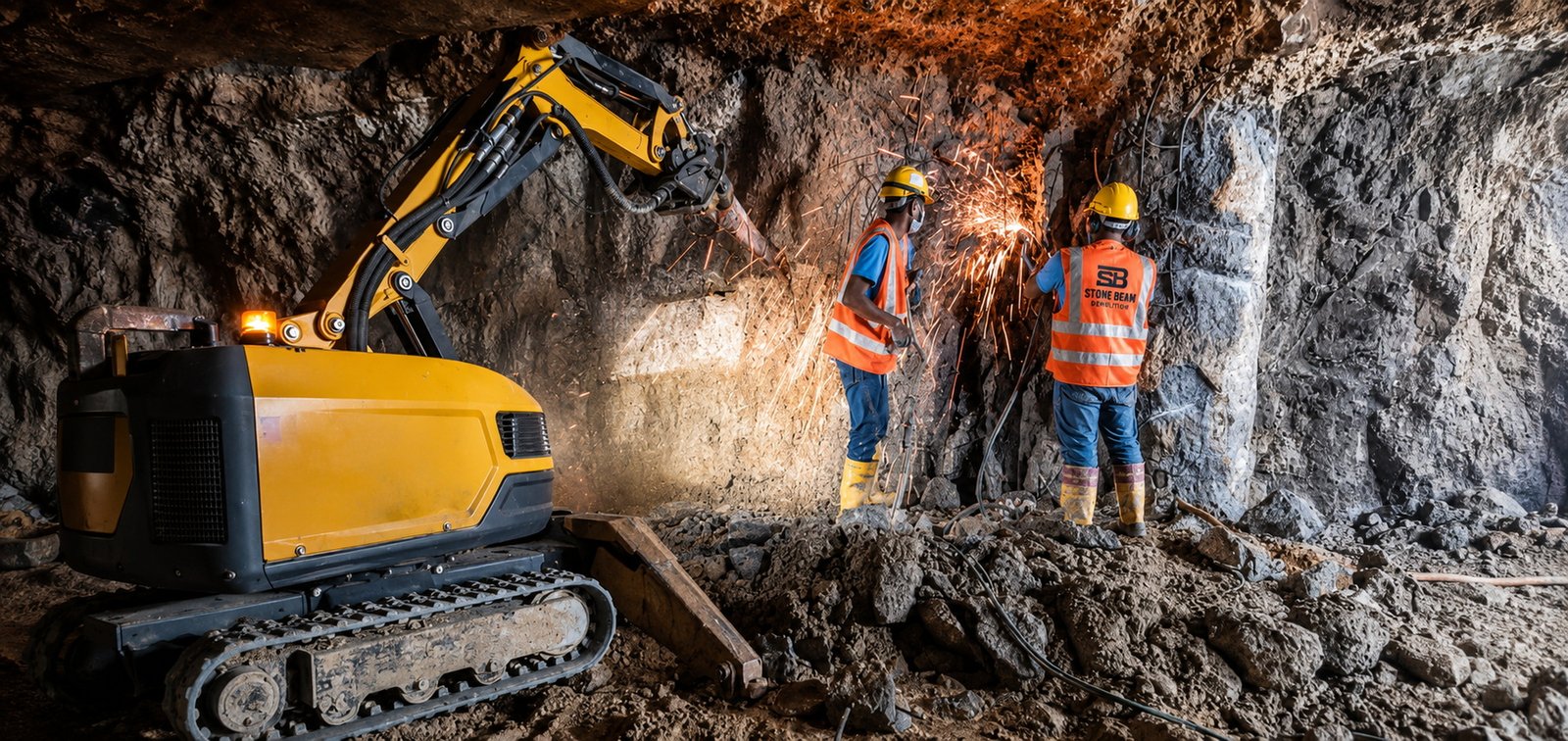
    Dismantling, lifting, demolition and site logistics sequenced together.
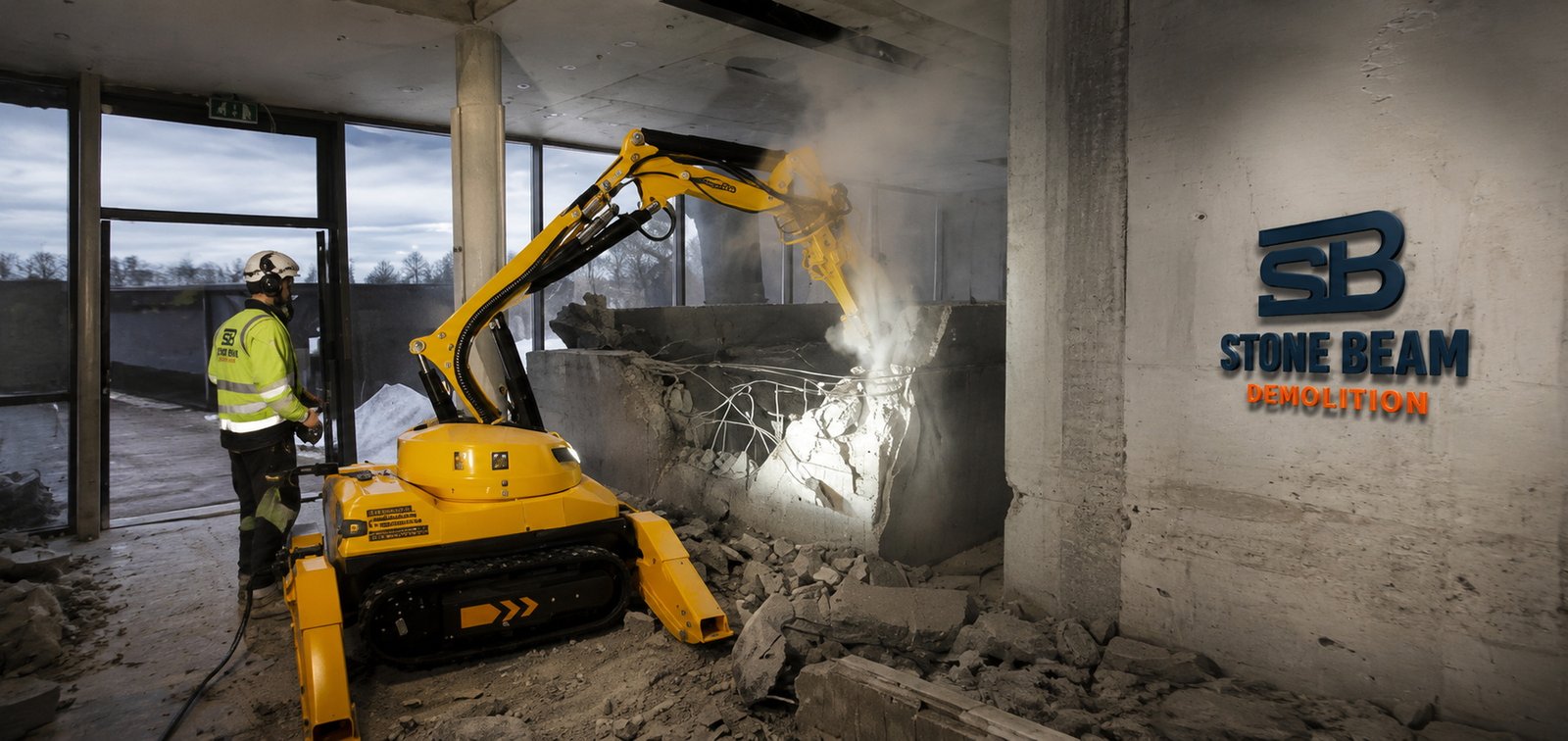
    Client assets, reusable materials, scrap and provisional items stated explicitly.
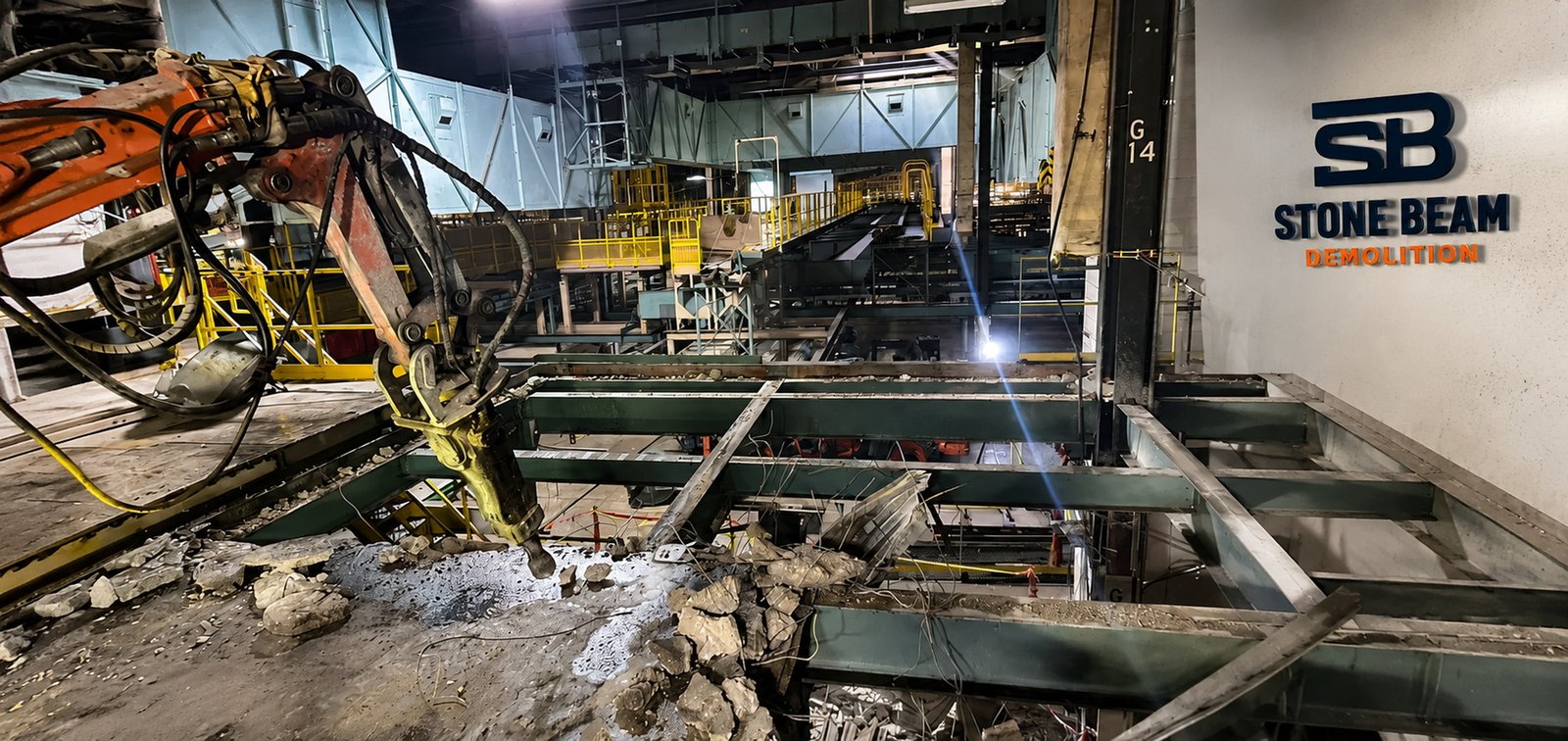
    Why Stone Beam

    Common questions, answered straight

    What plant owners and operators ask before they call.

    Not automatically. "Empty" is a visual description — atmosphere testing, residue checks and a current gas-free certificate from the named competent party are needed before hot work.
    The certificate is issued by the designated competent person under the site's PTW system — Stone Beam's structural scope begins once that release evidence is recorded.
    Yes, once excavation, utility verification and readiness conditions are confirmed — the tank is lifted whole or removed sectionally depending on verified weight and condition.
    Where verified weight, geometry, structural condition, lifting points, crane radius and route all support it — otherwise sectional removal is used.
    Yes — primarily a reinforced-concrete removal problem, though confined-space and service-isolation controls still apply even without hydrocarbon history.
    No. Mechanical methods reduce one category of ignition risk but should never be described as universally spark-free or risk-free.
    Only when the demolition zone and live operations can be separated through approved SIMOPS, isolation and access controls — feasibility depends on the actual plant, never promised in advance.
    Ownership is contractual — retained by the client, transferred to the contractor, or credited on a measured basis. This is defined before removal, not assumed.
    The team stops disturbing the affected area and routes the condition to the appointed environmental specialist — demolition alone can't certify soil or groundwater is clean.

    Still have questions?