Dry Concrete Cutting Dubai
Where slurry can't be introduced
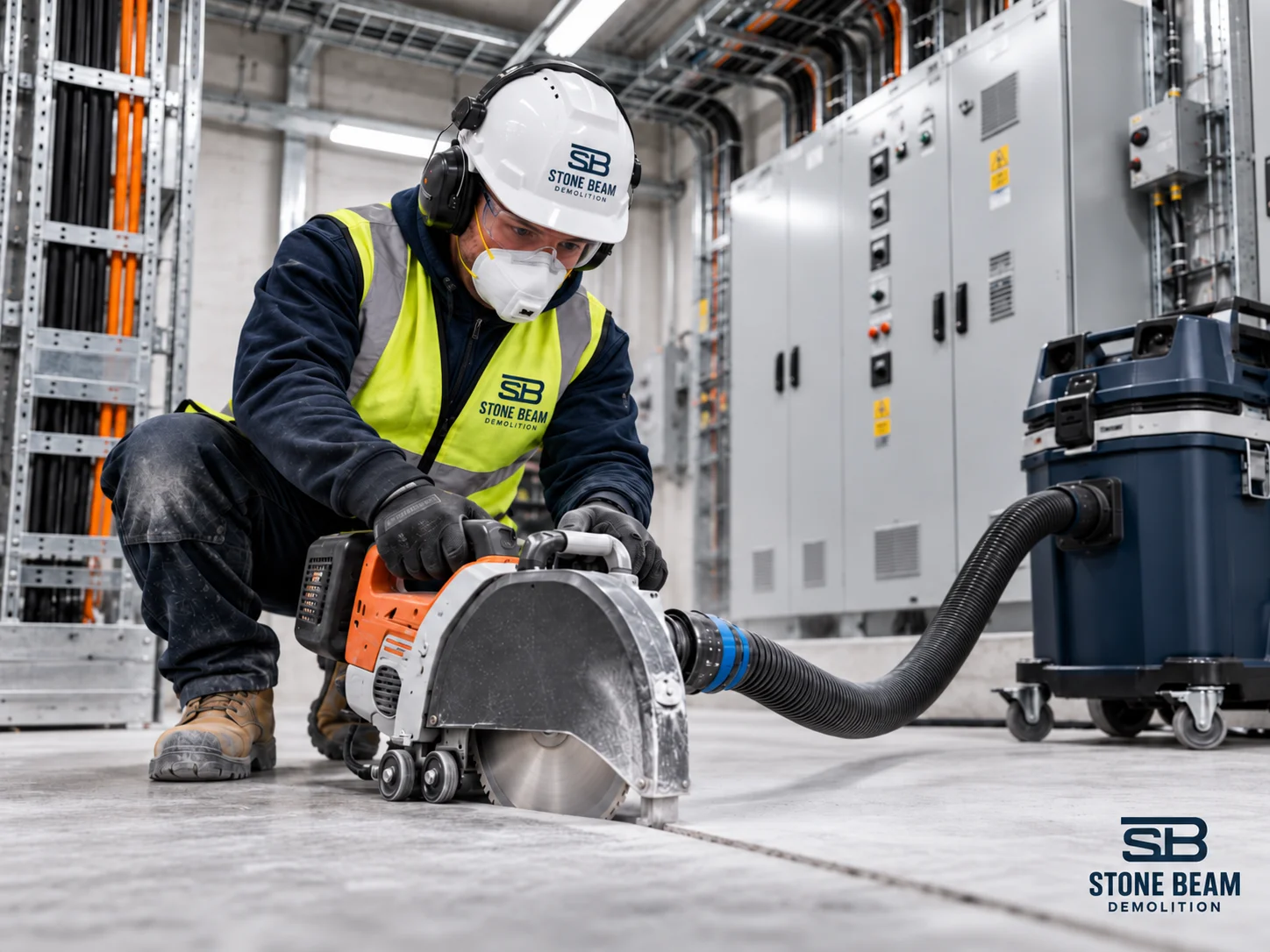
Dry concrete cutting in Dubai: diamond cutting without cooling water, with heat managed through blade design and duty cycle, and dust captured at the source by a compatible extraction system.
No water at the cut
























Overview
A condition at the cut, not one machine
"Dry cutting" describes the environmental condition in which no cooling water is intentionally introduced, not a single machine or a universal depth capability.
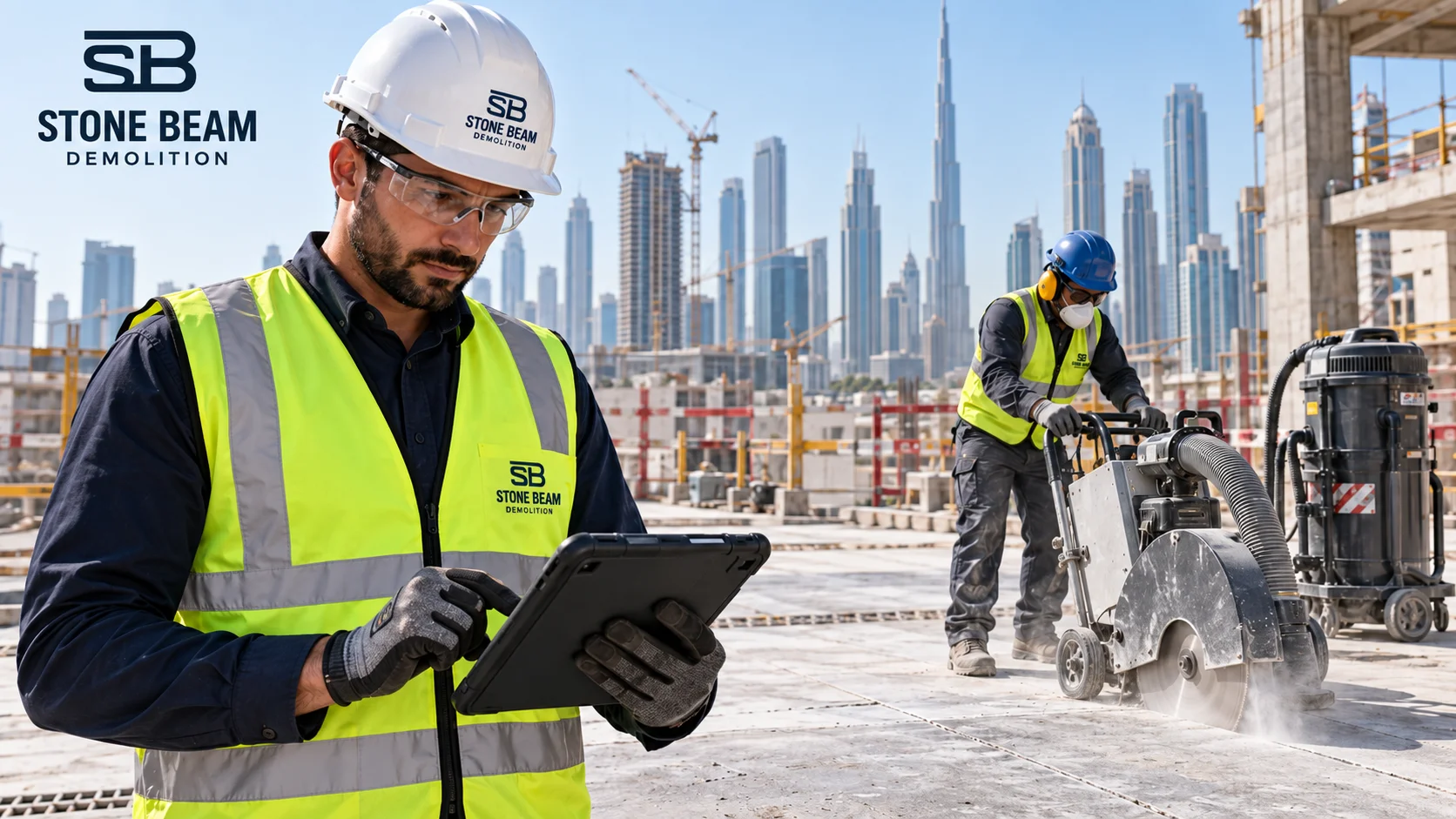
The selected dry-rated system manages heat through blade design, machine operating limits, and duty cycle, while dust is captured as close to the source as practicable using a compatible extraction arrangement. Manufacturers offer dry-capable handheld battery, corded, and petrol cutters with different blade diameters, cutting depths, and extraction arrangements. The exact system used is chosen from the actual scope and the manufacturer's instructions, not a generic "dry cutting machine" claim.
Not chosen for convenience alone
Dry cutting shouldn't be selected merely because water management is inconvenient. If wet cutting gives materially better cooling, dust suppression or sustained production, and slurry can be safely contained, wet cutting may be the more appropriate method.
Request a demolition quote
Use this form layout on the live page to qualify leads before a call.
Fit decided by the slurry problem, not preference
Selected where water migration or slurry would create a worse outcome than the dust-control measures needed for dry work.
Where slurry could stain or damage stone, joinery, ceilings, or occupied areas below.
Where water migration through a slab or wall cavity can't be accepted.
Only after electrical/MEP and facility controls are defined by the responsible parties.
Openings suited to the selected dry-rated system's depth and geometry.
Avoiding wet slurry can simplify protection, subject to noise, dust, and reopening controls.
Locations with no practical way to capture, transfer, or dispose of cutting slurry.
Six conditions that point elsewhere
Dry cutting isn't the right answer to every water-sensitive job.
Condition
Deep or sustained cutting
Large heavy section
Circular MEP penetration
High silica exposure risk
Tool not dry-rated
Structural section removal
Water-free, not risk-free
Removing water removes one control mechanism; a credible method treats dust as an engineered part of the system, not a housekeeping step afterward. "Dust-free concrete cutting" is never a service promise.
Matched extraction
Inspection & containment
Clean-up method
Avoiding water isn't the same as being safe
Dry cutting removes one interface in electrical or moisture-sensitive environments; it never makes working beside energised equipment automatically safe. Electrical status, LOTO, permit to work, and clearances stay with the competent parties the project defines. Dry cutting is never marketed as permission to cut next to live electrical equipment.
System-specific, not one universal depth
Manufacturer ranges show why capability is tied to the exact tool and blade, not a generic "dry cutting machine" claim.
System & blade selection
Depth & duty cycle
Extraction requirement
Occupied-building controls
Structural review
Not a fixed rate
An itemised, project-specific quotation reflects the actual scope, system and dust-control requirements.
An engineered service, not equipment for hir
The method is selected after reviewing the structure, access, and risk. It's not chosen because it's the tool on the truck that day.
The method, sequence and controls are confirmed from the actual site condition before any machine or tool is mobilised.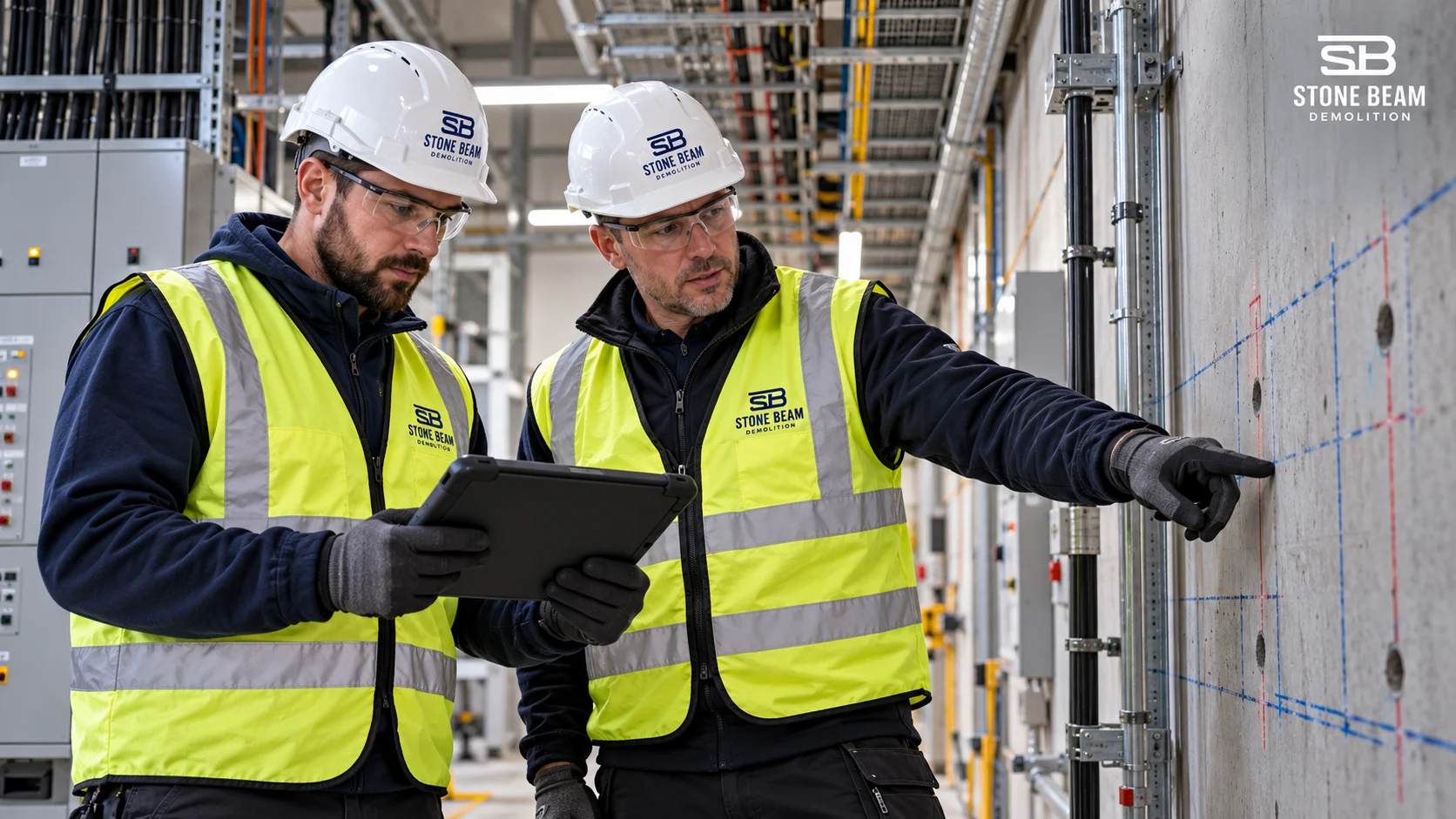
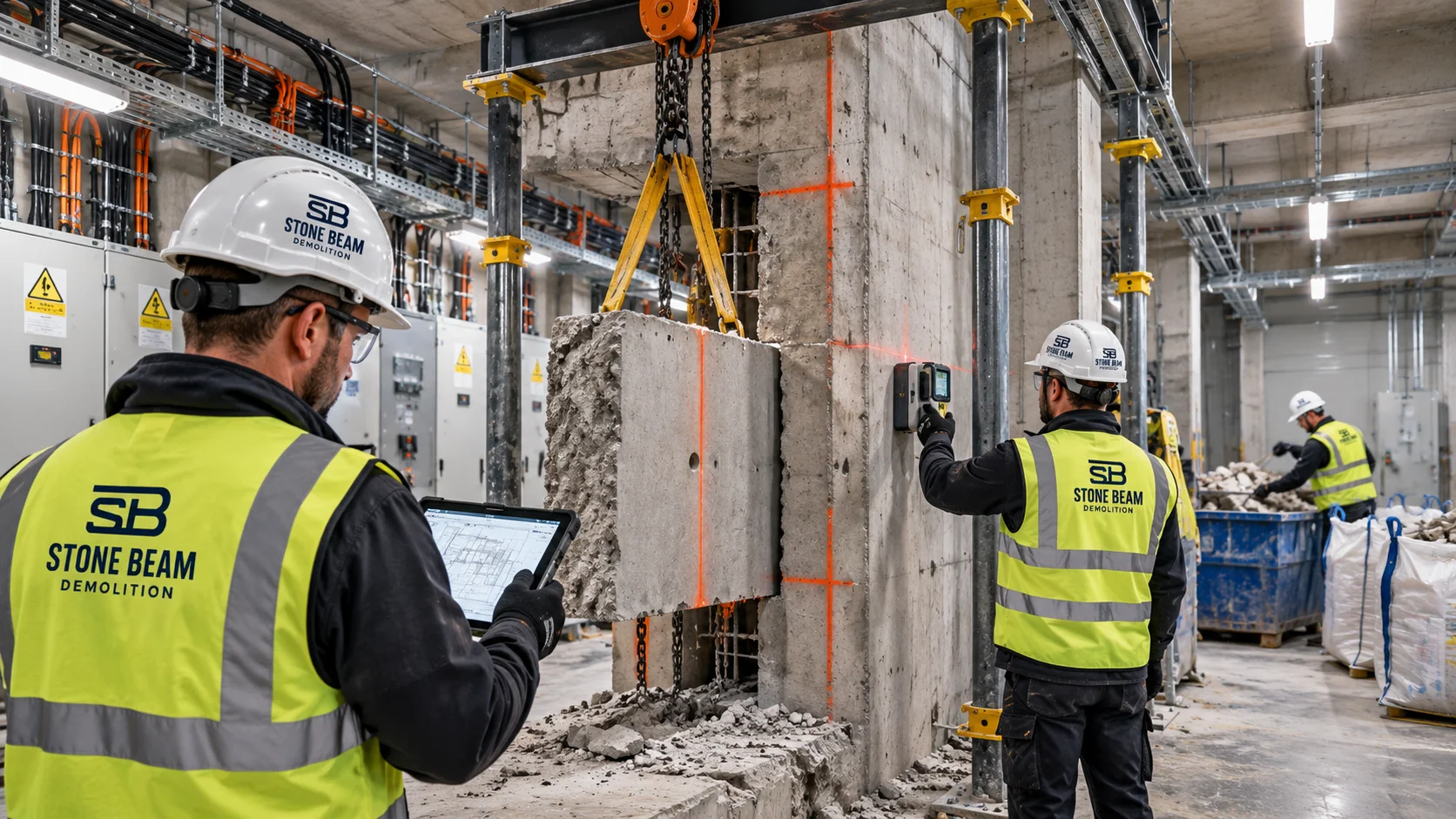
Cutting, scanning, temporary support, lifting and waste handling coordinated under one plan, not fragmented between separate contractors.
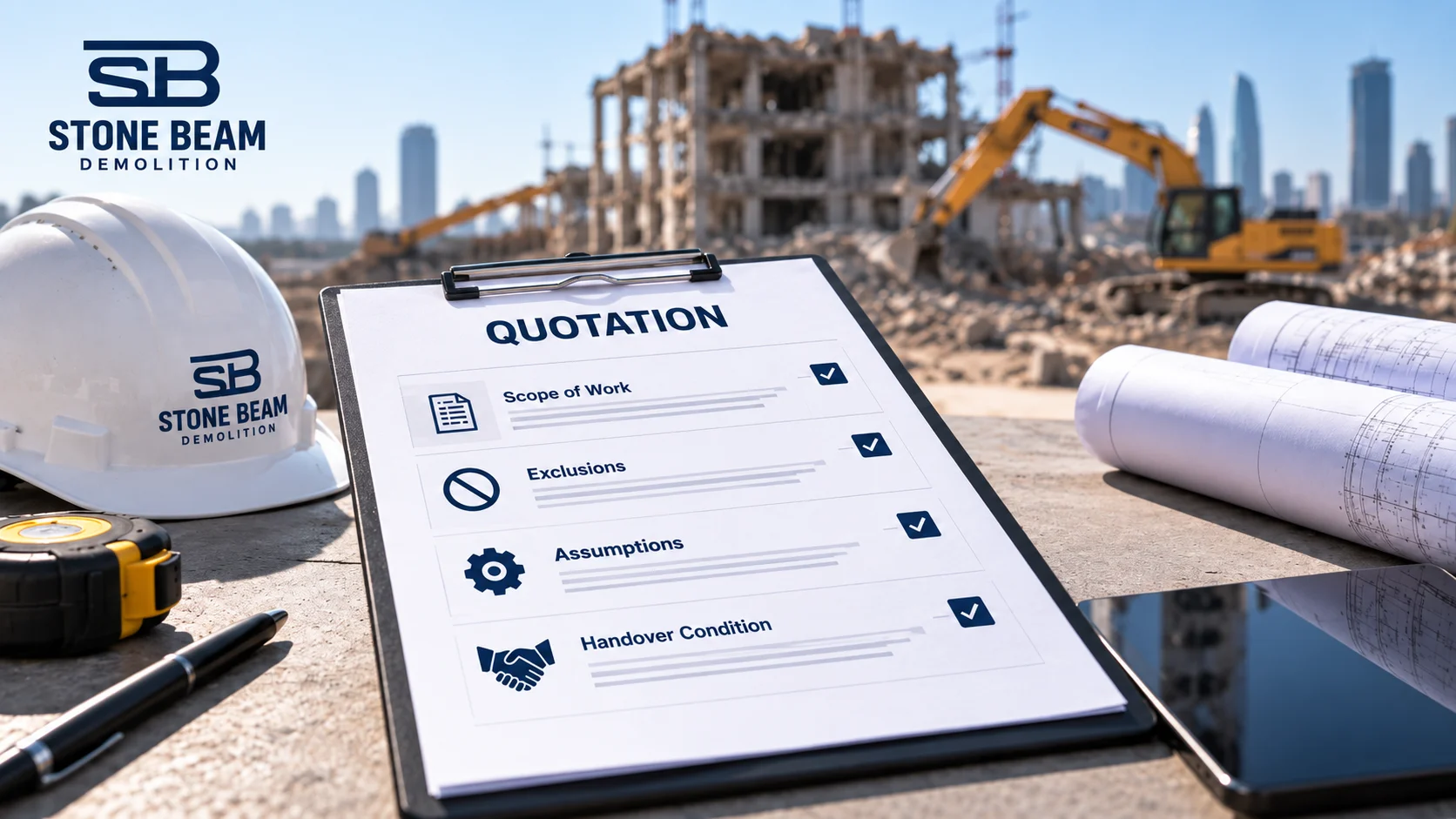
Scope, exclusions, assumptions, and handover conditions are stated in the quotation, not hidden inside a single lump-sum line.
Equipment, certifications, and capability are stated only where current records support them, never a generic "we do everything" promise.
Common questions, answered straight
What building managers and fit-out contractors ask before they call.
Diamond cutting performed without cooling water — heat managed through blade design and duty cycle, dust captured at the source by a compatible extraction arrangement.
No. It should never be marketed as dust-free — a credible method treats dust control as an engineered system: matched extraction, containment, inspection and a cleaning method that avoids re-suspending fine dust.
Avoiding water removes one interface, but electrical status, isolation and permit-to-work still apply — dry cutting is never permission to work next to live equipment.
Depends on the selected system's blade, power and duty cycle — no universal depth figure applies across all dry-rated tools.
Scanning is used where concealed reinforcement or services materially affect the cut — structural approval still comes from the responsible engineer, not from scanning alone.
Yes, often to simplify protection versus wet slurry — subject to noise, dust, access and reopening controls specific to the building.
No. Removing water changes the dust and slurry profile, not the noise or vibration characteristics of the cutting equipment.
Still have questions?
