Permit & NOC coordination, tracked to a named owner
Coordinating the demolition-permit and NOC route across Dubai authorities — a live register, not a generic checklist copied from another project.
Jurisdiction · submission · comments · release






















Overview
Full coordination or a defined support package — written into the matrix
Can include jurisdiction check, a live submission register, the demolition-permit application where Stone Beam is the eligible/requesting party, utility NOC coordination, aligning the method/HSE package, logging authority comments, the start-work release check, and completion/close-out coordination.
Permit delays are often caused by dependency failures rather than the final authority review — an unclear boundary, a name mismatch, an expired site plan, missing utility status, or a submission assuming the wrong jurisdiction. A stronger process freezes the project identity and responsibility chain before the first application is uploaded.
Checklist warning
A generic list copied from another project can be a useful starting checklist, but it is not the permit route. The current authority portal, project jurisdiction, demolition method and appointment structure control the actual submission.
Request a demolition quote
Use this form layout on the live page to qualify leads before a call.
Nine questions before the first application is prepared
Answered before permit preparation begins — not discovered mid-submission.
Condition
Which authority controls the plot and demolition permit?
Is there a master-developer or free-zone NOC on top of the building-authority permit?
Who is the legal owner and who can appoint the consultant and contractor?
Who is eligible to submit each application on the relevant portal?
Is the demolition full, partial, structural, internal-only or a special method?
Which utilities are present, and which need disconnection, protection or diversion?
Which documents must be prepared by consultant, contractor, owner or specialist?
What must be complete before physical demolition can start?
What completion or close-out document is required after demolition?
Four interfaces, four different roles
These illustrate why the service must be jurisdiction-specific — they aren't a copy-paste requirement list for every Dubai project.
Authority
Dubai Municipality
Dubai Development Authority
Trakhees / PCFC
RTA
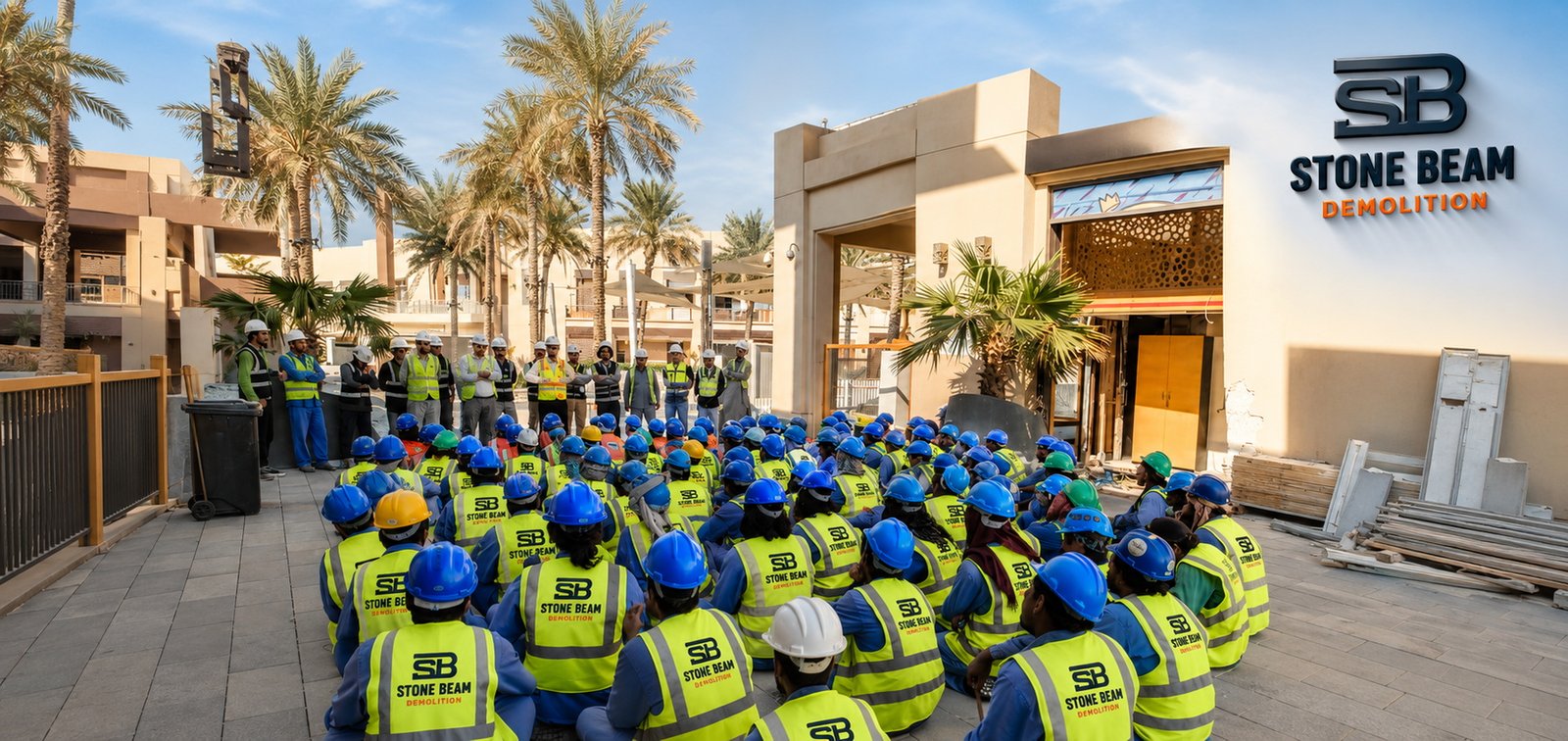
"Approved" on the portal isn't automatically "ready on site"
Before filing, the package is checked for coherence: project identity, drawing boundary, method alignment, HSE alignment, utility status, consultant/owner deliverables, file control and commercial responsibility.
Before demolition starts
Is the correct permit issued and valid? Are required NOCs and utility isolations at the required status? Are owner-side clearances complete? Is the approved boundary marked, and hoarding/access/protection installed? Are the approved method and emergency controls available on site? If any critical item is unresolved, the condition is recorded as hold — never assumed.
Jurisdiction and appointments — not a flat fee
The full path also depends on appointments, utility disconnections, third-party NOCs, resubmissions, payments and project-specific comments — not the authority's published estimate alone.
Jurisdiction complexity
Demolition method
Utility dependencies
Specialist appointments
Authority comments
Close-out requirement
Not a fixed rate
An itemised, project-specific quotation reflects the confirmed jurisdiction, method and appointment structure.
An engineered service, not equipment for hir
The method is selected after reviewing the structure, access, and risk — not chosen because it's the tool on the truck that day.
The method, sequence and controls are confirmed from the actual site condition before any machine or tool is mobilised.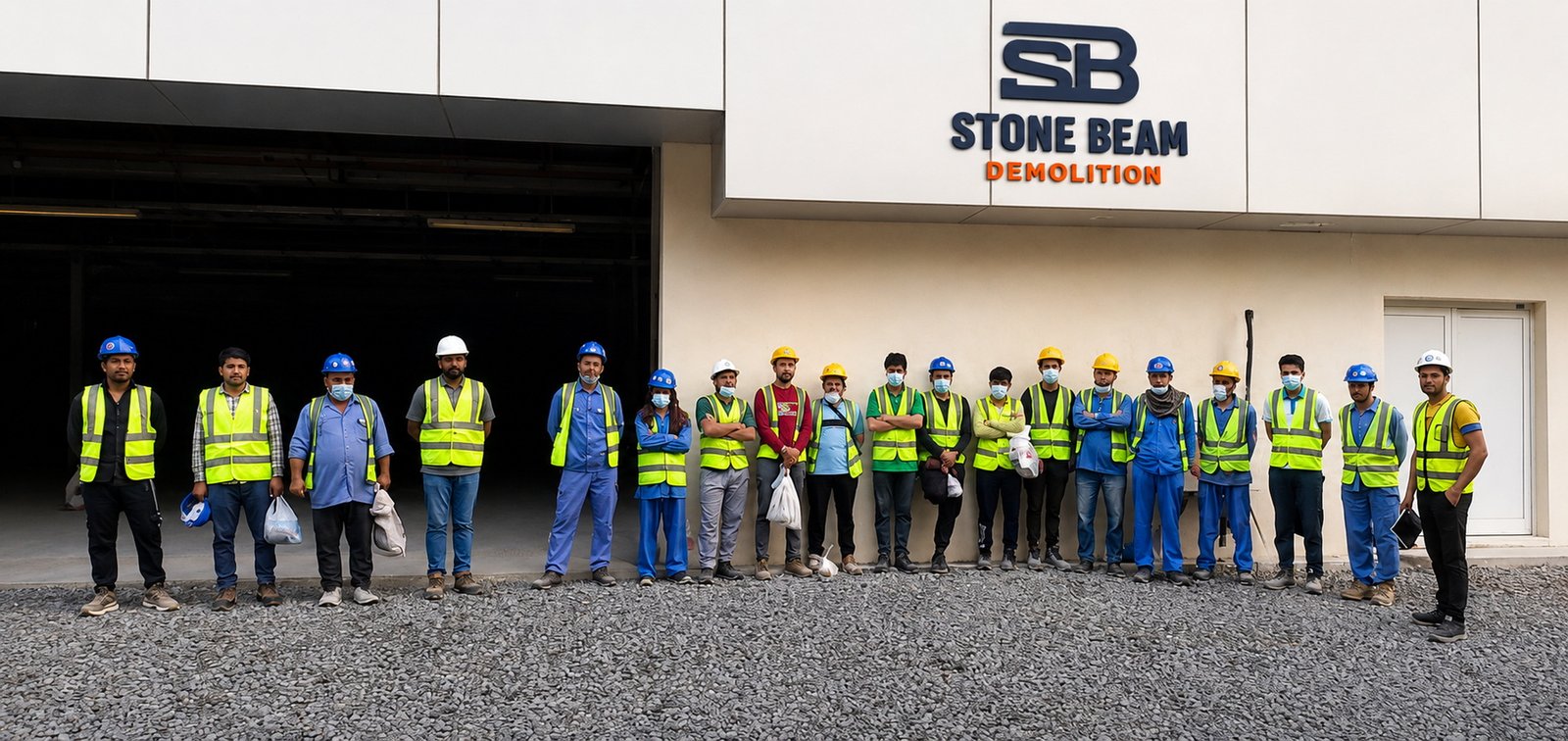
Cutting, scanning, temporary support, lifting and waste handling coordinated under one plan, not fragmented between separate contractors.
Scope, exclusions, assumptions and handover condition are stated in the quotation — not hidden inside a single lump-sum line.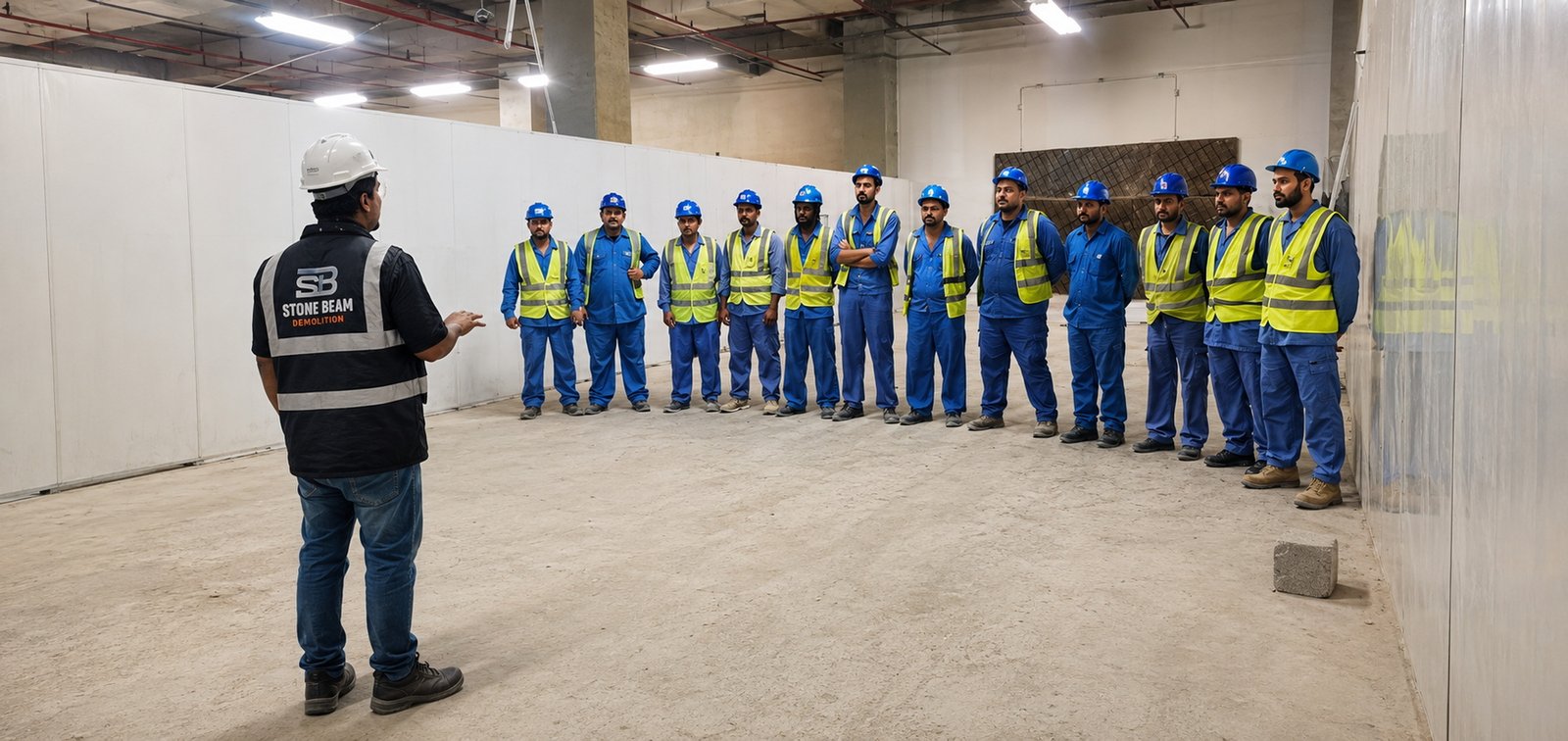
Common questions, answered straight
What owners and contractors ask before they call.
Depends on plot jurisdiction — Dubai Municipality, DDA, Trakhees/PCFC or another competent authority. The applicable route is confirmed for the specific plot before submission.
No. Approval belongs to the competent authority — Stone Beam coordinates a coherent, current submission but can't guarantee outcome or timing.
Published authority estimates (e.g. DDA's ~5 working days) cover the authority's own review, not the full project-permit path — appointments, utility disconnections, third-party NOCs and comments all affect total duration.
Utility NOCs are commonly required, but the applicable set depends on the project and authority route — confirmed per plot, not assumed universal.
No. RTA is a location/traffic-triggered interface — relevant where the project affects the Right-of-Way, not a universal requirement.
The project owner — DEWA's process ties final settlement to clearance, so a contractor can't promise completed disconnection while owner-side settlement is outstanding.
Comments are logged with an owner, required action and revision evidence through a comment-closure process — avoiding independent teams uploading inconsistent revisions.
Still have questions?
