Excavation, released stage by stage — not assumed clear
Bulk, basement, foundation and trench excavation across Dubai — production advances only once geometry, services, shoring and groundwater are confirmed for that specific zone.
Bulk · basement · trench · foundation

























Overview
Bulk, basement, foundation, trench — defined per project
Typical packages can include bulk and reduced-level excavation, basement excavation within an approved shoring system, foundation/pile-cap/lift-pit excavation, trenching, post-demolition excavation, loading and project-specific cart-away, and selective stockpiling.
Rock breaking, hard strata, contaminated soil, existing foundations, buried tanks, piles, live utilities, groundwater, shoring, dewatering, backfilling and compaction can materially change the method and price — each stated as included, excluded, provisional or by others before mobilisation.
Measurement rule
In-situ volume is not truck volume. Excavated material bulks on loading, so cubic-metre figures should state whether they're bank/in-situ, loose or compacted measure — otherwise "cubic metres" becomes a disputed number rather than a shared one.
Request a demolition quote
Use this form layout on the live page to qualify leads before a call.
Seven interfaces that stay separate — stated, not assumed
Each needs its own named owner and evidence before it's folded into the excavation quotation.
Interface
Shoring / earth retention
Dewatering
Utility diversion
Rock / obstructions
Backfilling / compaction
Waste transport / disposal
Geotechnical acceptance
The excavator shouldn't be the first to discover a missing update
Before each excavation zone is released, the project team confirms the controls relevant to that stage.
Latest section, formation level, tolerance and set-out benchmarks confirmed before quantity-dependent work.
Current locating/exposure evidence; excavation never advances below the released shoring stage.
Water-control interface stabilised before deeper cuts; plant position, ramps and truck routes confirmed.
Stockpile, reuse assessment and destination confirmed — preventing uncontrolled mixing or disposal.
A named stop-work trigger and decision authority — discoveries are isolated, not excavated around.
Record drawings are the desktop starting point — if observed conditions conflict, excavation stops in that area until resolved.
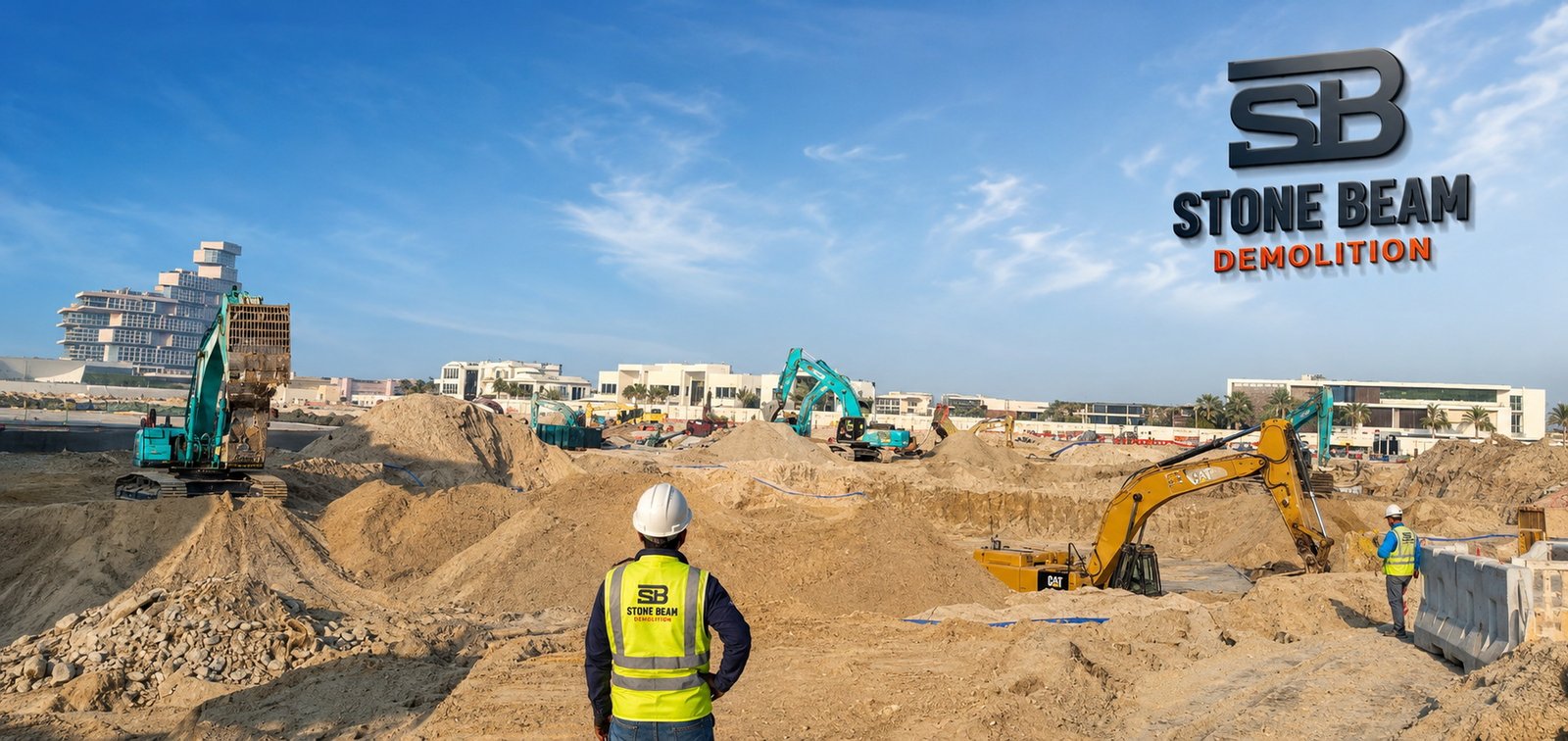
Three specialist conditions, three different constraints
Removing soil changes the pressure and restraint condition of a retaining system — basement excavation follows the approved stage sequence, not the final basement level directly.
Shoring scope note
Stone Beam may execute excavation within an approved shoring sequence. Shoring design, installation, monitoring and acceptance remain separate responsibilities unless expressly appointed and the required evidence is current.
Ground, access and logistics — not a flat cubic-metre rate
A credible programme is built from the whole cycle — excavator output, loading space, ramp gradient, truck turnaround, survey hold points and groundwater — not a headline daily figure.
Ground conditions
Depth & shoring interface
Groundwater
Access & logistics
Utility risk
Material route
Not a fixed rate
An itemised, project-specific quotation reflects ground conditions, shoring interface, access and the confirmed material route.
An engineered service, not equipment for hir
The method is selected after reviewing the structure, access, and risk — not chosen because it's the tool on the truck that day.
The method, sequence and controls are confirmed from the actual site condition before any machine or tool is mobilised.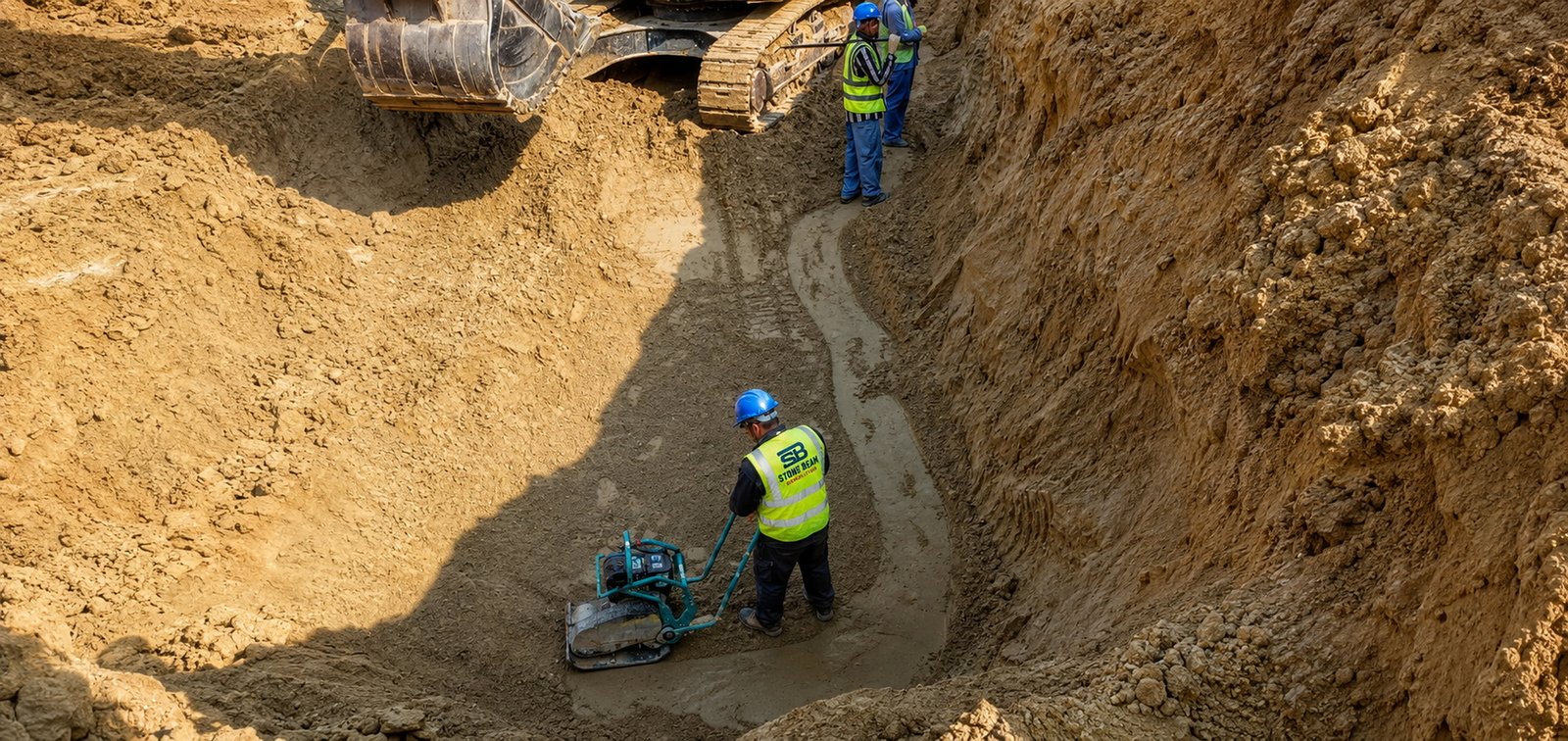
Cutting, scanning, temporary support, lifting and waste handling coordinated under one plan, not fragmented between separate contractors.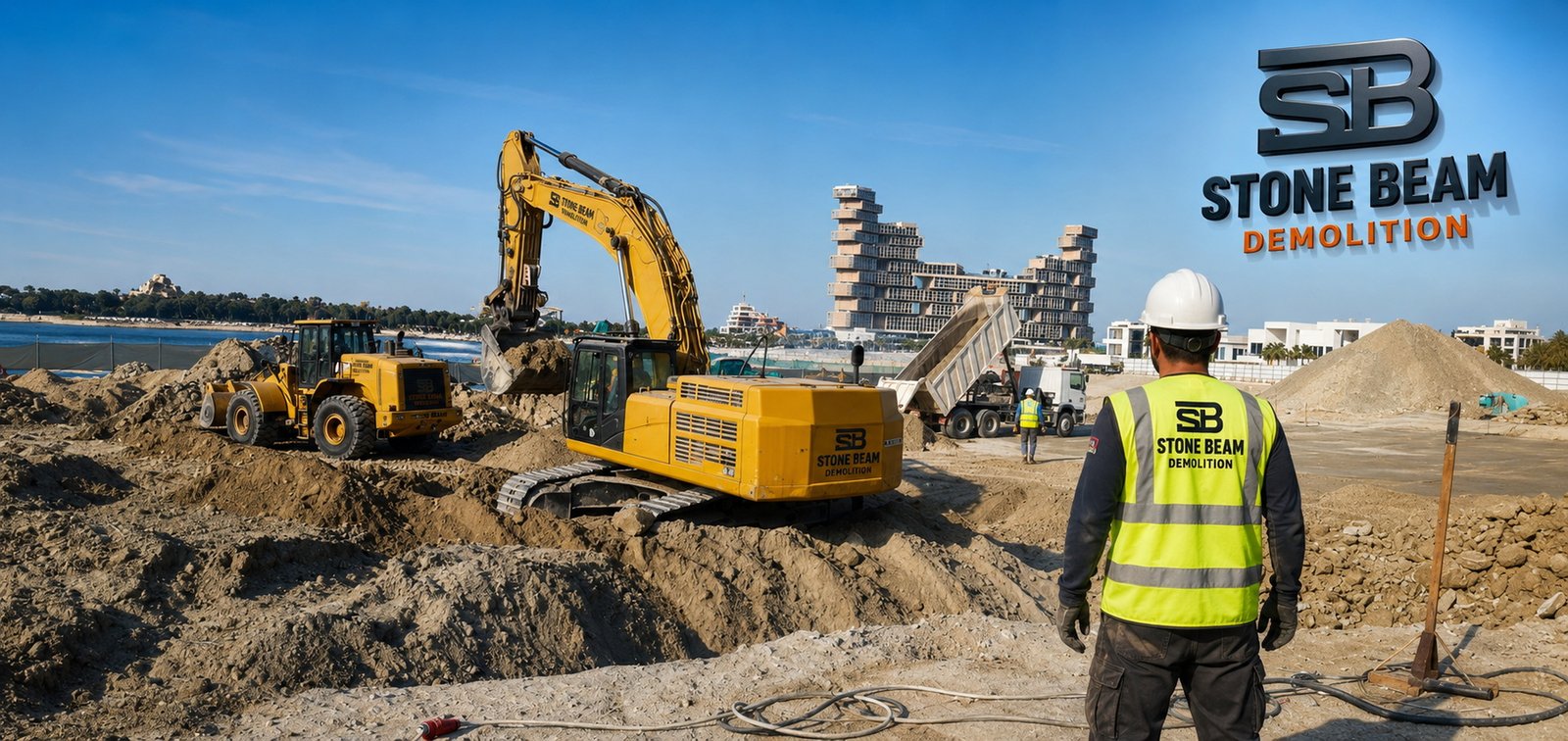
Scope, exclusions, assumptions and handover condition are stated in the quotation — not hidden inside a single lump-sum line.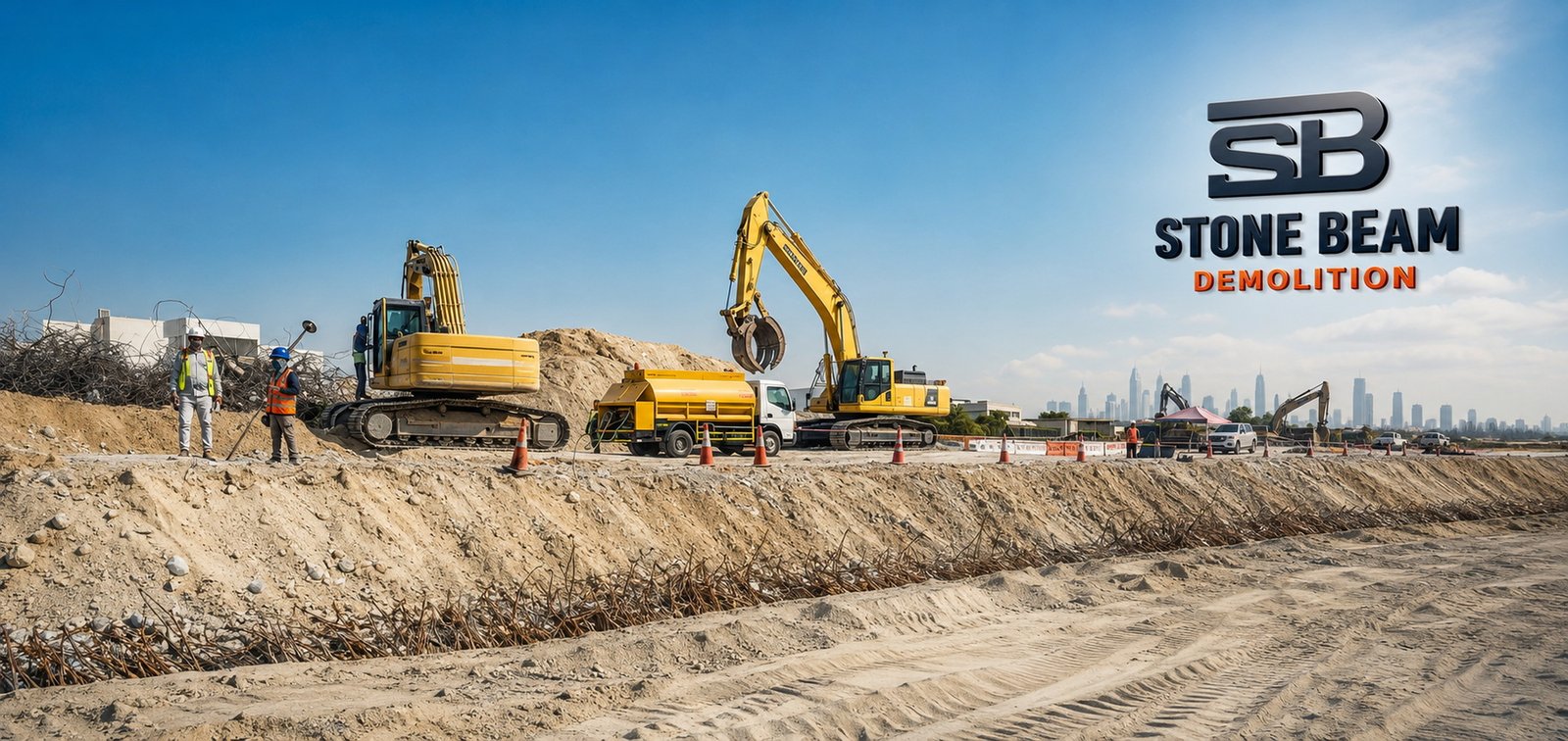
Common questions, answered straight
What contractors and consultants ask before they call.
Bulk, reduced-level, basement, foundation, pile-cap, lift-pit, trench and post-demolition excavation — scoped per project drawings and quotation.
Depends on the project contract and jurisdiction — the responsibility matrix names who applies for and holds each approval, never assumed by default.
Through layered verification — records, competent locating, surface marking, scanning where suitable, and trial holes or hand exposure. If conditions conflict with records, excavation stops in that area until resolved.
Yes, within an approved and released shoring sequence — the shoring design, installation and monitoring stay separate responsibilities unless expressly appointed.
Only when expressly scoped — dewatering needs a designed route, discharge point and operating responsibility stated separately.
Not automatically — suitability depends on testing, specification and named geotechnical/consultant acceptance, not the excavation activity alone.
Cubic-metre pricing is common, but the measurement basis — bank/in-situ, loose or compacted — must be stated, since excavated material bulks on loading.
Treated through the unknown-conditions protocol — the discovery is isolated, classified and routed through the agreed change process rather than excavated around by assumption.
Still have questions?
