

















Core Drilling Dubai
Cconfirmed Before The Bit Turns
Core drilling in Dubai: rotary diamond coring for MEP penetrations, sleeves, and test cores, with hole location, structural permission, and far-side protection confirmed before setup.
Round penetrations · sleeves · test cores
Overview
Lower impact than percussion — not structurally neutral
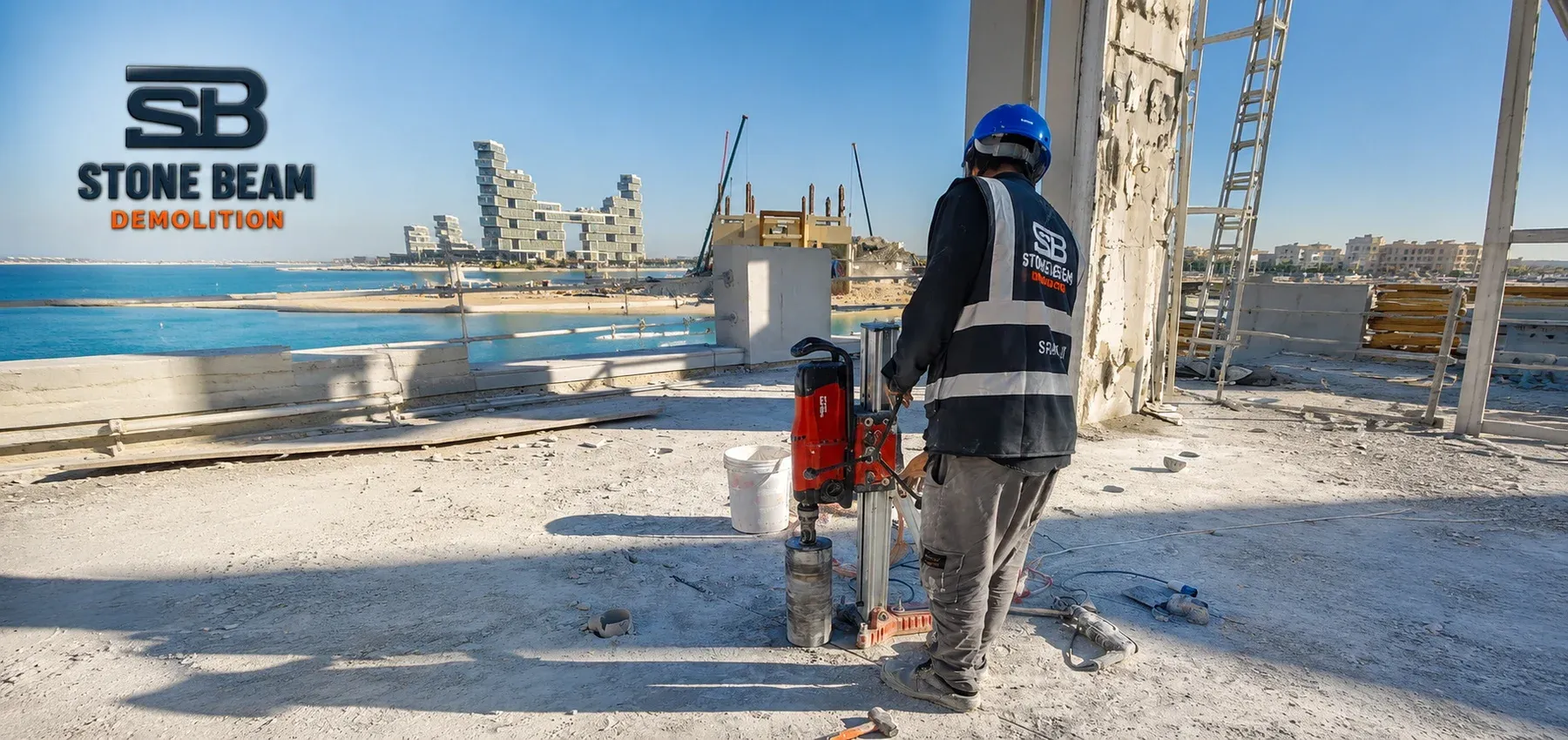
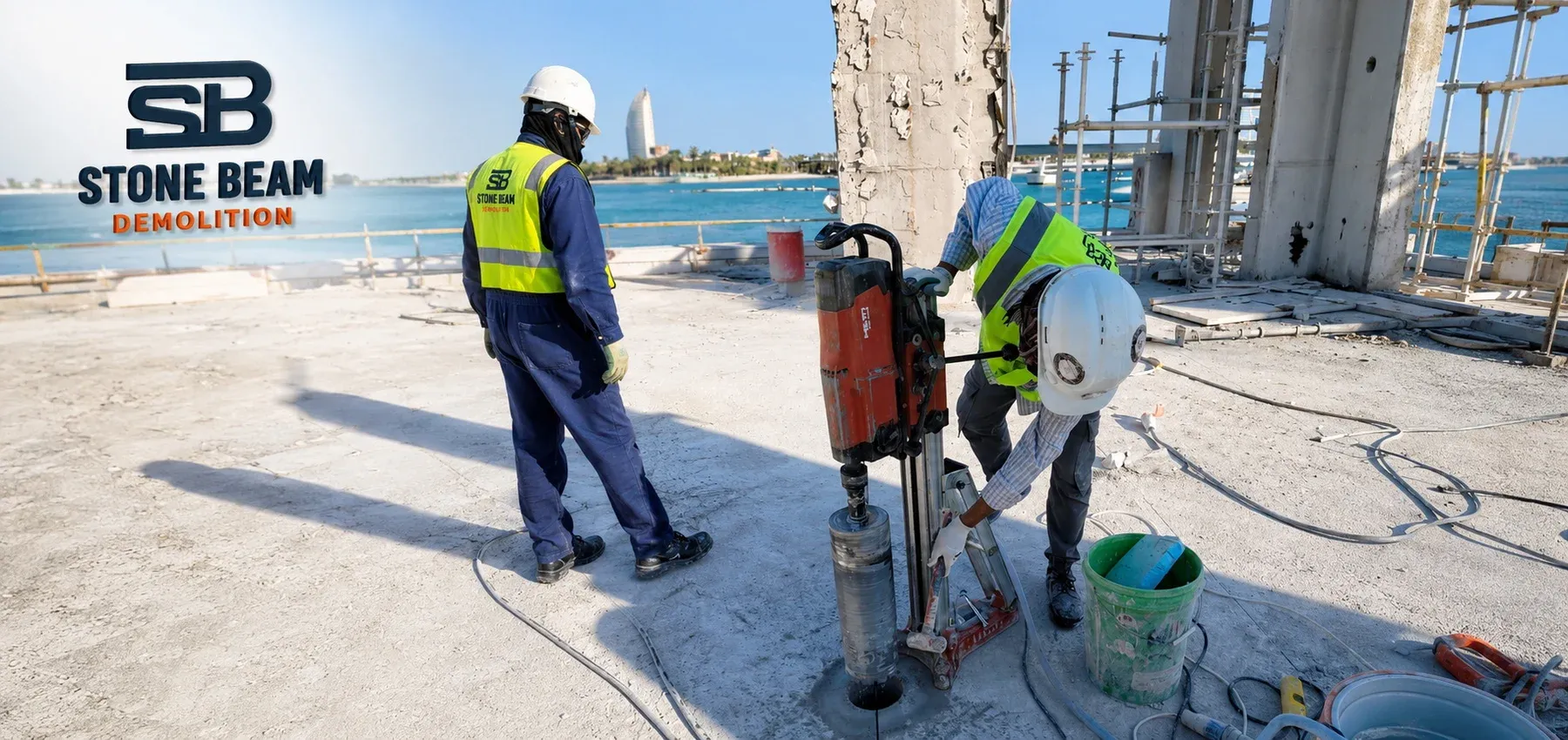
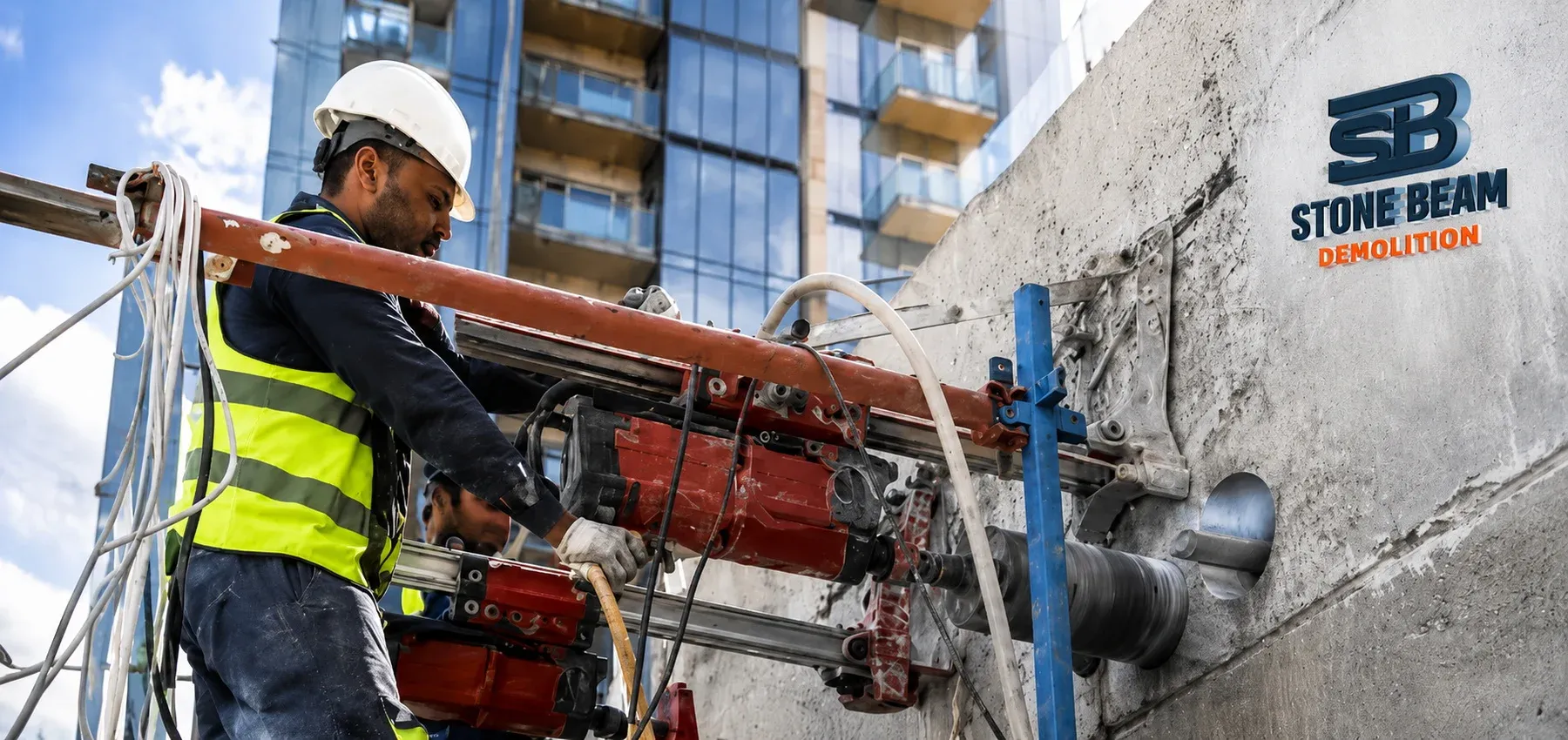
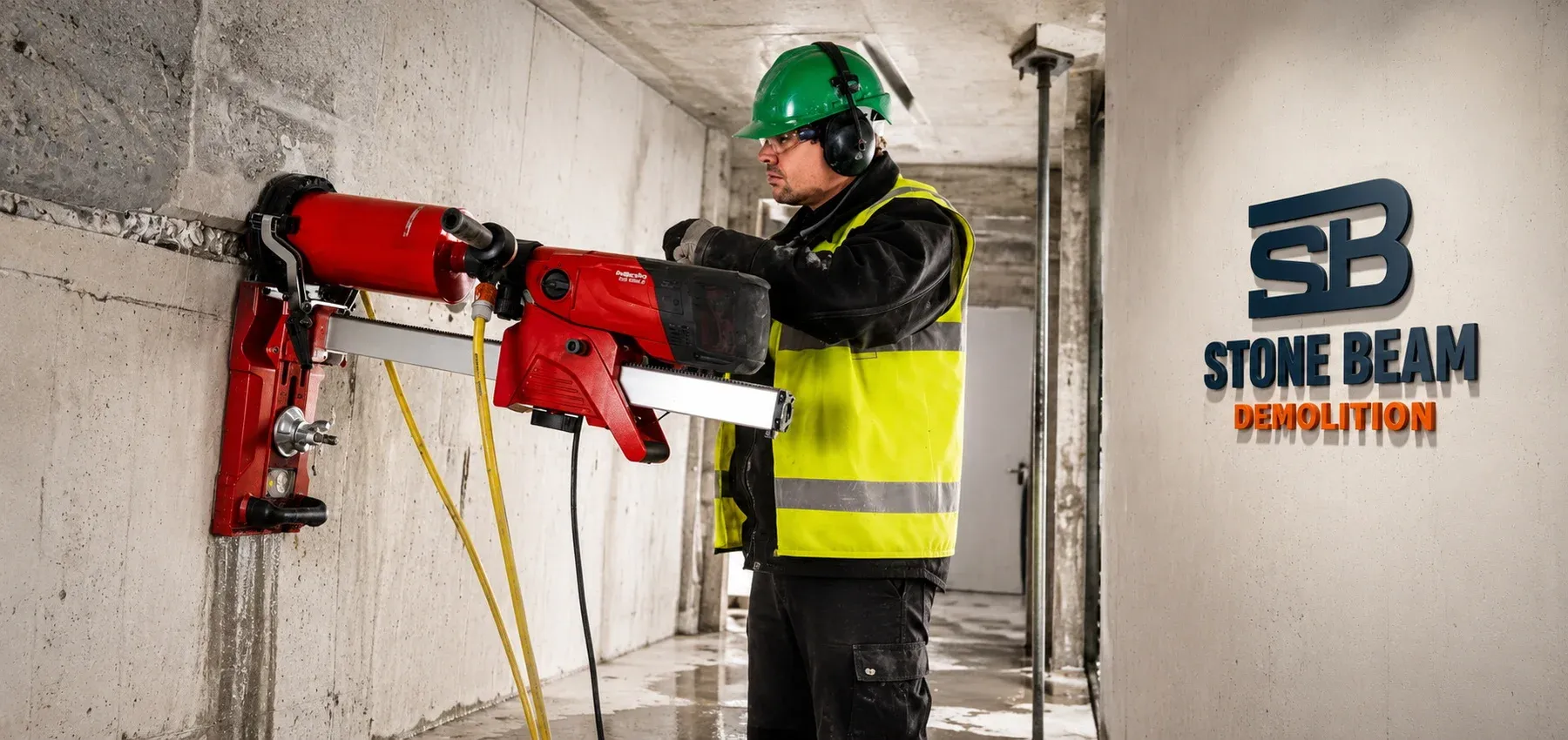
A hollow diamond bit removes a cylindrical section, leaving a round penetration and an extracted core.
Because diamond coring cuts rather than repeatedly hammering the element, it's generally lower impact than percussion, but that doesn't make it "zero vibration", "zero damage", or structurally neutral. Breakthrough spalling, tool torque, reinforcement contact, water migration, and dropped-core hazards all still need to be controlled.
Engineering principle
A scan can show or suggest where an embedded object may be. It does not decide whether an engineer allows the hole. "Scanned" and "approved" are different project states.
Request a demolition quote
Use this form layout on the live page to qualify leads before a call.
Eight questions, resolved before setup
The most important decision often happens before the drill goes in place.
Decision
Hole geometry
Structural permission
Embedded-object risk
Far side
Rig fixation
Water / dust
Core control
Handover
Four directions, four different setups
Overhead coring is not just floor coring in reverse.
The area below must be controlled; the core is never released uncontrolled through a suspended slab.
The far face needs access or protection; the rig must be fixed against reaction and torque.
Solves layout constraints but raises setup and alignment sensitivity; start and exit points are shown clearly.
Operator exposure, falling slurry/dust, and core retention need a dedicated method, not a mirrored floor plan.
Diameter and depth aren't fixed capabilities
Coring capacity depends on the selected machine, bit, extension system, reinforcement, orientation, fixation, power, and water, and there is never a universal "12–1000 mm, any depth" promise.
Diameter & depth
Orientation
Reinforcement
Access & fixation
Core capture
Handover
No fixed per-hole rate
An itemised, project-specific quotation reflects the actual diameter, depth, orientation and handover scope.
An engineered service, not equipment for hir
The method is selected after reviewing the structure, access, and risk. It's not chosen because it's the tool on the truck that day.
The method, sequence, and controls are confirmed from the actual site conditions before any machine or tool is mobilised.
Cutting, scanning, temporary support, lifting, and waste handling are coordinated under one plan, not fragmented between separate contractors.
Scope, exclusions, assumptions, and handover conditions are stated in the quotation, not hidden inside a single lump-sum line.
Equipment, certifications and capability are stated only where current records support them — never a generic "we do everything" promise.
Common questions, answered straight
What MEP contractors and consultants ask before they call.
Yes, both describe rotary diamond coring that removes a cylindrical section to leave a round penetration and an extracted core.
No, verification is risk-based; scanning is used where concealed reinforcement, tendons, or services materially affect the proposed hole, not as a blanket rule for every penetration.
Only with disciplined location control and engineer approval is a scan never treated as permission to cut a tendon.
No universal figure: capacity depends on the selected machine, bit, extension system, reinforcement, orientation, and fixation for the specific project.
Physically, diamond bits can cut reinforcement; whether it's permitted at a given location is a structural decision, not a drilling decision.
Yes, with a dedicated method addressing operator exposure, falling slurry/dust and core retention, not simply floor coring mirrored upward.
No, dry coring needs compatible extraction, shrouds, and controlled cleaning for respirable silica; it should never be marketed as dust-free.
Defined in the quotation, sleeving, fire-stopping, and making good can be included or left to a follow-on MEP trade, stated either way explicitly.
Still have questions?


