Concrete cutting Dubai
Planned before the blade touches concrete
Concrete cutting services in Dubai include controlled diamond sawing for openings, trenches and section removal, with the approved boundary, support and release sequence defined before cutting starts.
Wall · floor · wire sawing






















Overview
A clean cut is only one part of a safe result
A saw follows a planned line, but precision at the blade doesn't remove the need for engineering around the structure.
Three decisions stay separate: what's structurally approved to be removed, which cutting system can create the required geometry, and how the released section will be supported and removed. A diamond saw can physically cut concrete and reinforcing steel; that capability never means the project is authorised to sever every bar, tendon, beam, or wall. Structural approval belongs to the appointed design process; the cutting specialist turns the approved change into a buildable execution plan.
Do not design from the work face
If the site condition, reinforcement, tendon location or existing damage doesn't match the approved information, the cut stops and goes back through the project change/approval process — never improvised at the blade.
Request a demolition quote
Use this form layout on the live page to qualify leads before a call.
Three sawing systems, three different jobs
Selected from geometry, thickness, access, and the final edge requirement, not a default technique.
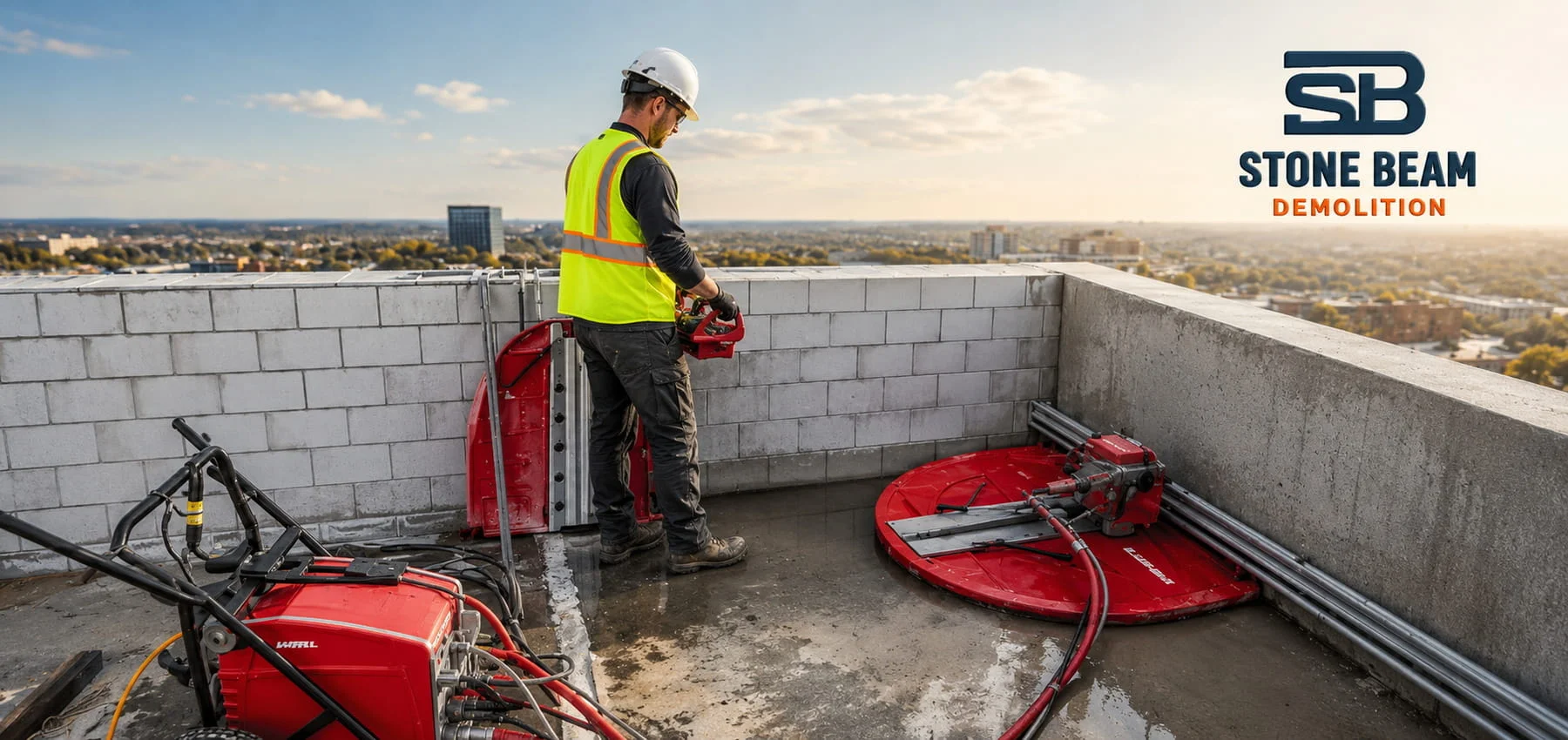
Track-mounted saws for doors, windows, and openings access, corner overcut, panel weight, and slurry route are all confirmed before cutting.
A slab-on-grade cut and a suspended-slab cut are not the same risk; temporary conditions, panel weight, and edge protection differ sharply.
For transfer beams, heavy walls, foundations, and machine bases where a circular blade can't reach, never marketed as unlimited or vibration-free.
Matched to the project condition
Core drilling and dry cutting are covered on their own dedicated pages. This matrix shows where each method fits.
Condition
Straight wall opening
Ground-bearing slab trench
Suspended slab opening
Very thick / irregular section
Uncertain embedded items
Never sold as "silent, dust-free, disruption-free"
Water cools the tool and suppresses dust but creates its own interface slurry on a finished or occupied floor.
Wet cutting
Dry cutting
Live buildings
The same linear metre can be a different job
A ground-floor cut through a thin slab isn't comparable to a heavily reinforced suspended slab needing scanning, propping and night work.
Method & equipment class
Thickness & reinforcement
Length & geometry
Access & level
PT / scanning
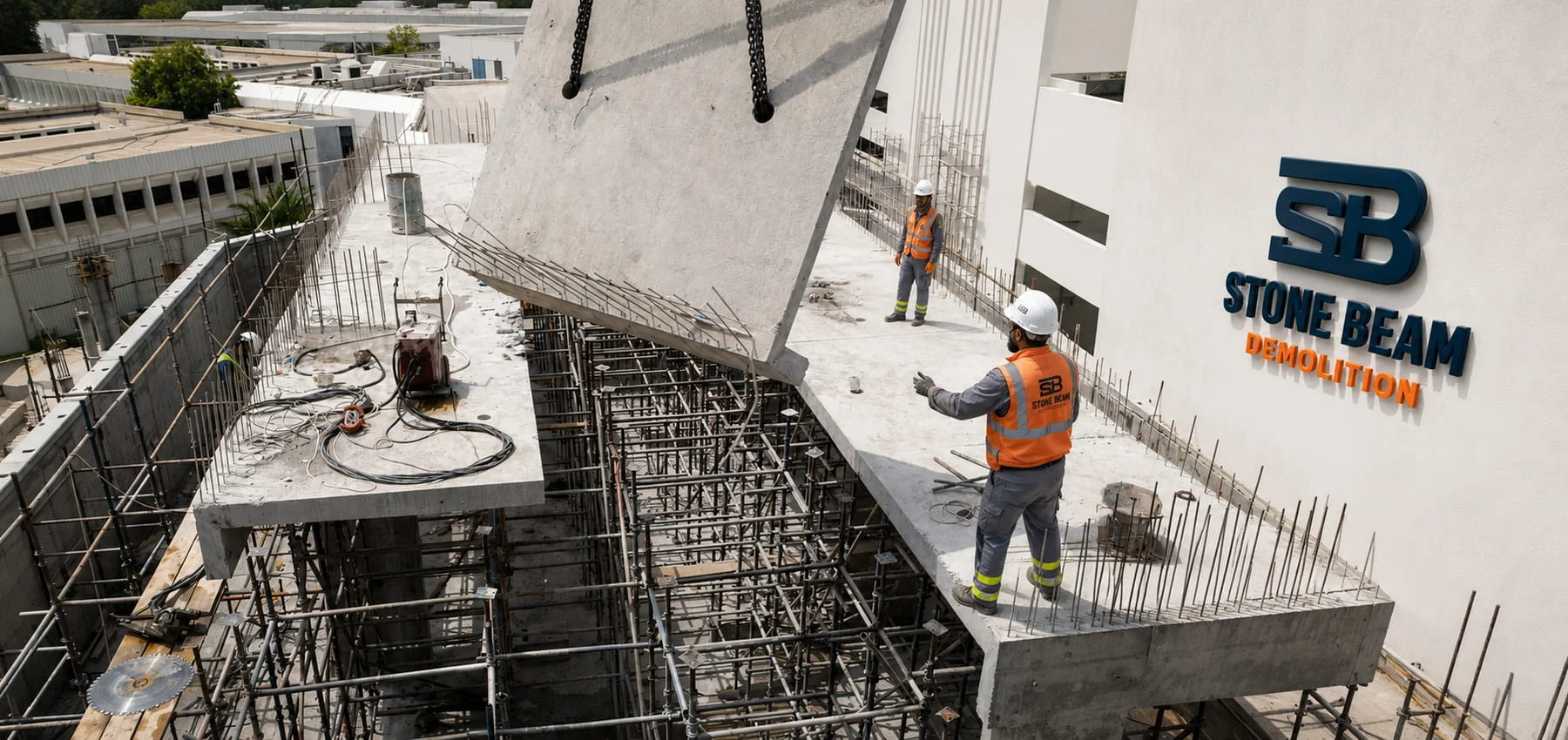
Support & lifting
Slurry / dry extraction
Working-hour restrictions
No public rate table
An itemised, site-specific quotation is more defensible than a headline rate that excludes the interfaces controlling the job.
An engineered service, not equipment for hir
The method is selected after reviewing the structure, access, and risk, not chosen because it's the tool on the truck that day.
The method, sequence and controls are confirmed from the actual site condition before any machine or tool is mobilised.
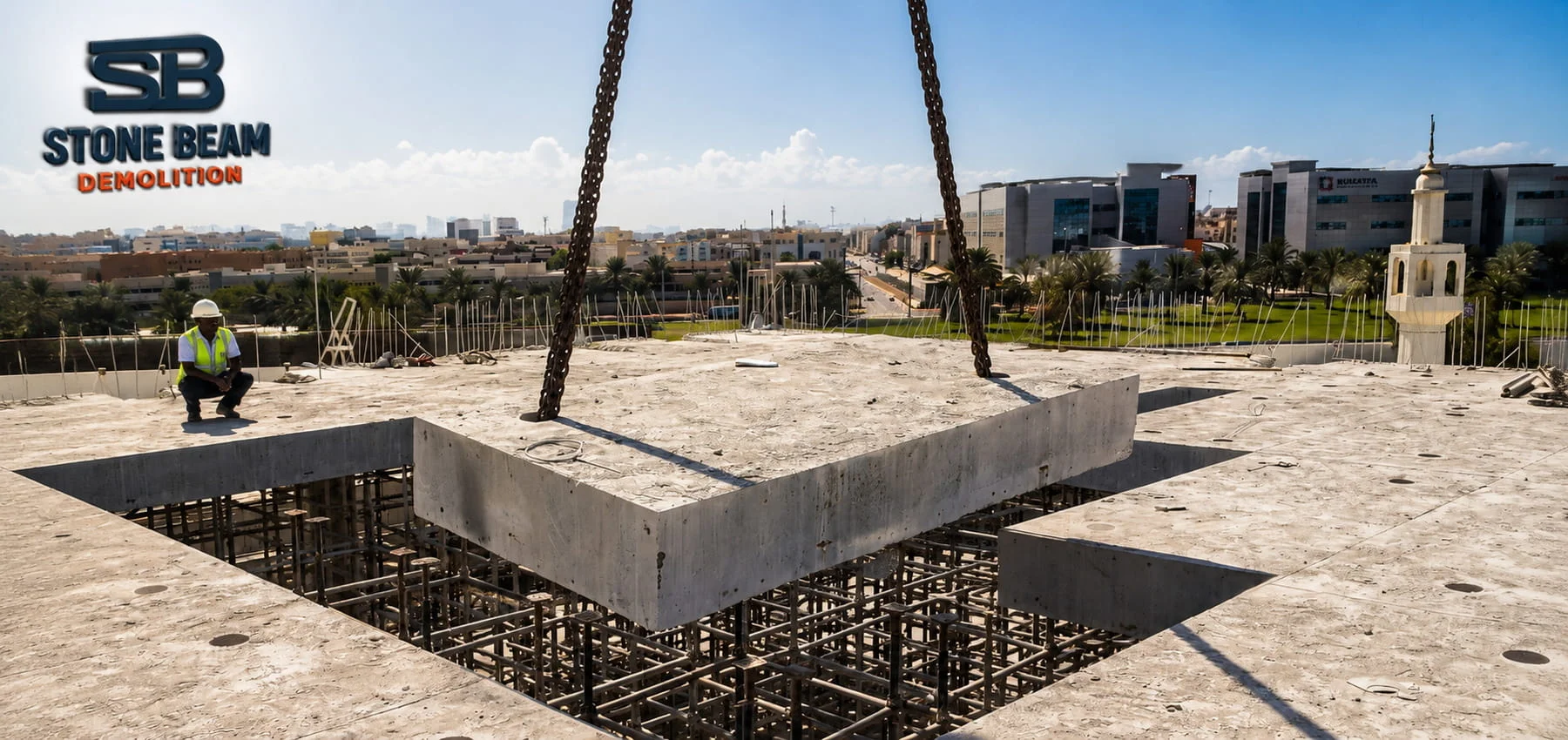
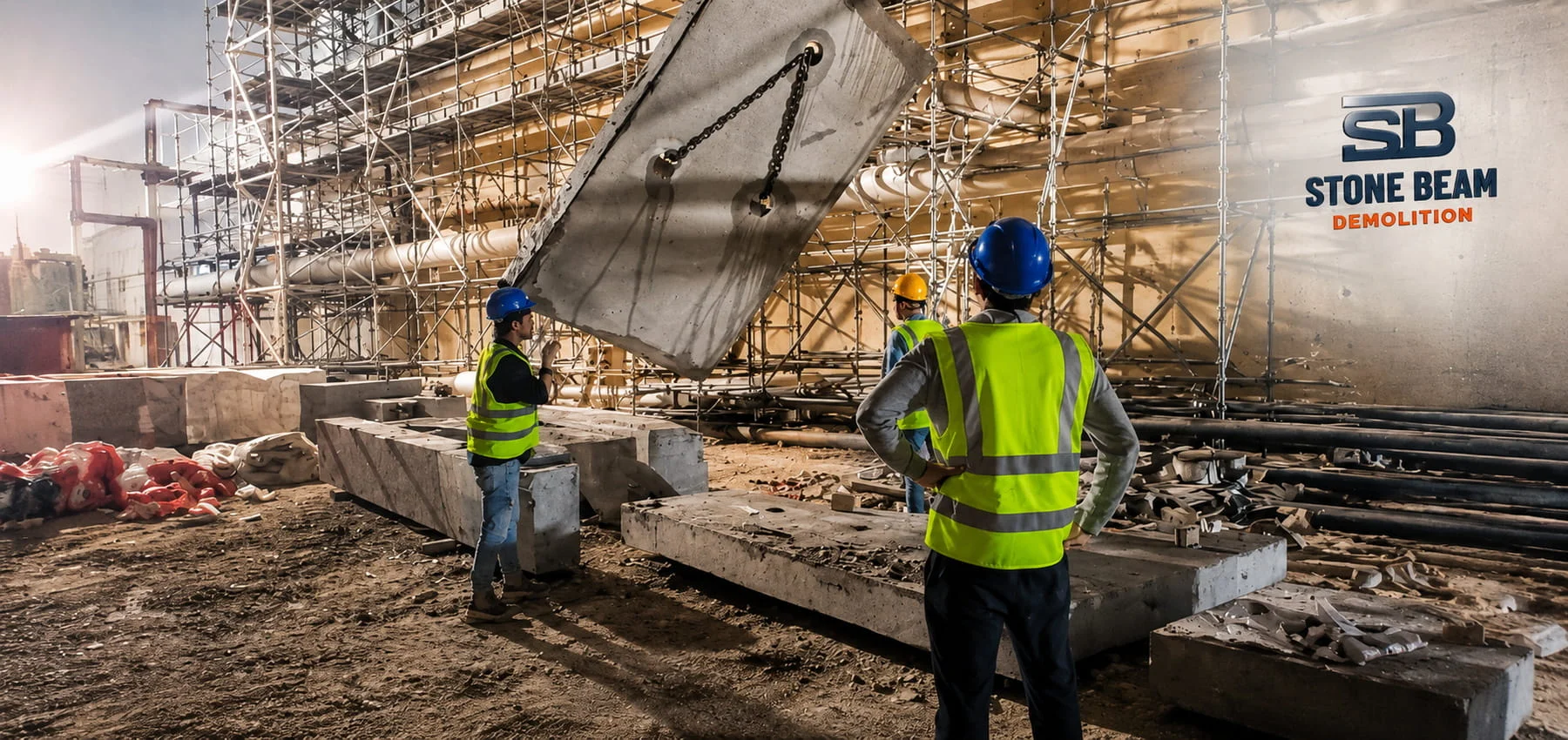
Cutting, scanning, temporary support, lifting and waste handling coordinated under one plan, not fragmented between separate contractors.
Scope, exclusions, assumptions and handover condition are stated in the quotation — not hidden inside a single lump-sum line.
Equipment, certifications, and capability are stated only where current records support them, never a generic "we do everything" promise.
Common questions, answered straight
What developers and consultants ask before they call.
Wall sawing creates vertical/linear cuts in walls and selected slab edges. Floor sawing cuts slabs-on-grade or suspended slabs — a suspended cut carries a different temporary-stability risk.
For large, thick or irregular reinforced-concrete elements where a circular blade can't provide the required reach or geometry — transfer beams, heavy walls, foundations, machine bases.
No. Scanning is valuable where concealed reinforcement, tendons or services affect the work — it's an interpretive tool with depth and access limitations, not a mandatory step for every cut.
nly against reliable PT information and structural-engineer approval. If site conditions conflict with the records, the cut stops until the discrepancy is resolved.
o. It avoids repeated percussive breaking, but feasibility still depends on access, equipment, wire/blade routing and the ability to control the released load.
o. Wet cutting controls dust but creates slurry to manage; dry cutting needs compatible extraction and silica controls — neither is promised disruption-free.
Depends on the property, jurisdiction and scope — a small fit-out penetration can follow a different route than a new structural opening. The competent authority and approved design route are confirmed per project.
Yes, coordinated around working hours, access, noise, water, lift bookings and fire-life-safety requirements specific to that building — never sold as disruption-free.
Still have questions?
